Meta Quest 3 vs 3S vs Pro vs Quest 2: The Ultimate VR & Mixed Reality Showdown (2025 Guide)
VR is not another dream of the future, it is something real and available, and evolves at a rapid pace. The Meta Quest line is one of the most prominent examples of the newest available platforms that combine standalone power and mixed-reality features with intuitive interaction. You can be a gamer, creator, or even a regular user; Quest is something that Meta has to offer.
In this guide, we deconstruct all the major Quest models Quest 3, Quest 3S, Quest 2, and Quest Pro with their strengths, weaknesses, specifications and real world use. We will also narrow down to the Quest 3 vs. 3S Auto battle that will assist you to settle on what really suits you well.
Meta Quest 3 — The Flagship Mixed-Reality Powerhouse
Release
Launched in 2023.
Overview
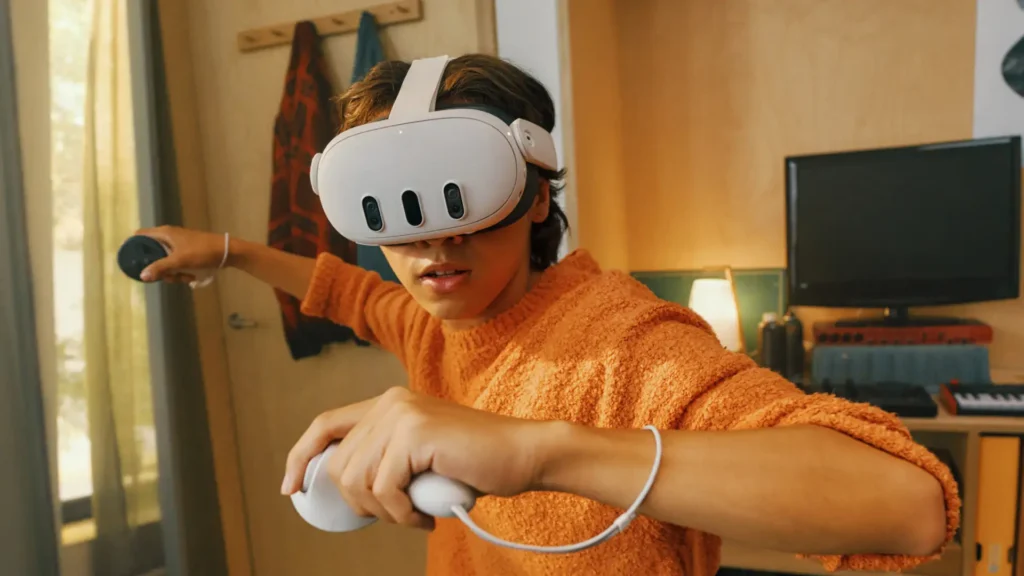
Meta Quest 3 completely redefined the VR landscape. With a next-gen processor, sharper lenses, high-quality mixed reality, slimmer design, and top-tier performance, it is the most advanced consumer VR headset Meta has produced.
Specs & Hardware
- Chipset: Qualcomm Snapdragon XR2 Gen 2
- RAM: 8 GB LPDDR5
- Storage Options: 128 GB, 512 GB
- Display: Dual LCD — ~2,064 × 2,208 pixels per eye
- Refresh Rate: 90 Hz (native), 120 Hz experimental
- Lenses: Pancake lenses for a slimmer form factor
- Field of View (FoV): ~110° horizontal × 96° vertical
- Tracking & Cameras: 6-DOF headset tracking, color passthrough, multiple external sensors
- Connectivity: Wi-Fi 6E, Bluetooth 5.2
- Weight: ~515 g
- Battery Life: Around 2.5–3.5 hours depending on usage
Best For
- Gamers wanting maximum quality
- Mixed-reality experiences
- Fitness and VR training
- Upgrading from Quest 2
Pros
- Excellent mixed-reality passthrough thanks to color sensors
- Powerful performance for immersive games and MR
- Good balance of weight and comfort
- High resolution display produces sharp visuals
Cons
- 120 Hz is still experimental — may not be stable or useful for all apps
- Battery life is moderate, not ideal for very long sessions
- Premium price for what some consider “mid-high” tier
Meta Quest Pro — Premium Mixed Reality for Creators
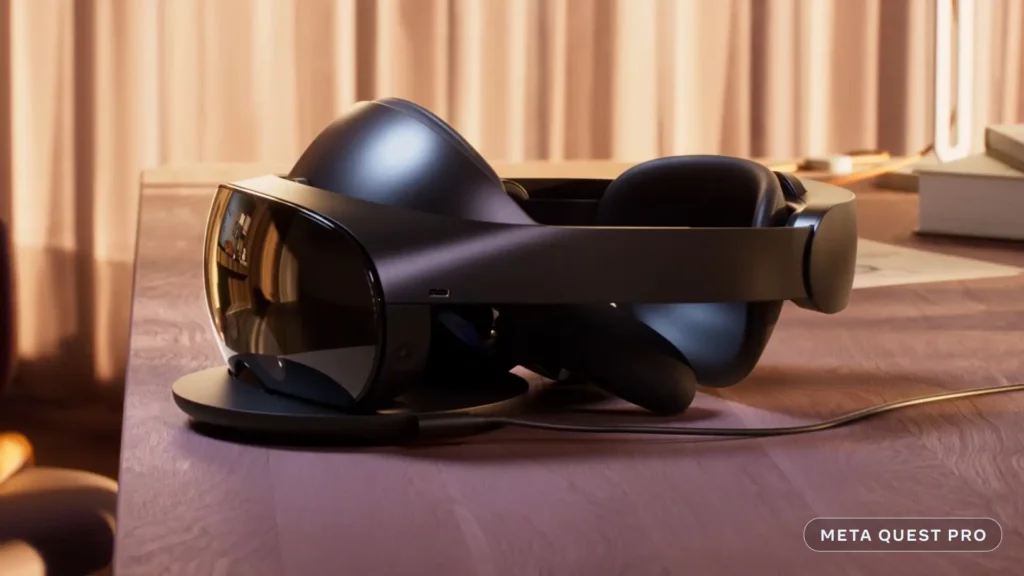
Release
Launched in 2022.
Overview
Meta Quest Pro introduced face + eye tracking, making avatars more realistic and enabling natural expression inside VR meetings. It targets professionals, creators, and advanced VR users.
Specs & Hardware
- Chipset: Qualcomm Snapdragon XR2+ (plus)
- RAM: 12 GB Storage: 256 GB
- Display: Dual QD-LCD with Mini-LED backlighting, 1800 × 1920 per eye
- Lenses: Pancake type, enabling thinner design and better clarity
- Field of View: ~106° × 96°
- Tracking / Cameras: 6-DOF, color passthrough, eye tracking, face tracking
- Connectivity: Wi-Fi 6E, Bluetooth 5.2
- Weight: 722 g (heavier design, but balanced)
- Controllers: Touch Pro with self-tracking and haptic feedback
Best For
- Professionals
- 3D designers
- VR meetings, collaboration, productivity
Pros
- Excellent MR capabilities — color passthrough, eye & face tracking
- Very powerful hardware for creators / enterprise
- Pancake lenses provide better visual clarity
- Built for productivity: design, meetings, collaboration
Cons
- Very expensive
- Heavier than consumer models
- Not ideal for long casual gaming sessions
- Limited appeal now that Meta is focusing on 3 / 3S
Meta Quest 3S — The Affordable Next-Gen Option
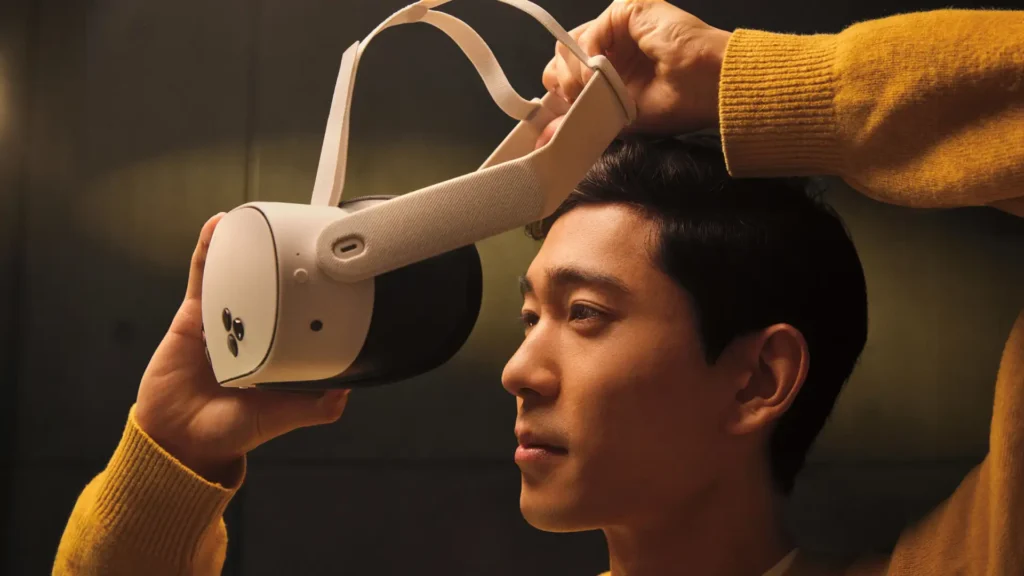
Release
Released October 15, 2024.
Overview
Meta Quest 3S takes everything people loved about Quest 3 — mixed reality, new design, advanced features — and makes it more affordable. It shares the same processor as Quest 3 but uses a slightly lower-resolution display to reduce cost.
Specs & Hardware
- Chipset: Same Snapdragon XR2 Gen 2 as Quest 3
- RAM: 8 GB LPDDR5
- Storage: 128 GB or 256 GB
- Display: RGB LCD, ~1,832 × 1,920 per eye, refresh up to 120 Hz
- Graphics: Adreno 740 GPU
- Cameras: 2 × 4 MP RGB + 4 IR depth/IR cameras
- Connectivity: Wi-Fi 6E, Bluetooth 5.2
- Weight: 514 g
- Battery Life: ~2.5 hours (per some reports)
Best For
- Users wanting Quest 3 power at lower cost
- Mixed reality beginners
- Mid-range buyers
Pros
- Same MR-capable chipset as Quest 3 at a much lower cost
- Lightweight and comfortable for extended use
- Good storage options (256 GB is generous for many users)
- Ideal for first-time MR/VR users or those on a tighter budget
Cons
- Uses fresnel (or older-style) optics vs pancake in Quest 3 → less sharp visuals
- Slightly smaller field of view
- No experimental 120 Hz or limited — depends on model/app
- Fewer premium features (e.g., lens clarity) compared to Quest 3
Meta Quest 2 — The Classic and Affordable Entry
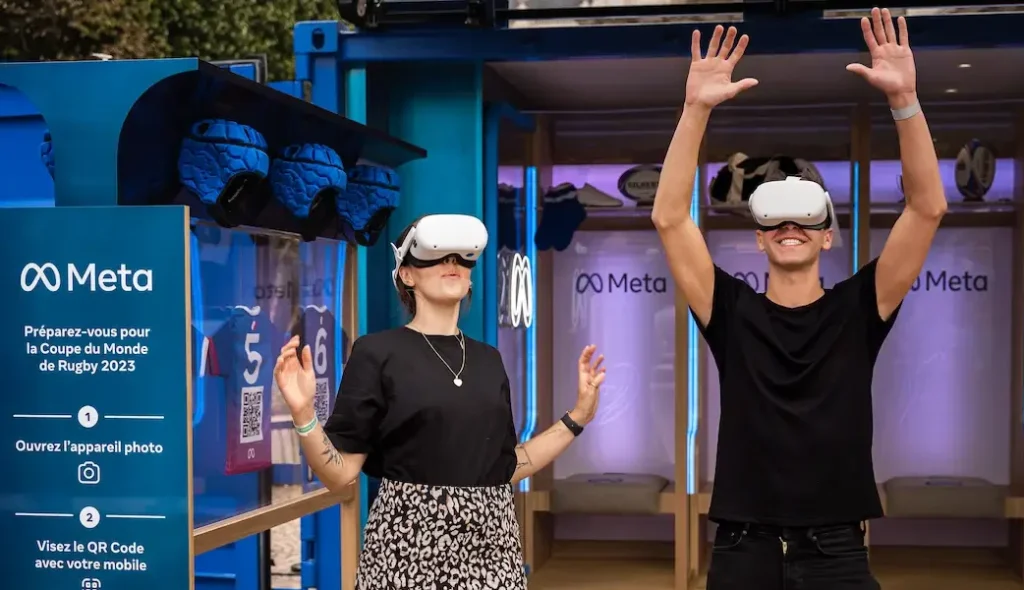
Release
Released in 2020. (Meta’s earlier popular model)
Overview
Meta Quest 2 is still one of the most successful VR headsets ever made — simple, lightweight, and powerful enough for thousands of games and apps. Even in 2025, it remains the best choice for newcomers who want to step into VR without spending much.
Specs & Hardware
- Chipset: Snapdragon XR2 (original)
- RAM: Typically 6 GB (depends on version)
- Storage Options: Various (64 GB, 128 GB, 256 GB) historically
- Display: Single LCD panel (~1,832 × 1,920 per eye)
- Refresh Rate: Up to 120 Hz (depending on version)
- Lenses: Fresnel
- Tracking: 6-DOF inside-out
- Connectivity: Wi-Fi, Bluetooth
- Weight: ~503 g (older model)
Best For
- First-time VR users
- Kids, students, and casual gamers
- Budget gaming setups
Pros
- Very mature software ecosystem
- Relatively cheap on second-hand / discount markets
- Lightweight and well-supported
- Great for gaming, social VR, fitness apps
Cons
- Older chipset; less power than newer models
- Lower-resolution display than Quest 3 / 3S
- No color passthrough (monochrome for earlier models)
- Shorter battery life vs premium headsets
Meta Quest 3 vs. Meta Quest 3S
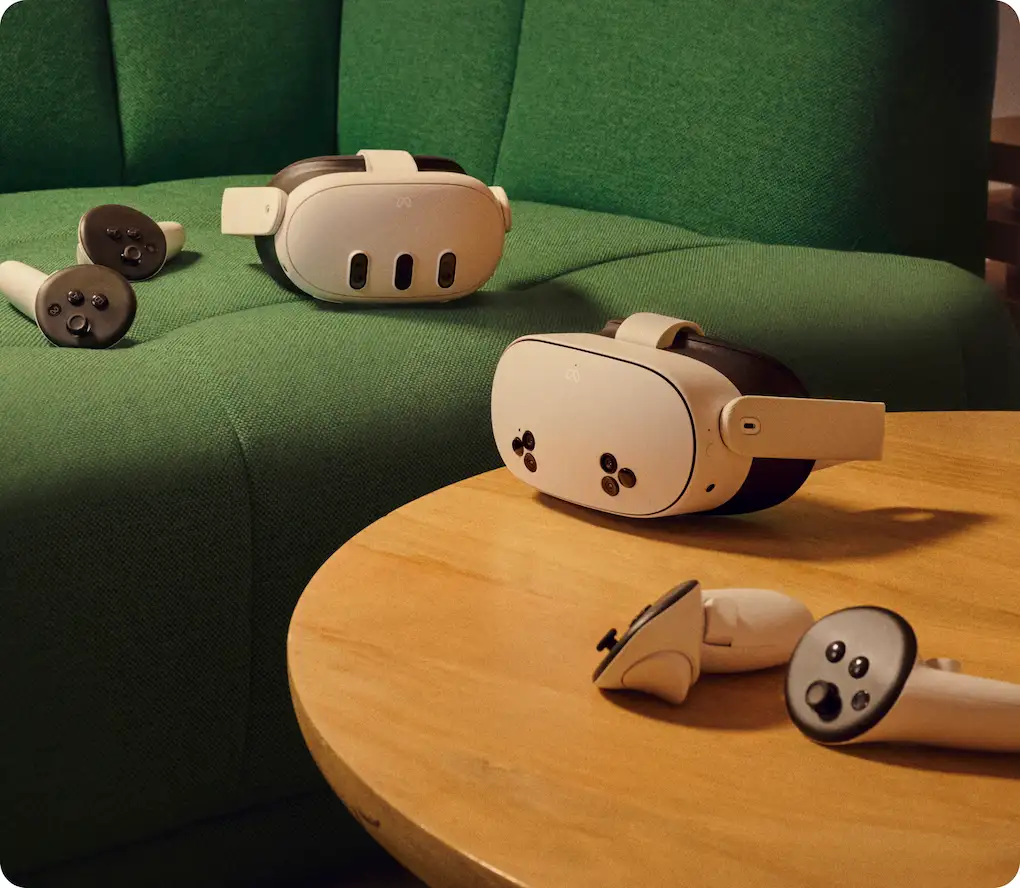
1. Performance & Core Hardware
- Both use Snapdragon XR2 Gen 2, so raw processing power is nearly identical.
- Both support advanced mixed reality features thanks to the same underlying chipset.
2. Display & Optical Differences
- Quest 3: Pancake lenses — provide better clarity, a wider field of view (~110°), and more premium feel.
- Quest 3S: Uses fresnel or simpler optics (depending on reports) to reduce cost.
- Resolution:
Quest 3: ~2,064 × 2,208 per eye.
Quest 3S: ~1,832 × 1,920 per eye. - Refresh Rate: Both support up to 120 Hz, but on 3S the higher rate may depend more on the app / mode.
3. Field of View & Comfort
- Quest 3’s pancake lenses give a larger perceived field-of-view (FoV), making the VR world feel more immersive.
- Quest 3S is slightly thicker and possibly less refined in optics, which may reduce clarity or FoV for demanding MR experiences.
4. Storage & Memory
- Quest 3: Comes in 128 GB / 512 GB.
- Quest 3S: 128 GB / 256 GB available.
- Since both have the same RAM (8 GB), memory use for apps will be similar, but larger storage on Quest 3 is more future-proof.
5. Tracking, Cameras & MR
- Both headsets support 6-DOF tracking, color passthrough cameras, and MR experiences.
- However, Quest 3 may feel more premium in MR due to its superior optics.
6. Weight & Design
- Quest 3: ~515 g.
- Quest 3S: ~514 g.
- Practically the same weight — very close ergonomic feel, though the 3S may feel a little bulkier due to lens design.
7. Pricing
- Quest 3: $499 (128 GB), $649 (512 GB) — at launch.
- Quest 3S: $299 (128 GB), $399 (256 GB).
- The 3S offers a significant price saving, making mixed reality more accessible.
8. Ideal Use-case Comparison
Pick Quest 3 if:
- You care about visual fidelity and want sharper images.
- You plan to use MR heavily and want better lenses.
- You want more storage for big games or MR projects.
Pick Quest 3S if:
- You want very good MR experience but don’t want to pay full flagship price.
- You are okay with slightly less sharp visuals.
- You prefer a lower-cost alternative without compromising on core performance.
Mega Comparison — Meta Quest 3 vs. Meta Quest 3S
| Feature | Quest 3 | Quest 3S |
|---|---|---|
| Processor | XR2 Gen 2 | XR2 Gen 2 |
| Display | 2064 × 2208 | 1832 × 1920 |
| Lenses | Pancake | Pancake |
| RAM | 8 GB | 6 GB |
| MR Quality | Higher-end | Very good |
| Price | Higher | Lower |
Which Meta Quest Model Should You Buy (2025 Recommendation)
- Choose Quest 3: If you want the top MR/VR experience, don’t mind paying more, and want a device that will stay powerful for years.
- Choose Quest 3S: If you’re budget-conscious, want next-gen features, but don’t need the absolute best optics.
- Choose Quest 2: Only if you find a good deal — it’s older but still solid for gaming and VR.
- Choose Quest Pro: If you’re a professional, creator, or someone who prioritizes eye tracking, face tracking, and MR work over cost.
Where to Buy Meta Quest 3
- Official Meta Store (US) – Direct from Meta, both 128GB and 512GB models.
Buy from Meta.com - Amazon (US) – Ships fast with Prime, bundles available.
Buy from Amazon - Best Buy (US) – Online or in-store pickup, often bundles with bonus games.
Buy from Best Buy - Walmart (US) – Both models stocked, competitive pricing.
Buy from Walmart - Refurbished (Meta Certified) – Discounted Quest 3 with 1-year warranty.
Buy Refurbished from Meta
FAQs about Meta Quest Series
Meta Quest 3 offers a sharper display, more RAM, and slightly higher-quality mixed reality, while Quest 3S delivers next-gen performance at a more affordable price. Both use the XR2 Gen 2 processor, but Quest 3 is more future-proof for heavy users.
o. All Meta Quest headsets are fully standalone. You can add a PC connection (wired or wireless) only if you want to access advanced PC-VR games or heavy applications.
Meta Quest 3 is the best overall headset due to its sharp display, XR2 Gen 2 processor, and next-gen mixed reality. For budget buyers, Quest 3S offers incredible value with the same processor at a lower cost.
Battery life averages 2–2.5 hours across most headsets. Quest 3 and Quest 3S both last around 2 hours during gameplay, while Quest 2 can reach up to 3 hours in lighter use.
Yes. Quest is one of the most versatile VR devices:
Gaming: Smooth tracking + high performance
Fitness: Lightweight and interactive
Productivity: Multi-window MR for workspace tasks
This combination makes Meta Quest one of the most universal VR headsets available.