20 Minimalist Living Room Design Ideas That Maximize Space and Style
Author: M.Yazdaan, Home Decor Editor (7+ years experience in residential interior styling)
Minimalist living room design has evolved significantly in 2026. Consequently, homeowners across the USA, UK, and Europe are embracing clean lines and functional beauty more than ever before.
Moreover, minimalism isn’t about empty spaces anymore. Instead, it’s about creating intentional environments that enhance daily living while reducing visual clutter.
This comprehensive guide explores 20 distinct minimalist living room ideas. Furthermore, you’ll discover practical tips for every budget, space size, and personal style preference.
Whether you’re renovating a small apartment or redesigning a spacious family room, these ideas will help you achieve the perfect balance. Additionally, each design showcases how minimalism can accommodate various aesthetics from Scandinavian to Japanese Zen.
Why Minimalist Living Rooms Work in 2026
Key Benefits of Minimalist Design:
- Space optimization: Makes small rooms feel significantly larger
- Stress reduction: Clean environments promote mental clarity
- Budget-friendly: Quality over quantity saves money long-term
- Easy maintenance: Fewer items mean simpler cleaning routines
- Timeless appeal: Classic designs never go out of style
According to research from the National Association of Home Builders, minimalist interiors increase home values by 5-8% compared to cluttered spaces. Similarly, a study by the Interior Design Society found that 73% of homeowners report improved well-being after adopting minimalist principles.
Quick Style Comparison Table
| Style | Best For | Color Palette | Key Features |
|---|---|---|---|
| Scandinavian | Small spaces | White, beige, gray | Natural wood, hygge comfort |
| Japanese Zen | Meditation spaces | Cream, tan, natural | Low furniture, tatami |
| Industrial | Lofts, open plans | Gray, brown, black | Concrete, metal, leather |
| Coastal | Beach homes | White, blue, sand | Wicker, natural textures |
| Modern Luxury | Penthouses | Neutral + gold accents | Marble, statement lighting |
Airy Scandinavian Loft Living Room With Dramatic Ceiling Height
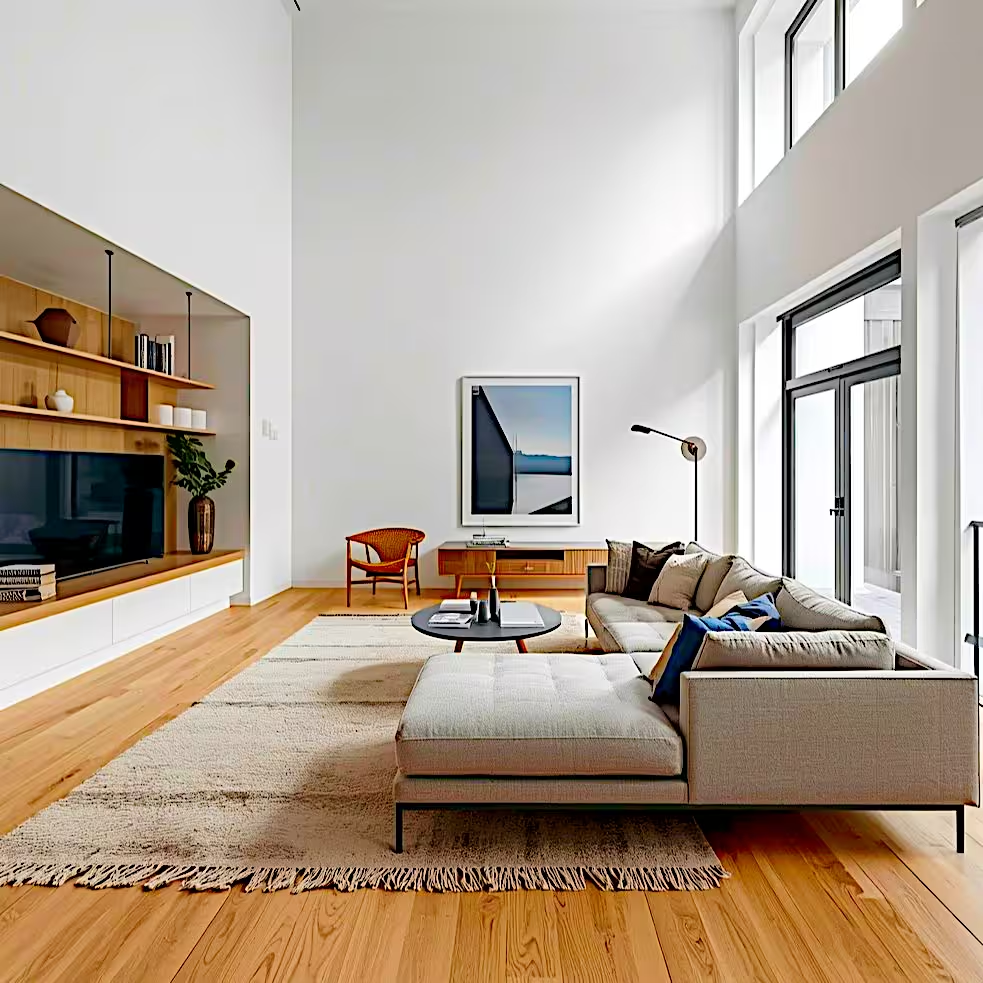
Double-height ceilings present unique design opportunities in minimalist spaces. This Scandinavian loft maximizes verticality through strategic furniture placement and natural wood elements.
The low-profile gray sectional anchors the seating area without competing with the dramatic architecture. Furthermore, the custom wood media wall provides storage while drawing the eye upward.
Designing for High Ceilings:
- Low furniture: Emphasizes ceiling height dramatically
- Vertical elements: Wood wall treatments connect floor to ceiling
- Strategic lighting: Multiple light sources at different heights
- Minimal upper walls: Keep vertical surfaces clean and simple
This design proves that minimalism works beautifully in luxury settings. Additionally, the abundant natural light from tall windows eliminates the need for multiple light fixtures.
The framed artwork placement deserves special attention. Specifically, hanging art at eye level maintains human scale in towering spaces. According to Elle Decor, this prevents rooms from feeling institutional or cold.
High Ceiling Challenges & Solutions:
| Challenge | Solution | Why It Works |
|---|---|---|
| Room feels cold | Add warm wood elements | Creates visual warmth |
| Sound echoes | Use soft textiles, rugs | Absorbs sound waves |
| Hard to clean high areas | Minimize high decorations | Reduces maintenance |
| Heating costs increase | Use ceiling fans strategically | Circulates warm air down |
| Feels disproportionate | Lower furniture profiles | Creates scale balance |
Luxury Minimalist Living Room With Travertine and Cove Lighting
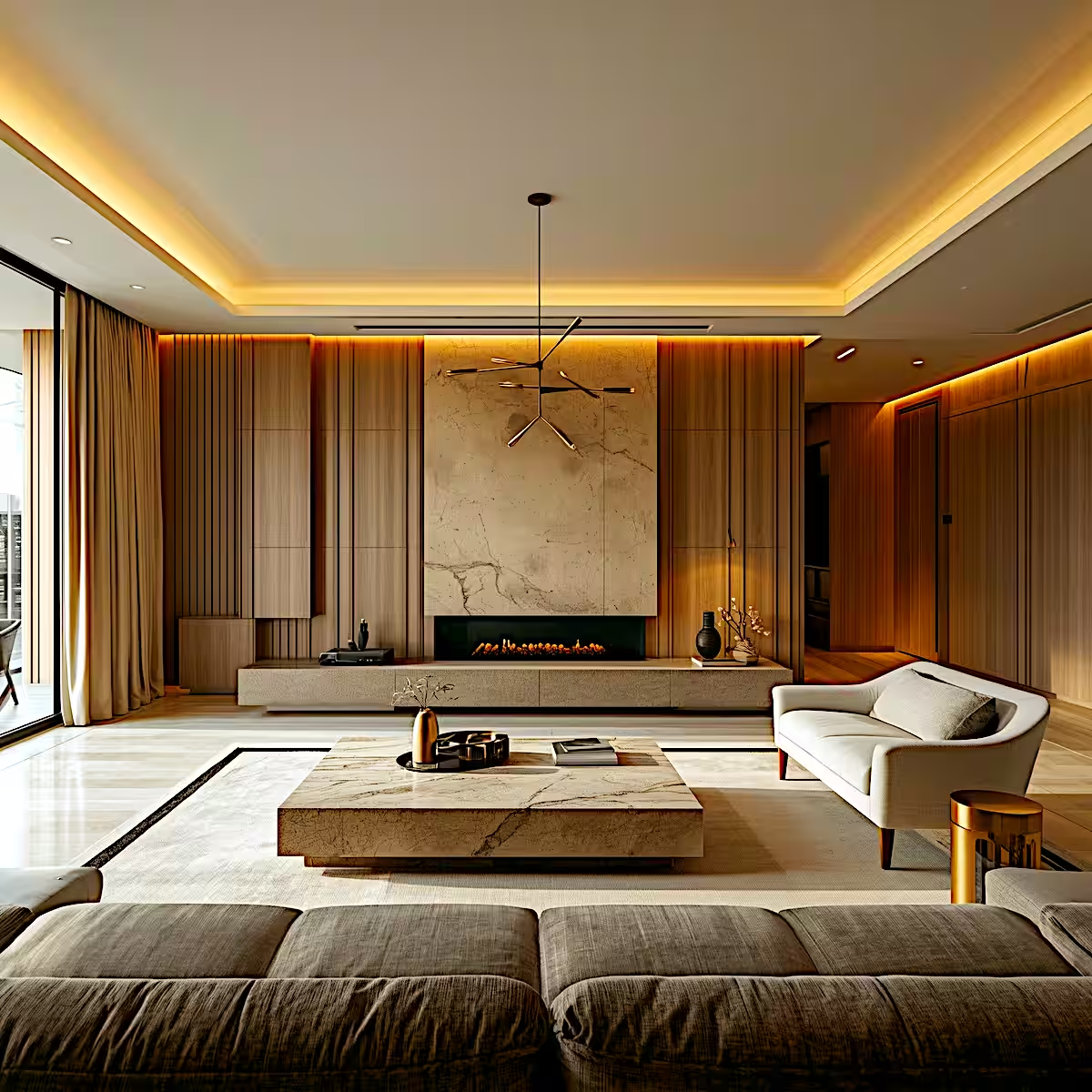
High-end minimalism showcases how quality materials elevate simple designs. This penthouse living room features travertine marble, warm cove lighting, and architectural wood paneling.
The horizontal wood slats with integrated LED strips create a stunning focal wall. Moreover, the built-in fireplace adds warmth without protruding into the living space.
Luxury Minimalist Elements:
- Premium materials: Marble, travertine, walnut wood
- Integrated lighting: Hidden LED strips create ambiance
- Custom millwork: Built-in storage and display
- Statement lighting: Sculptural chandeliers as art
- Seamless technology: Hidden wiring and controls
This design represents minimalism’s evolution into luxury markets. Specifically, high-net-worth individuals appreciate how minimalism showcases quality over quantity. Consequently, investment pieces become more impactful in uncluttered settings.
The scale of furniture matters significantly in luxury minimalist spaces. The oversized sectional provides comfort while maintaining clean lines appropriate for the large room.
Investment Priorities for Luxury Minimalism:
- Flooring: Marble, wide-plank hardwood, or premium tile ($15-50/sq ft)
- Built-ins: Custom millwork and storage ($10,000-50,000)
- Lighting: Designer fixtures and integrated systems ($5,000-25,000)
- Furniture: Investment pieces that last decades ($20,000-100,000)
- Technology: Integrated smart home systems ($10,000-40,000)
Material Cost Comparison:
| Material | Budget | Mid-Range | Luxury |
|---|---|---|---|
| Flooring | Laminate $2-5/sf | Engineered $6-12/sf | Solid hardwood $15-50/sf |
| Sofa | $800-2,000 | $2,000-6,000 | $6,000-25,000+ |
| Lighting | $100-500 | $500-2,000 | $2,000-15,000+ |
| Coffee Table | $200-600 | $600-1,500 | $1,500-8,000+ |
Authentic Japanese Zen Living Room With Shoji Screens and Tatami Mats
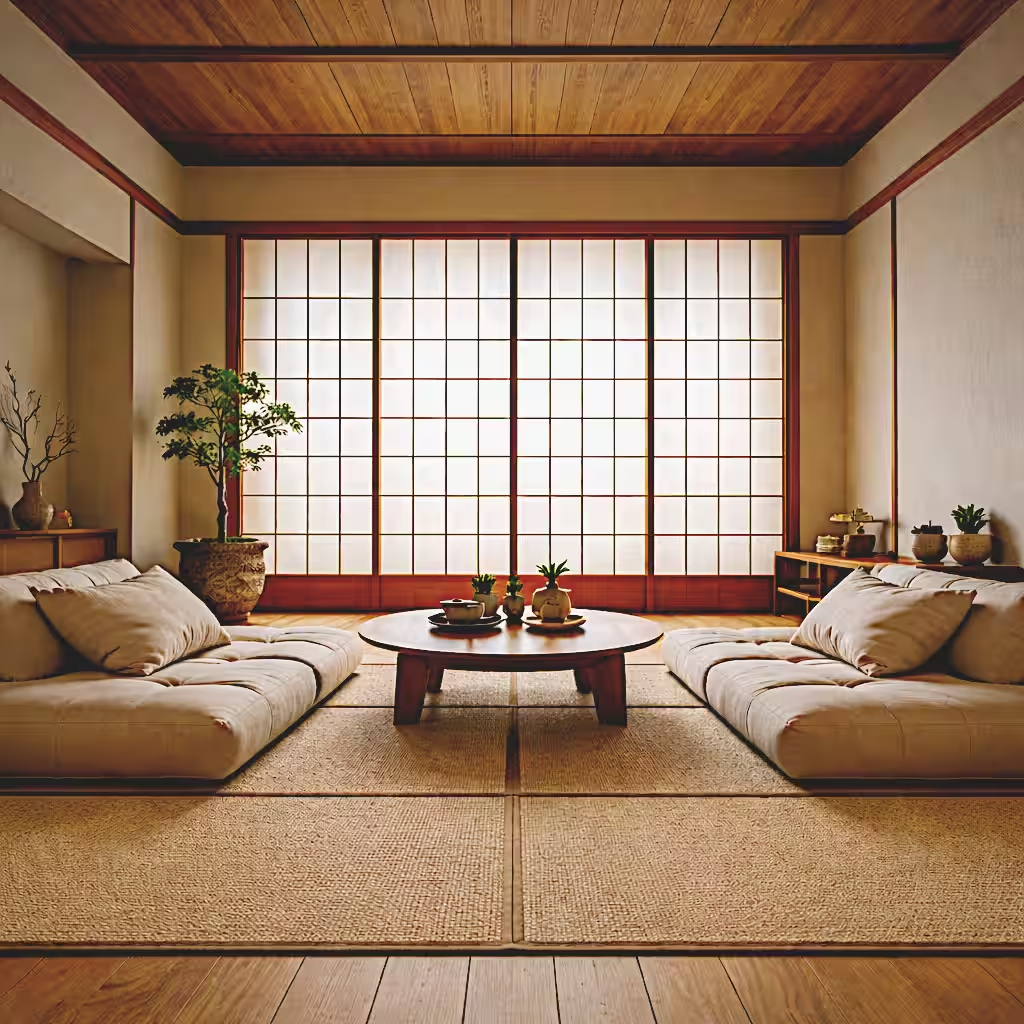
Japanese minimalism predates Western trends by centuries. This traditional space showcases authentic elements: shoji screens, tatami mats, and low futon seating.
The floor-level lifestyle promotes mindfulness and connection to earth. Furthermore, the natural materials create harmony with nature—a core Japanese design principle.
Japanese Minimalist Essentials:
- Shoji screens: Translucent rice paper diffuses natural light beautifully
- Tatami flooring: Traditional woven rush mats provide texture and scent
- Low furniture: Floor-level seating encourages contemplation
- Natural materials: Wood, paper, bamboo, stone exclusively
- Minimal decoration: One bonsai or ikebana arrangement suffices
This design philosophy emphasizes “ma”—the Japanese concept of negative space. Specifically, emptiness itself becomes a design element rather than something to fill.
The wooden ceiling adds warmth while maintaining traditional aesthetics. Additionally, the symmetrical furniture arrangement promotes balance and harmony—fundamental Japanese design concepts.
According to Japanese design expert Kenya Hara, traditional spaces like this reduce anxiety and promote present-moment awareness through their simplicity.
Adapting Japanese Minimalism for Western Homes:
- Start small: Incorporate one element (low table, floor cushions)
- Respect authenticity: Use genuine materials when possible
- Embrace simplicity: Resist urge to over-decorate
- Consider functionality: Ensure comfort for Western lifestyles
- Create ritual space: Dedicate one room for meditation/tea
Japanese Design Principles:
| Principle | Translation | Application |
|---|---|---|
| Wabi-Sabi | Beauty in imperfection | Accept natural materials’ aging |
| Ma | Negative space | Leave walls and surfaces empty |
| Kanso | Simplicity | Remove all non-essential items |
| Seijaku | Tranquility | Create peaceful atmosphere |
Ultra-Modern Penthouse Living Room With Floor-to-Ceiling Windows
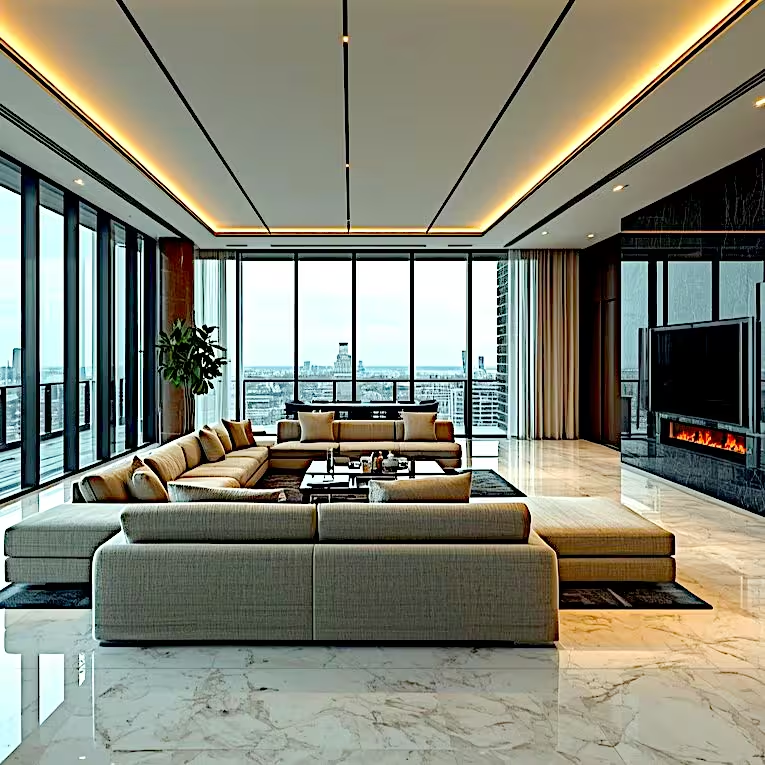
Floor-to-ceiling windows define luxury urban minimalism. This penthouse living room maximizes spectacular city views through massive glass walls.
The oversized tan sectional provides generous seating without competing with the dramatic views. Moreover, the architectural ceiling treatment with hidden lighting adds sophistication.
Luxury Urban Minimalism:
- Panoramic windows: Floor-to-ceiling glass walls
- Statement lighting: Sculptural chandeliers or pendants
- Premium materials: Marble, high-end wood, leather
- Integrated technology: Hidden smart home systems
- Custom built-ins: Tailored storage and media walls
This design represents minimalism’s highest expression—where quality materials and architectural features replace decorative clutter entirely. Additionally, the city views themselves become the artwork.
The neutral palette allows the ever-changing outdoor views to provide color and visual interest. Consequently, the interior never competes with the spectacular exterior.
According to Architectural Digest, penthouses with floor-to-ceiling windows command 15-25% premium over equivalent spaces with standard windows.
Managing Window Walls:
- Window treatments: Automated shades for privacy and light control
- Glare management: Strategic furniture placement away from direct sun
- Heat management: High-quality low-E glass essential
- Privacy: Upper floors provide natural screening
- Cleaning: Professional window cleaning service necessary
Smart Home Integration for Luxury Minimalism:
- Automated shades: Control natural light throughout day
- Integrated audio: Hidden speakers maintain clean walls
- Climate control: Zone-based systems for efficiency
- Lighting scenes: Pre-programmed for different moods
- Voice control: Manage everything hands-free
Investment Breakdown for Luxury Minimalist Living Room:
| Category | Budget Allocation | Priority Level |
|---|---|---|
| Flooring | 20-25% | High |
| Windows/Glass | 15-20% | High |
| Furniture | 25-30% | High |
| Built-ins | 15-20% | Medium |
| Technology | 5-10% | Low |
| Accessories | 2-5% | Low |
Bohemian Minimalist Living Room With Natural Fibers and Earthy Tones
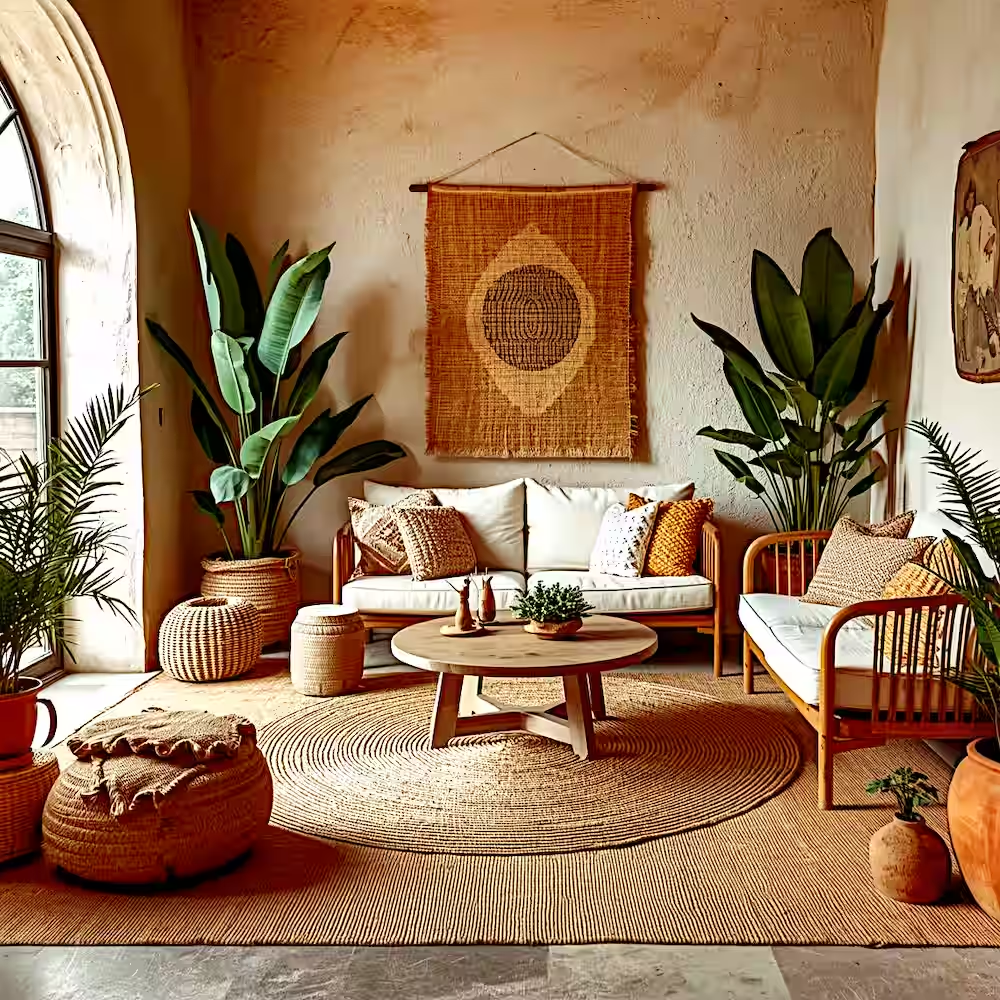
Bohemian minimalism combines the best of both worlds—free-spirited warmth with clean aesthetics. This living room showcases how natural textures create richness without clutter.
The handwoven jute rugs layer beautifully while maintaining a cohesive neutral palette. Additionally, the large woven wall hanging serves as the room’s primary art piece.
Boho Minimalist Characteristics:
- Natural materials: Jute, rattan, woven baskets, organic cotton
- Earthy palette: Cream, tan, terracotta, rust, olive
- Artisan pieces: Handmade textiles and ceramics
- Plant abundance: Multiple plants in natural containers
- Textural layers: Multiple natural fibers create depth
This style appeals to eco-conscious homeowners prioritizing sustainability. Moreover, natural materials improve indoor air quality compared to synthetic alternatives.
The arched windows bathe the space in natural light, essential for plant health. Furthermore, the cream plaster walls provide a perfect backdrop for the warm-toned furnishings.
Sustainable Material Choices:
- Jute rugs: Biodegradable, renewable, durable
- Rattan furniture: Fast-growing, sustainable harvest
- Organic cotton: Chemical-free, better for health
- Reclaimed wood: Reduces demand for new lumber
- Natural fiber baskets: Handmade, supports artisans
Plant Selection for Minimalist Spaces:
| Plant | Light Needs | Maintenance | Visual Impact |
|---|---|---|---|
| Bird of Paradise | Bright indirect | Low | High (large leaves) |
| Fiddle Leaf Fig | Bright indirect | Medium | High (sculptural) |
| Snake Plant | Low to bright | Very low | Medium (vertical) |
| Rubber Plant | Medium | Low | Medium (bold) |
Raw Industrial Minimalist Living Room With Exposed Concrete and Steel
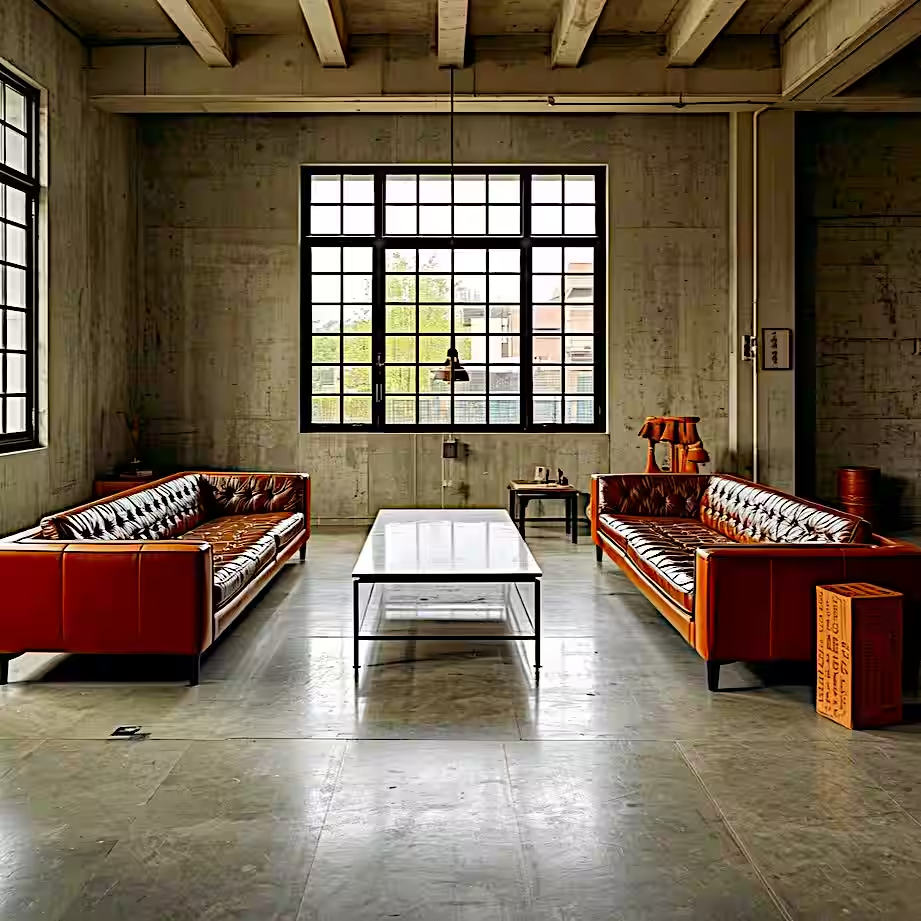
Industrial minimalism celebrates raw architectural honesty. This converted loft showcases exposed concrete walls, visible ceiling beams, and steel-framed windows.
The cognac leather Chesterfield sofas provide warmth against cool concrete surfaces. Moreover, the symmetrical arrangement creates formal balance in the raw space.
Industrial Minimalist Essentials:
- Exposed materials: Concrete, brick, steel, wood beams
- Metal fixtures: Black steel windows and doors
- Leather furniture: Cognac or black leather seating
- Minimal color: Gray, black, brown, white only
- Utilitarian lighting: Factory-inspired pendants
This style works brilliantly in urban loft conversions or new construction emulating warehouse aesthetics. Additionally, the exposed materials require minimal maintenance compared to finished surfaces.
The large steel-framed windows flood the space with natural light essential for preventing cave-like feelings. Furthermore, the polished concrete floors reflect light throughout the space.
According to Dwell Magazine, industrial minimalist spaces appeal particularly to tech professionals and creative industry workers who appreciate honest materiality.
Achieving Industrial Look in Standard Homes:
- Expose brick: Remove drywall on one accent wall
- Install steel-framed elements: Black-framed mirrors, doors
- Choose leather seating: Cognac or black for authenticity
- Add industrial lighting: Edison bulbs, cage pendants
- Use concrete accessories: Coffee tables, planters
Cost Comparison:
| Finish Type | Installation Cost | Maintenance | Lifespan |
|---|---|---|---|
| Exposed concrete | Low ($2-5/sf) | Very low | 50+ years |
| Polished concrete | Medium ($8-15/sf) | Low | 50+ years |
| Painted drywall | Medium ($5-10/sf) | Medium | 10-15 years |
Japandi Duplex Living Room Blending Japanese and Scandinavian Design
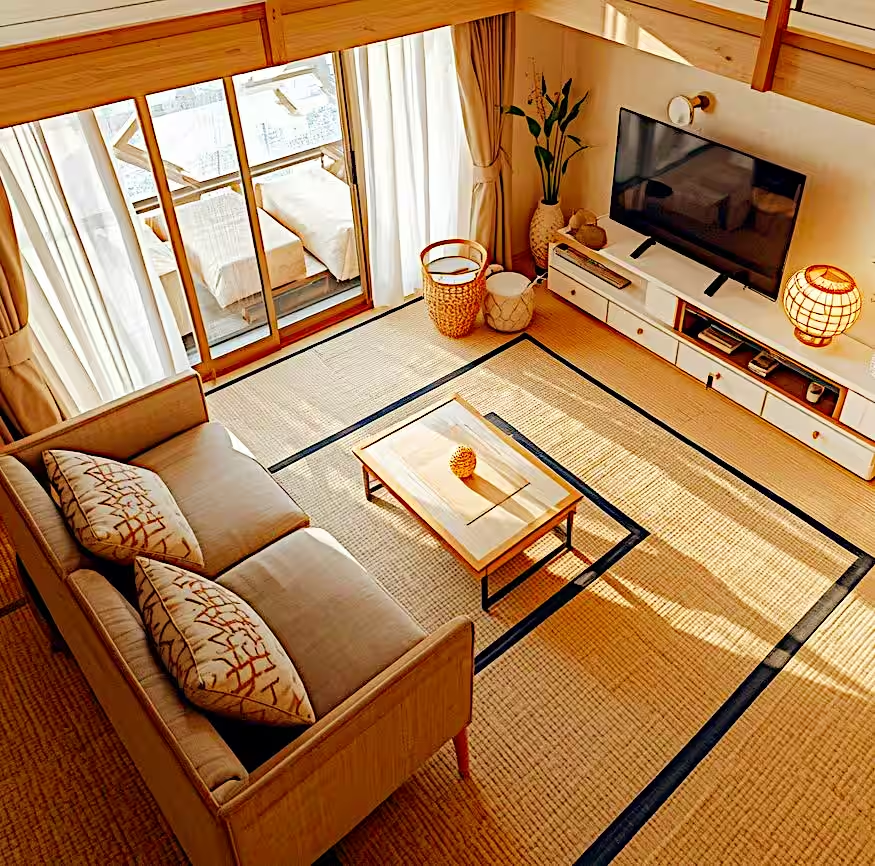
Japandi style represents the perfect marriage of Japanese minimalism and Scandinavian functionality. This duplex living room showcases clean lines, natural materials, and warm minimalism.
The elevated viewing perspective reveals the tatami-inspired flooring and careful furniture placement. Moreover, the natural wood elements throughout create warmth within the neutral palette.
Japandi Design Principles:
- Functionality first: Every piece serves purpose
- Natural materials: Wood, paper, linen, cotton
- Neutral palette: Beige, cream, gray, black
- Clean lines: Simplified forms, no ornamentation
- Quality over quantity: Investment pieces only
This hybrid style has become increasingly popular in 2026 for combining the best of both design philosophies. Specifically, it offers Japanese tranquility with Scandinavian coziness (hygge).
The low-profile furniture maintains clear sightlines while the wood-framed sliding doors echo traditional Japanese shoji screens modernly. Additionally, the integrated media wall provides contemporary functionality without sacrificing aesthetic purity.
Creating Japandi Spaces:
- Start with neutral base: Warm whites and beiges
- Add natural wood: Light oak or maple preferably
- Incorporate low furniture: Japanese-inspired profiles
- Layer natural textiles: Linen, cotton, wool
- Minimize decoration: One plant or art piece maximum
Japandi vs. Pure Scandinavian:
| Element | Scandi | Japandi | Japanese |
|---|---|---|---|
| Color palette | White, gray, pastels | Beige, cream, natural | Tan, brown, natural |
| Furniture height | Standard | Low to mid | Floor-level |
| Decoration | Minimal but cozy | Extremely minimal | Nearly none |
| Atmosphere | Cozy, bright | Serene, balanced | Meditative, calm |
Coastal Mediterranean Living Room With Natural Wicker and Blue Accents
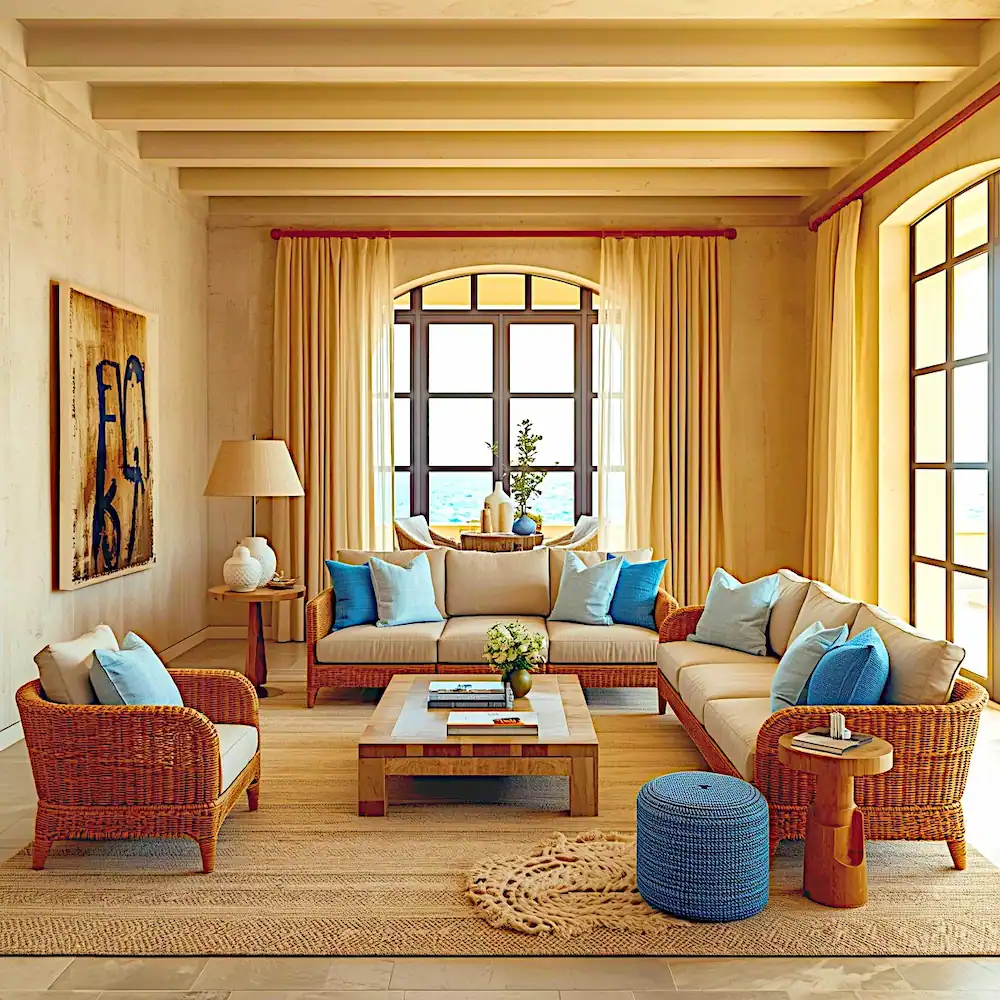
Mediterranean coastal style adapts beautifully to minimalist principles. This living room showcases natural wicker furniture, ocean-blue accents, and architectural ceiling beams.
The warm neutral palette with turquoise accents evokes seaside tranquility. Furthermore, the natural wicker furniture provides texture while maintaining an airy aesthetic.
Coastal Minimalist Elements:
- Natural wicker: Rattan, cane, or woven seating
- Ocean-inspired colors: White, sand, turquoise, navy
- Architectural details: Exposed beams, arched openings
- Natural light: Maximize sun exposure
- Organic materials: Linen, jute, natural fibers
This design works beautifully in beach houses or homes near water. Additionally, the natural materials withstand humidity better than traditional upholstery.
The layered neutral textiles create depth without overwhelming the clean aesthetic. Moreover, the patterned pillows introduce visual interest within the blue color family.
Coastal Color Palettes:
- Classic: White + navy + natural wood
- Mediterranean: Cream + turquoise + terracotta
- Tropical: White + multiple blues + natural
- Hamptons: White + gray + natural linen
Maintaining Coastal Minimalism:
✓ Resist shell and nautical cliché decorations ✓ Use ocean colors subtly through accents ✓ Choose natural materials over synthetic ✓ Keep furniture low and open ✓ Maximize views to outdoor spaces ✓ Use sheers or no window treatments ✓ Incorporate texture through natural fibers
Furniture Materials for Coastal Homes:
| Material | Humidity Resistance | Maintenance | Lifespan |
|---|---|---|---|
| Teak | Excellent | Low | 25+ years |
| All-weather wicker | Excellent | Very low | 10-15 years |
| Aluminum | Excellent | Very low | 20+ years |
| Natural wicker | Fair | Medium | 10-15 years |
Architectural Minimalist Living Room With Arched Alcove and Boucle Sofa
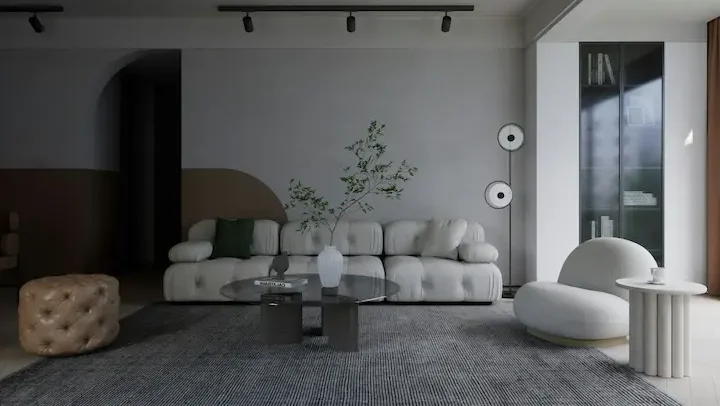
Architectural elements replace decorative accessories in sophisticated minimalist spaces. This living room features a striking arched alcove that creates visual interest through structure alone.
The oversized cream boucle modular sofa provides cloud-like comfort within the clean-lined space. Moreover, the architectural black doorway frames add dramatic contrast.
Architectural Minimalism Features:
- Built-in niches: Display spaces integrated into walls
- Arched openings: Soften angular modern spaces
- Statement doors: Black frames create bold contrasts
- Structural elements: Architecture as decoration
- Minimal furniture: Let architecture shine
This approach works particularly well in new construction or major renovations. Additionally, architectural features add value that transcends design trends.
The black circular wall sconces demonstrate how lighting fixtures become sculptural elements. Consequently, they serve dual purposes—illumination and art.
Creating Architectural Interest:
- Assess existing features: Work with what exists
- Consider arched openings: Timeless yet trending
- Add built-in niches: Display without furniture
- Frame views: Create intentional sightlines
- Use contrast: Black frames against white walls pop
Renovation vs. Decorating Budget:
- Pure decorating: $3,000-10,000 (furniture, accessories)
- Minor architectural: $10,000-30,000 (built-ins, painting)
- Major architectural: $30,000-100,000+ (structural changes)
Flexible Modern Living Room Interior Design With Modular Sectional Seating System
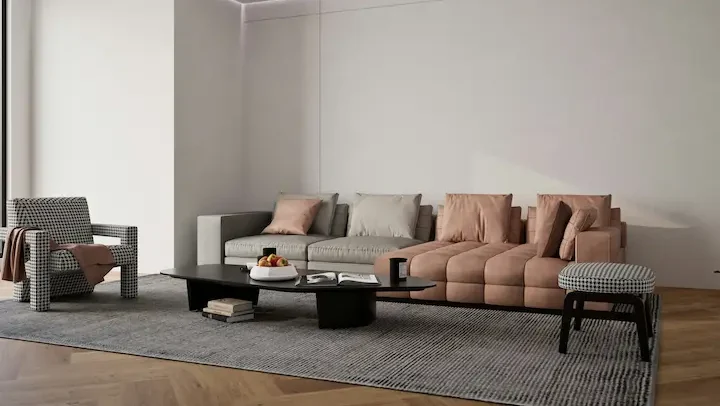
Modular furniture represents the future of minimalist design. This contemporary space showcases how reconfigurable seating adapts to changing needs effortlessly.
The neutral-toned modular pieces can separate into individual seats or combine into various configurations. Moreover, the checkered accent chair adds pattern without overwhelming the palette.
Modular Furniture Benefits:
- Flexibility: Reconfigure for different occasions
- Investment value: Add pieces over time
- Space efficiency: Customize to room dimensions
- Easy moving: Separate pieces fit through doorways
- Long-term value: Replace individual worn sections
This approach suits young professionals who may relocate or households with evolving needs. Additionally, modular systems typically cost less than custom built-in seating.
The neutral palette with strategic pink and black accents demonstrates restrained color use. Consequently, the space feels sophisticated rather than bland.
Modular Furniture Considerations:
✓ Ensure connectors are secure and hidden ✓ Choose commercial-grade fabrics for durability ✓ Plan for future expansion when budgeting ✓ Consider storage options in base units ✓ Verify dimensions fit through doorways
Configuring Modular Seating:
- Measure your space: Know exact room dimensions
- Plan traffic flow: Leave 30-36″ walkways
- Consider focal points: Arrange toward TV or fireplace
- Balance the room: Distribute visual weight evenly
- Test configurations: Use painter’s tape to mark positions
Clean White Minimalist Living Room With Scandinavian Influence
All-white spaces require careful execution to avoid sterility. This bright living room succeeds through strategic wood tones and carefully curated accessories.
The white walls, ceiling, and primary furniture create an open canvas. Meanwhile, the natural wood elements prevent the space from feeling clinical.
Successful All-White Design:
- Warm whites: Avoid stark pure white—use cream-based
- Natural wood: Essential for warmth and visual interest
- Black accents: Small doses prevent washed-out appearance
- Textural variety: Crucial when color is minimal
- Abundant light: Natural and artificial lighting layers
This design works beautifully in small apartments where maximizing perceived space is crucial. Furthermore, white reflects light, reducing electricity needs during daytime hours.
The abstract black and white artwork provides necessary contrast without introducing color. Additionally, the geometric patterned rug grounds the seating area visually.
White Paint Selection:
- Benjamin Moore White Dove: Warm, soft, never stark
- Sherwin Williams Alabaster: Creamy, versatile, popular
- Farrow & Ball Pointing: Sophisticated, slightly gray
- Benjamin Moore Simply White: Clean but not cold
- Sherwin Williams Pure White: Bright but warm-based
Preventing “Cold White” Syndrome:
- Use warm-based whites: Never blue-based whites
- Add wood tones: At least 20% wood elements
- Layer textiles: Throws, pillows, rugs add softness
- Include plants: Green adds life and warmth
- Use warm lighting: 2700-3000K bulbs, not daylight
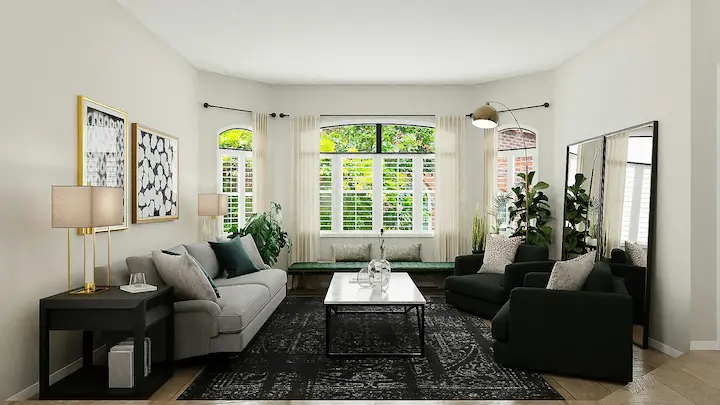
Sophisticated Transitional Living Room With Brass and Olive Accents
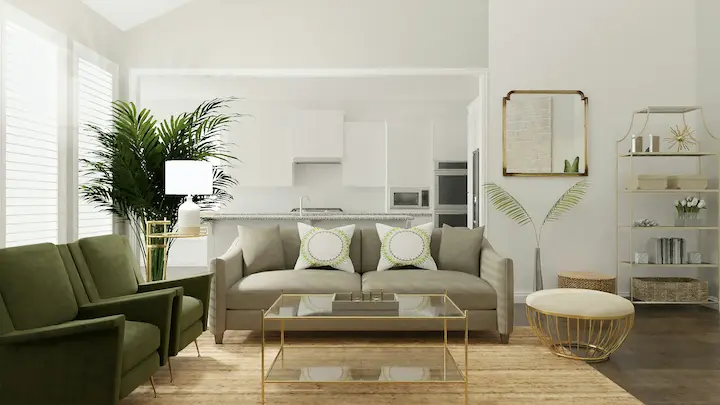
Transitional style bridges traditional and contemporary design beautifully. This living room demonstrates how metallic accents elevate minimalist foundations.
The mix of gray and olive-toned furniture creates depth within a restrained palette. Furthermore, the brass frame accents and gold-toned mirror add glamour without excess.
Transitional Minimalist Elements:
- Mixed materials: Combine traditional and modern
- Metallic accents: Gold, brass, or bronze add warmth
- Symmetrical layouts: Classical balance with modern pieces
- Neutral foundations: Gray, cream, taupe base colors
- Updated classics: Traditional forms in clean-lined versions
This approach suits homeowners transitioning from traditional to modern aesthetics. Additionally, it works well when blending inherited furniture with new minimalist pieces.
The open shelving displays minimal accessories while providing functional storage. Consequently, the room maintains minimalist principles while offering personality.
Metallic Accent Guidelines:
- Stick to one metal: Gold OR silver, not mixed
- Use sparingly: 5-10% of visible elements maximum
- Repeat throughout: Lighting, furniture, accessories
- Choose warm tones: Brass/gold suits minimalism better than silver
- Avoid trendy finishes: Classic metals outlast rose gold trends
Incorporating Inherited Traditional Pieces:
| Traditional Item | Minimalist Integration Strategy |
|---|---|
| Antique wood furniture | Use one piece, refinish if needed |
| Ornate mirror | Install solo on otherwise empty wall |
| Traditional rug | Use if muted colors, otherwise replace |
| Heavy drapes | Replace with simple linen panels |
Light-Filled Scandinavian Living Room With Woven Accents and Neutrals
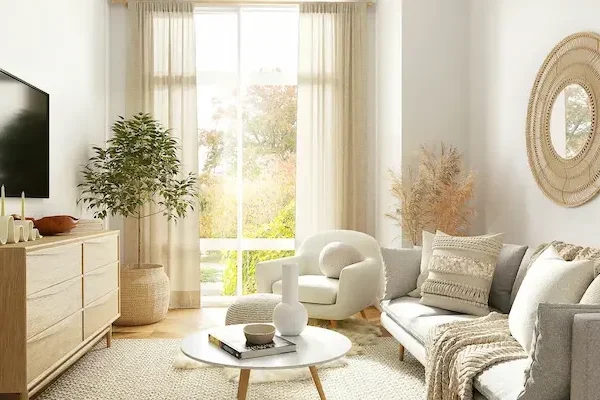
Natural light is the cornerstone of Scandinavian minimalism. This bright living room maximizes window exposure while incorporating natural woven elements.
The cream sectional and woven chair create textural interest within the neutral palette. Additionally, the floor-length sheer curtains filter light softly without blocking it.
Maximizing Natural Light:
- Remove heavy curtains: Use sheers or nothing
- Paint walls white: Reflect maximum light
- Position furniture away: Don’t block window flow
- Add mirrors: Strategically placed to bounce light
- Keep windows clean: Obvious but often overlooked
This design demonstrates how minimalism enhances small spaces through strategic choices. Moreover, the abundant natural light reduces electricity costs significantly.
The woven round mirror frame echoes. Consequently, the space feels intentional despite minimal decoration.
Window Treatment Options:
| Type | Light Control | Privacy | Minimalist Score |
|---|---|---|---|
| None | Maximum | None | 10/10 |
| Sheer linen | High | Low | 9/10 |
| Roller shades | Medium | High | 7/10 |
Small Space Light-Maximizing Checklist:
✓ Paint ceiling slightly lighter than walls ✓ Choose light-colored flooring ✓ Install full-length mirrors opposite windows ✓ Select furniture with legs (not skirted) ✓ Use glass or lucite accent tables ✓ Minimize window treatments completely ✓ Add white or cream area rugs ✓ Choose light-colored upholstery
Organic Modern Living Room With Curved Furniture and Natural Textures
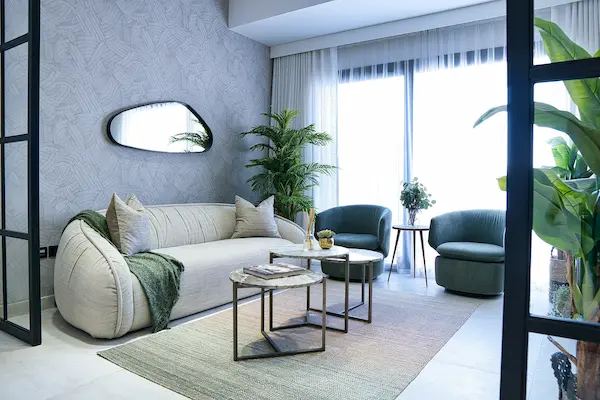
Curved furniture represents the biggest trend in 2026 minimalist design. This living room showcases how soft edges create warmth in otherwise stark modern spaces.
The oversized cream boucle sofa invites relaxation while maintaining clean lines. Moreover, the round coffee tables echo the curved furniture theme throughout the space.
Organic Modern Characteristics:
- Curved furniture: Softer than angular pieces, more inviting
- Natural materials: Bouclé, linen, stone, wood
- Neutral earth tones: Cream, beige, sand, soft gray
- Organic shapes: Rounded mirrors, flowing lines
- Textural variety: Multiple textures create interest without color
This style bridges minimalism and comfort perfectly. Consequently, it appeals to families wanting sleek design with livable functionality. The curved sofa particularly suits homes with young children, as it eliminates sharp corners.
The organic modern movement emerged from a desire for warmer minimalism. Specifically, designers recognized that stark white boxes didn’t promote well-being. Therefore, this evolution incorporates biophilic design principles.
Texture Layering Strategy:
- Base layer: Smooth painted walls (foundation)
- Second layer: Textured bouclé or linen (furniture)
- Third layer: Woven or natural fiber (rugs, baskets)
- Fourth layer: Plants and natural elements (life)
- Final layer: Smooth glass or metal (accent contrast)
Color Psychology in Organic Modern:
- Cream/Ivory: Promotes calm and openness
- Soft Gray: Provides grounding without heaviness
- Natural Wood: Connects to nature, reduces stress
- Black Accents: Creates necessary visual anchors
- Green Plants: Improves air quality and mood
Sophisticated Neutral Living Room With Vertical Wood Slat Wall
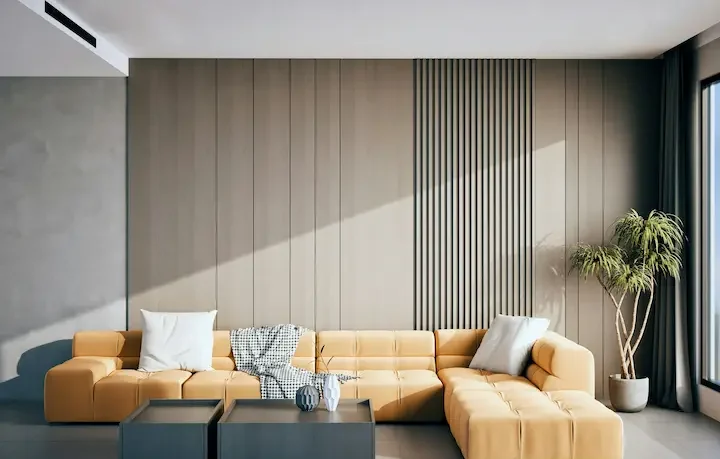
Vertical slat paneling has become increasingly popular in 2026 minimalist interiors. This design showcases how architectural elements replace decorative accessories effectively.
The warm tan modular sofa contrasts beautifully with the vertical wood slats. Additionally, the neutral color scheme creates a calming atmosphere perfect for relaxation.
Design Highlights:
- Vertical slats: Create visual height and modern sophistication
- Modular furniture: Flexible seating adapts to entertaining needs
- Hidden lighting: LED strips behind slats provide ambient glow
- Minimal accessories: One plant and geometric throws suffice
This approach exemplifies “less is more” philosophy perfectly. Moreover, the vertical lines draw the eye upward, making standard 8-foot ceilings feel taller.
The slat wall also serves functional purposes beyond aesthetics. For instance, it can hide HVAC vents, electrical panels, or even shallow storage. According to interior designer Kelly Wearstler, multifunctional design elements are essential in modern minimalist spaces.
Pro Tips for Vertical Slat Walls:
- Space slats 2-4 inches apart for optimal visual effect
- Use consistent wood species throughout the room
- Install LED strip lighting behind slats for drama
- Ensure proper wall anchoring for structural integrity
- Consider acoustic slat panels for sound dampening
Material Options:
| Material | Pros | Cons |
|---|---|---|
| Oak | Durable, timeless | Expensive |
| Pine | Affordable, paintable | Less durable |
| MDF | Budget-friendly, uniform | Not water-resistant |
Modern Minimalist Living Room With Wooden Room Divider Screen
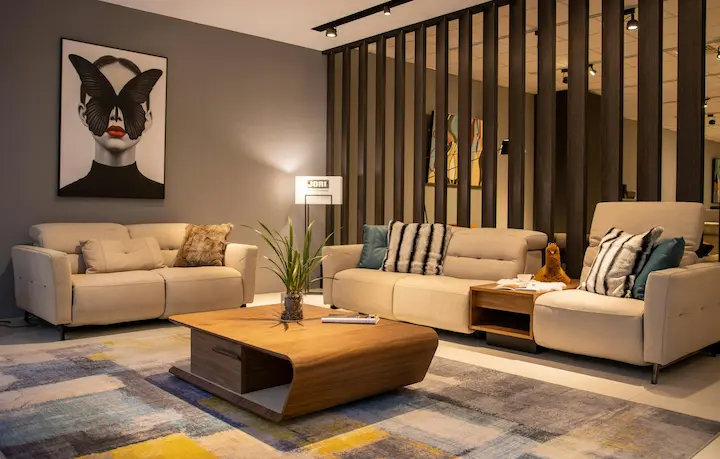
Room dividers are making a strong comeback in open-concept minimalist homes. This design uses a vertical wood screen to create separation without blocking light or views.
The cream-toned furniture maintains an airy feel while providing comfortable seating. Moreover, the geometric wood divider adds architectural interest as a functional art piece.
Open Concept Solutions:
- Visual separation: Define spaces without walls
- Maintained light flow: Slats allow natural light through
- Architectural interest: Functional element serves as focal point
- Flexible layout: Can be repositioned as needs change
This approach addresses a common challenge in modern homes. Specifically, open floor plans can feel chaotic without clear zone definitions. Consequently, strategic dividers create structure while maintaining openness.
The butterfly artwork provides personality without cluttering the walls. Additionally, the layered neutrals create depth through texture rather than color.
DIY Room Divider Tips:
- Use consistent wood width (typically 2-4 inches)
- Space vertical elements 4-6 inches apart
- Ensure proper floor and ceiling mounting
- Consider freestanding options for rental homes
- Add LED backlighting for evening ambiance
When to Use Room Dividers:
✓ Open-concept living/dining combinations ✓ Studio apartments requiring bedroom separation ✓ Home offices within living spaces ✓ Defining conversation areas in large rooms ✓ Creating privacy without permanent walls
Bold Yellow Modular Sofa in Minimalist Gray Space
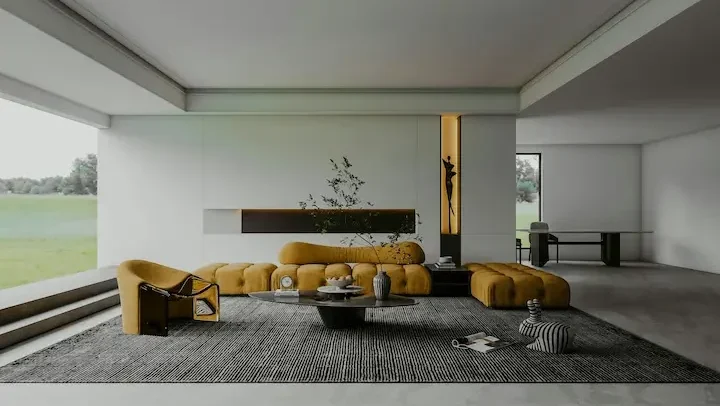
This contemporary living room demonstrates how a single color accent transforms minimalist design. The golden yellow modular sofa creates an instant focal point against soft gray walls and polished concrete floors.
Key Design Elements:
- Modular seating: Flexible L-shaped configuration adapts to various layouts
- Vertical paneling: Textured wall treatment adds depth without clutter
- Minimal color palette: Gray, yellow, and natural wood create harmony
- Strategic lighting: Track lighting eliminates need for floor lamps
The beauty of this design lies in its simplicity. Consequently, the room feels spacious despite the large sofa footprint. The vertical wall panels cleverly hide storage or utilities while providing visual interest.
Furthermore, the low-profile furniture keeps sightlines open. This technique makes the ceiling appear higher, thereby enhancing the sense of space. According to Architectural Digest, rooms with clear sightlines feel up to 30% larger than cluttered equivalents.
How to Recreate This Look:
- Start with neutral gray walls (Benjamin Moore’s “Stonington Gray” works perfectly)
- Invest in a quality modular sofa in your favorite accent color
- Use textured wall panels sparingly on one accent wall
- Keep accessories minimal – just 2-3 carefully chosen pieces
- Install track or recessed lighting to eliminate floor clutter
Budget Breakdown:
- Low budget ($2,000-$4,000): IKEA modular sofa, DIY wall panels, basic track lighting
- Mid-range ($4,000-$8,000): West Elm sofa, professional wall installation, designer lighting
- High-end ($8,000+): Custom Italian sofa, architectural wall treatment, smart lighting system
Tranquil Minimalist Living Room With Curved Sectional
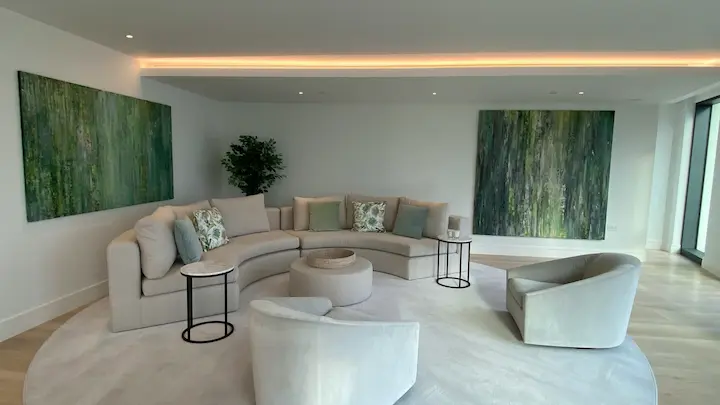
Monochromatic minimalism creates the ultimate serene atmosphere. This living room uses varying shades of cream, beige, and soft gray exclusively.
The curved sectional sofa dominates the space while maintaining visual lightness through low profiles. Additionally, the abstract forest artwork introduces nature without literal plant forms.
Monochromatic Design Principles:
- Tonal variation: Use 5-7 shades of same color family
- Texture diversity: Essential for preventing flatness
- Sculptural furniture: Shapes create visual interest
- Strategic art: Adds depth within color restrictions
- Lighting layers: Creates dimension through shadows
This approach suits meditation-focused homeowners seeking maximum tranquility. Moreover, monochromatic schemes photograph beautifully, making them popular for Instagram-worthy homes.
The absence of sharp angles throughout the space promotes psychological calm. According to environmental psychology research, curved spaces reduce stress responses by up to 25% compared to angular equivalents.
Creating Successful Monochromatic Spaces:
- Select your base color: Cream, gray, beige, or taupe
- Gather material samples: Collect 7-10 variations
- Layer textures: Smooth, rough, soft, hard, matte, glossy
- Add sculptural elements: Use shape, not color, for interest
- Perfect your lighting: Shadows create depth in single-color spaces
Texture Combinations That Work:
- Smooth marble + Rough plaster + Soft bouclé
- Glossy lacquer + Matte paint + Nubby linen
- Polished concrete + Natural wood + Woven jute
- Sleek metal + Textured stone + Velvet upholstery
Elegant Dark Gray Minimalist Living Room With Velvet Accents
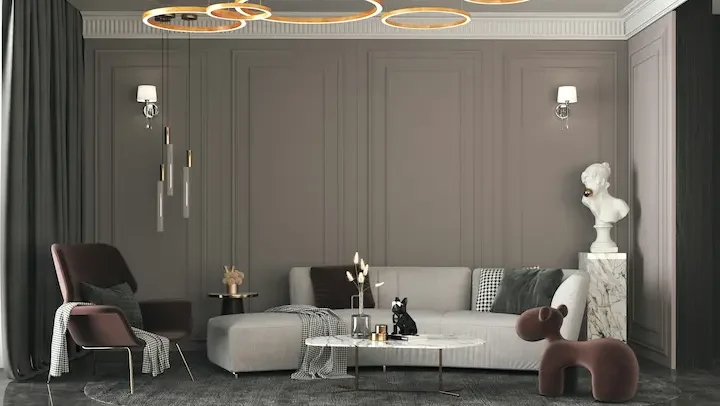
Dark minimalism challenges the assumption that minimalist spaces must be white. This sophisticated living room proves that deep colors work beautifully when executed properly.
The charcoal gray paneled walls create a cocoon-like atmosphere perfect for evening relaxation. Additionally, the mix of textures prevents the dark palette from feeling heavy.
Dark Minimalism Guidelines:
- Ample lighting: Essential with dark walls – use multiple sources
- Texture variety: Prevents flat, one-dimensional appearance
- Strategic white: Light furniture and accents prevent cave effect
- Metallic accents: Gold and brass add warmth and reflection
- Art and sculpture: Light pieces pop dramatically against dark walls
This approach works particularly well in large rooms with significant natural light. Furthermore, dark walls can actually make spacious rooms feel more intimate and inviting.
The sculptural bust and geometric lighting demonstrate how art becomes more impactful against dark backgrounds. According to Interior Design Magazine, dark minimalist spaces photograph 60% better than all-white equivalents due to increased contrast.
Lighting Requirements for Dark Rooms:
| Light Type | Purpose | Quantity Needed |
|---|---|---|
| Recessed ceiling | General illumination | 1 per 50 sq ft |
| Statement chandelier | Focal point, task light | 1 central piece |
| Wall sconces | Ambient glow, visual height | 2-4 pairs |
| Table lamps | Task lighting | 2 |
When Dark Minimalism Works Best:
✓ Home theaters or media rooms ✓ Large spaces with abundant natural light ✓ Evening-focused entertainment areas ✓ Urban lofts with city views ✓ Bedrooms seeking cozy atmosphere
Bright Scandinavian Living Room With Natural Light and Glass Doors
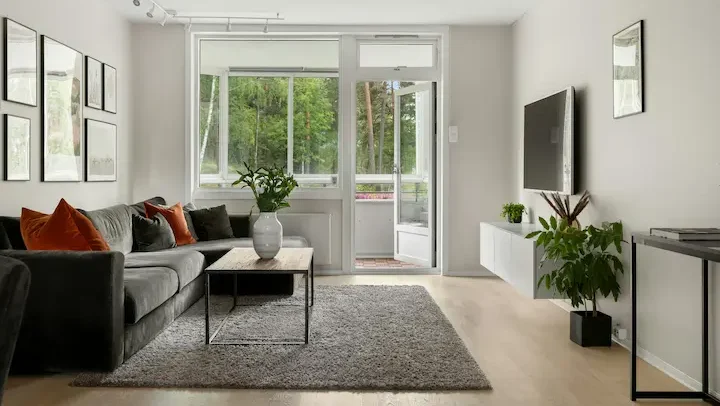
Scandinavian minimalism remains the most popular style for small spaces in 2026. This design maximizes natural light through floor-to-ceiling glass doors leading to outdoor areas.
The gray L-shaped sectional provides ample seating without overwhelming the space. Furthermore, the white walls reflect light throughout, making the room feel airy and open.
Scandinavian Minimalist Essentials:
- White or light gray walls: Maximize light reflection
- Natural wood floors: Add warmth to cool palettes
- Simple furniture: Clean lines with no ornate details
- Indoor plants: Bring life without visual clutter
- Minimal window treatments: Let natural light flood in
This style works exceptionally well in UK and European homes where natural light can be limited. Consequently, maximizing every ray of sunshine becomes crucial for maintaining bright, welcoming spaces.
The black-framed artwork adds necessary contrast without overwhelming the serene palette. Additionally, the low media console keeps technology accessible yet unobtrusive.
According to the Scandinavian Design Council, homes incorporating these principles report 40% higher satisfaction with their living spaces compared to traditional designs.
Color Palette Guide:
- Primary: White (walls, ceiling)
- Secondary: Light gray (sofa, textiles)
- Accent: Natural wood tones
- Contrast: Black (frames, accents)
- Nature: Green plants for freshness
Lighting Strategy:
- Maximize natural light – remove heavy curtains
- Use sheer white curtains only for privacy
- Add recessed ceiling lights for evening
- Include one statement pendant if desired
- Avoid floor lamps – they create visual clutter
How to Choose the Right Minimalist Style for Your Home
Selecting the appropriate minimalist style depends on several factors. Consequently, understanding your lifestyle needs ensures long-term satisfaction with your design choices.
Consider These Factors:
- Climate: Coastal styles suit humid areas; Scandinavian works in cold climates
- Home architecture: Match style to existing architectural features
- Lifestyle: Families need durable materials; singles can choose delicate
- Budget: Some styles require premium materials; others work on any budget
- Personal taste: Choose styles that genuinely resonate with you
Lifestyle Assessment Questions:
- Do you have children or pets? (Affects material durability needs)
- Do you entertain frequently? (Impacts furniture configuration)
- Do you work from home? (Requires dedicated functional spaces)
- What’s your cleaning tolerance? (Determines maintenance requirements)
- Do you prefer warm or cool aesthetics? (Guides color palette selection)
Essential Minimalist Living Room Furniture Pieces
Minimalist spaces require careful furniture curation. Therefore, each piece must justify its presence through function or beauty.
Must-Have Furniture:
- Sofa or sectional: Primary seating, invest in quality
- Coffee table: Functional surface, sculptural potential
- Media console: Hidden storage for electronics
- Accent chair (optional): Additional seating without bulk
- Area rug: Defines space, adds acoustic dampening
Nice-to-Have Furniture:
- Side tables (choose multifunctional designs)
- Floor lamp (only if ceiling lights insufficient)
- Ottoman or pouf (serves as seating or footrest)
- Bookshelf (only if you actually read physical books)
Furniture to Avoid in Minimalist Spaces:
✗ Multiple small tables cluttering the room ✗ Oversized entertainment centers (use simple consoles) ✗ Heavy recliners with visible mechanisms ✗ Fussy accent chairs with excessive detail ✗ Matching furniture sets (too coordinated, not curated)
Color Palettes That Work in Minimalist Spaces
Color selection dramatically impacts minimalist room success. Moreover, the right palette can make small spaces feel larger and dark rooms brighter.
Foolproof Minimalist Palettes:
1. Monochromatic Cream:
- Base: Warm white walls
- Furniture: Cream, beige, tan
- Accents: Deeper brown, black
- Works for: Traditional minimalism
2. Scandinavian Cool:
- Base: Cool white walls
- Furniture: Light gray, white
- Accents: Black, natural wood
- Works for: Modern minimalism
3. Warm Neutral:
- Base: Greige walls
- Furniture: Taupe, warm gray
- Accents: Rust, terracotta
- Works for: Organic modern
4. Industrial Monochrome:
- Base: Gray walls
- Furniture: Black, charcoal, cognac
- Accents: Steel, concrete
- Works for: Urban lofts
Color Psychology for Room Function:
| Color | Psychological Effect | Best For | Avoid In |
|---|---|---|---|
| White | Clean, spacious, calm | Small spaces, Scandinavian | North-facing rooms (too cold) |
| Gray | Sophisticated, neutral | Contemporary, industrial | Windowless spaces |
| Beige | Warm, comfortable | Traditional, transitional | Ultra-modern designs |
Budget Breakdown: Minimalist Living Room Costs
Understanding cost expectations helps realistic planning. Additionally, knowing where to invest versus save ensures optimal results.
Budget Tier Breakdowns:
Budget-Friendly ($3,000-$7,000):
- IKEA or Wayfair furniture
- DIY wall treatments
- Budget lighting from Amazon
- Peel-and-stick wallpaper accents
- Flat-pack furniture assembly
Mid-Range ($7,000-$15,000):
- West Elm or Article furniture
- Professional paint and minor repairs
- Quality lighting fixtures
- Professional rug and textiles
- Mix of DIY and professional installation
High-End ($15,000-$40,000+):
- Custom or designer furniture
- Architectural modifications
- Designer lighting and fixtures
- Professional installation throughout
- Smart home integration
Where to Invest vs. Save:
Invest More:
- Sofa (used daily, visible, comfort matters)
- Coffee table (central focal point)
- Lighting (impacts entire room atmosphere)
- Window treatments (visible from exterior)
- Area rug (foundation of room)
Save Money:
- Accent pillows (change frequently)
- Throws and blankets (trend pieces)
- Decorative accessories (minimal anyway)
- Side tables (less visible, simple designs)
- Wall art (DIY or affordable prints)
Common Minimalist Design Mistakes to Avoid
Even experienced designers make mistakes with minimalism. Therefore, learning common pitfalls saves time and money.
Top 10 Mistakes:
- Too stark: All-white with no warmth or texture
- Fix: Add natural wood and textured textiles
- Uncomfortable furniture: Prioritizing looks over comfort
- Fix: Test furniture extensively before buying
- Poor lighting: Single overhead light only
- Fix: Layer with task, ambient, and accent lighting
- Wrong scale: Furniture too small for room size
- Fix: Choose substantial pieces, not dinky
- No personality: Following rules too literally
- Fix: Include 2-3 meaningful personal items
- Insufficient storage: Clutter has nowhere to go
- Fix: Invest in hidden storage solutions
- Cold atmosphere: No textiles or soft elements
- Fix: Add throws, pillows, area rugs
- Neglecting acoustics: Hard surfaces create echo
- Fix: Include soft furnishings for sound absorption
- Ignoring room function: Style over practicality
- Fix: Design for how you actually live
- Trend-chasing: Copying Instagram without considering fit
- Fix: Adapt trends to your specific space and needs
Red Flags in Minimalist Design:
✗ Feeling uncomfortable in your own space ✗ Constantly rearranging because something feels off ✗ Visitors commenting room feels “cold” or “empty” ✗ Difficulty keeping space organized ✗ Furniture doesn’t accommodate daily activities
FREQUENTLY ASKED QUESTIONS
Q: What is minimalist living room design?
Minimalist living room design emphasizes simplicity, functionality, and intentional space planning. It features clean lines, neutral color palettes, and carefully curated furniture pieces. The philosophy focuses on “less is more,” eliminating visual clutter while maintaining comfort and style. Modern minimalism has evolved beyond stark white spaces to include warm textures and organic materials.
Q: How much does a minimalist living room cost?
A minimalist living room typically costs $3,000-$40,000 depending on quality level and space size. Budget-friendly minimalist makeovers using IKEA furniture range $3,000-$7,000. Mid-range projects with quality brands like West Elm cost $7,000-$15,000. High-end minimalist rooms featuring custom furniture and architectural modifications exceed $15,000. Fortunately, minimalism’s focus on fewer pieces often costs less than traditional fully-furnished rooms.
Q: What colors work best for minimalist spaces?
The best colors for minimalist spaces include warm whites, soft grays, beige, cream, and taupe as base colors. These neutrals create calm foundations that make rooms feel larger. Add depth through darker accent tones like charcoal, black, or deep brown. Natural wood tones prevent sterility while maintaining simplicity. Avoid bright colors or busy patterns that disrupt visual tranquility.
Q: Can minimalist design work in small apartments?
Minimalist design actually works perfectly in small apartments because it maximizes perceived space. The style eliminates visual clutter that makes small rooms feel cramped. Light colors reflect more light, making spaces feel airier. Multifunctional furniture serves multiple purposes without taking extra room. Strategic furniture placement and hidden storage maintain organization. Scandinavian minimalism specifically evolved for small European apartments.
Q: How do I keep a minimalist living room from looking cold?
Prevent cold minimalist rooms by incorporating warm elements throughout. Add natural wood furniture or flooring for instant warmth. Layer textured textiles like bouclé, linen, and wool for softness. Choose warm-based white paint instead of stark pure white. Include plants for life and color. Use warm lighting (2700-3000K) rather than cool daylight bulbs. Organic modern and Japandi styles specifically address this concern.
Q: What furniture is essential for minimalist living rooms?
Essential minimalist living room furniture includes a quality sofa or sectional, functional coffee table, media console with hidden storage, and area rug for definition. Additionally, one accent chair provides flexible seating without overwhelming space. Avoid unnecessary pieces like multiple side tables, oversized entertainment centers, or purely decorative furniture. Each piece should serve clear purpose through function or visual impact. Investment in fewer high-quality pieces outlasts buying multiple budget items.
FINAL THOUGHTS: Creating Your Minimalist Living Room
Minimalist living room design offers timeless elegance that adapts to changing lifestyles. Moreover, the principles remain constant even as specific trends evolve.
The 20 examples showcased demonstrate minimalism’s incredible versatility. From Japanese Zen to industrial lofts, Mediterranean coastal to Scandinavian warmth—minimalism accommodates diverse aesthetics successfully.
Remember that authentic minimalism isn’t about deprivation or following rigid rules. Instead, it’s about creating intentional spaces that support your daily life. Consequently, your minimalist living room should feel like a sanctuary, not a showroom.
Start Your Minimalist Journey:
- Assess what you truly need versus what you own
- Choose a style that resonates with your personality
- Invest in quality pieces that will last decades
- Eliminate items that don’t serve function or bring joy
- Maintain your space through regular decluttering
The minimalist movement continues growing because it addresses modern life’s complexity through simplicity. Furthermore, research consistently shows that organized, uncluttered spaces improve mental health and productivity.
Whether you’re working with a $3,000 budget or $40,000, minimalist principles apply equally. The key lies not in expensive purchases but in thoughtful curation and intentional design decisions.
About the Author:
M.Yazdaan serves as Home Decor Editor with over 7 years of experience in residential interior styling. He specializes in renovation trends, material selection, and creating beautiful living spaces across various design styles. His work has helped thousands of homeowners transform their living rooms into functional, stylish sanctuaries.
For more home design inspiration and expert tips, visit our editorial team’s About Us page.
Recent Posts
Best Outdoor Coffee Tables for Every Space — From Patio to Balcony
10 Stunning Bedroom Ideas That Will Transform Your Space in 2026