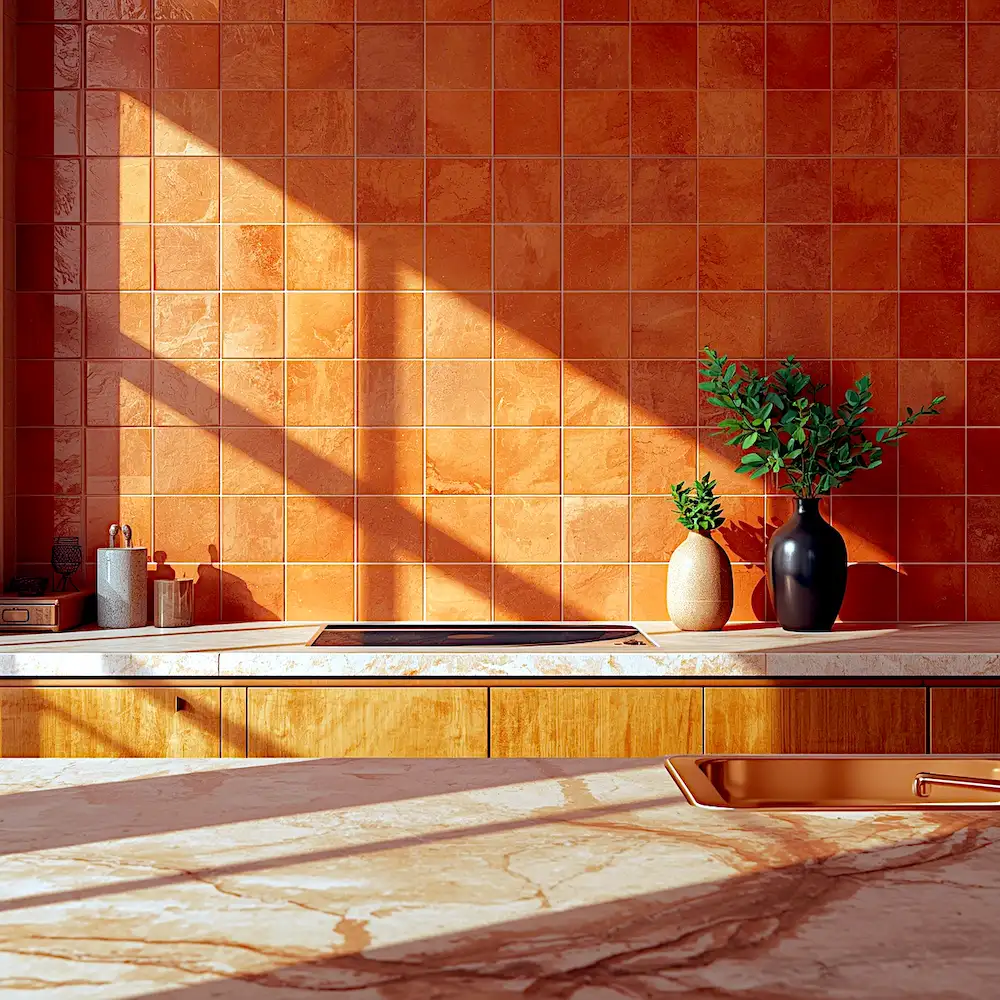
Small Kitchen Remodel Ideas: 15 Expert Design Strategies for 2026
Written by: M. Yazdaan, Home Decor Editor (7+ years experience)
Fact-Checked by: Emma Cartel, Research & Editorial Standards Coordinator (8+ years)
Last Updated: February 2026
Transforming a cramped kitchen into a functional, beautiful space doesn’t require knocking down walls or spending a fortune. Whether you’re working with 50 square feet or 150, the right small kitchen remodel ideas can completely change how your space looks and performs.
In this comprehensive guide, you’ll discover 15 proven small kitchen remodel strategies backed by 2026 design trends, real transformations, and expert insights. From budget-friendly cabinet makeovers to smart storage solutions, we’re covering everything you need to create your dream kitchen within your existing footprint.
What you’ll learn:
- Real before-and-after kitchen transformation with cost breakdown
- 10 distinctive design styles (white & bright, bold colors, wood tones, minimalist, and more)
- 2026’s hottest trends (butler’s pantries, aging-in-place features, fluted cabinets)
- 4 proven layout strategies for different space sizes
- Complete budget breakdown ($3K to $60K+)
- Storage and organization systems that actually work
- Professional timeline and process breakdown
Let’s dive in.
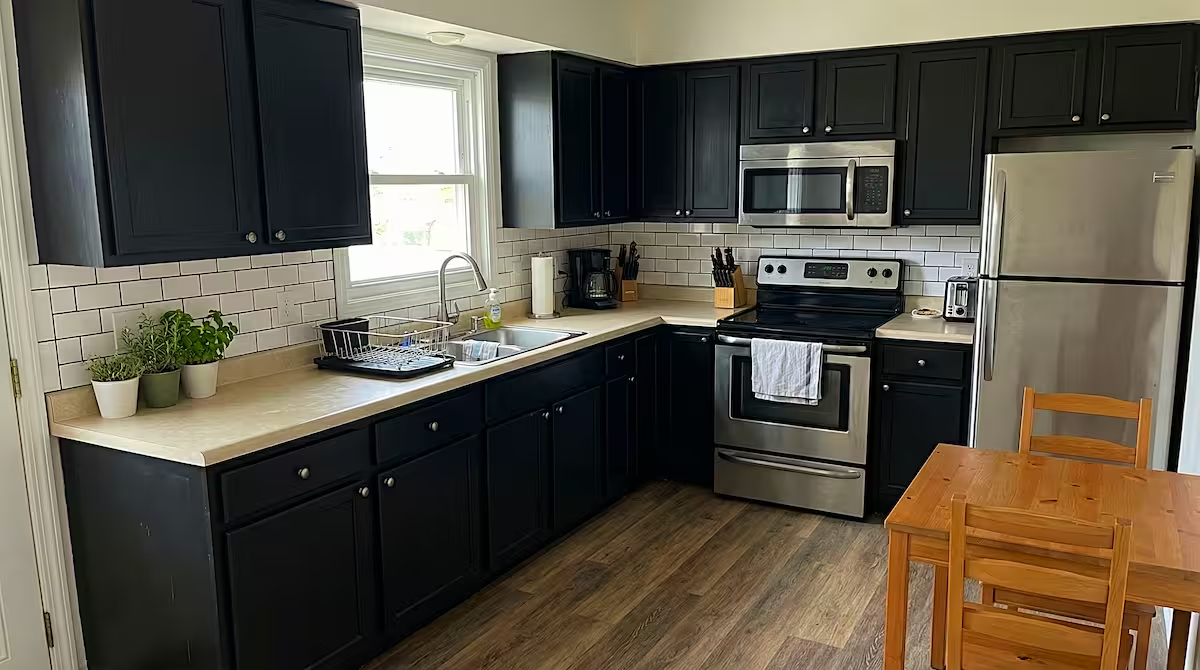
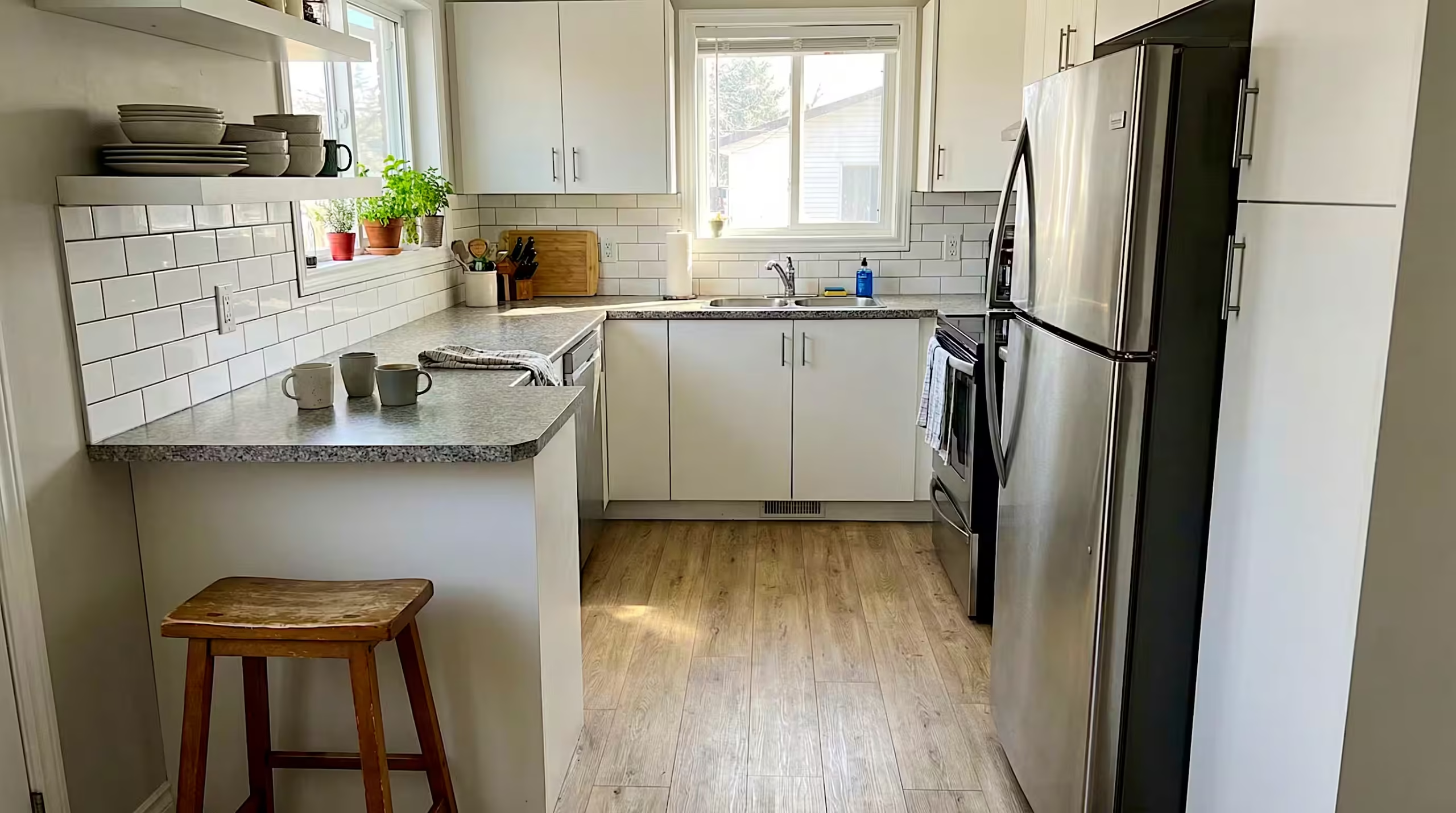
Real Small Kitchen Remodel: Before and After Transformation
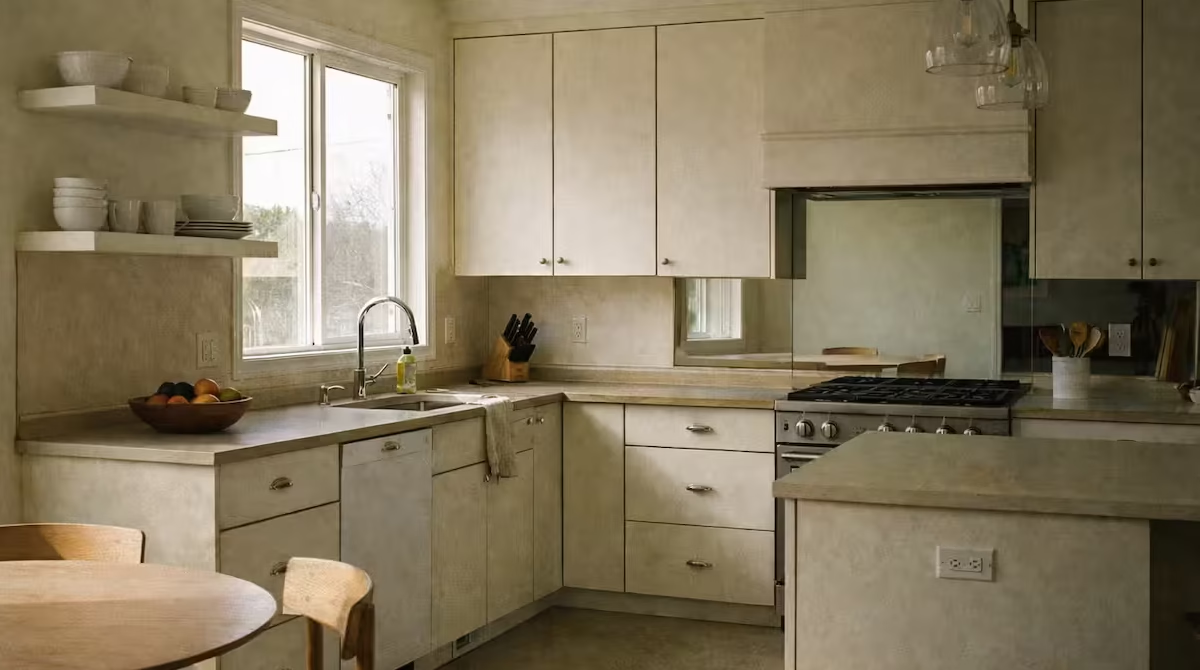
Before
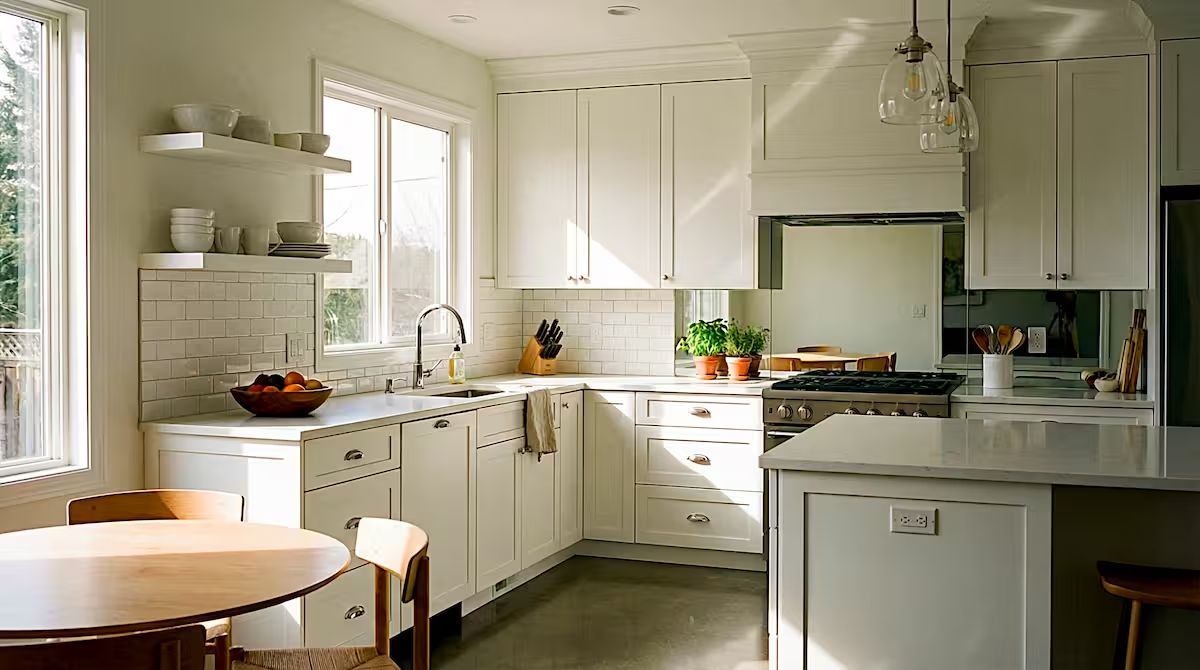
After
Nothing inspires like seeing actual results. Consequently, this L-shaped kitchen transformation proves you don’t need to change your layout to achieve dramatic impact.
What Changed in This Small Kitchen Renovation
Before: The original kitchen featured warm beige cabinets, basic cup-pull hardware, and a dated aesthetic that made the space feel smaller and darker than necessary.
After: The same footprint kitchen remodel introduced crisp white shaker cabinets, updated hardware, improved lighting, and cleaner styling on open shelves. Moreover, the transformation maintained the exact same layout while completely modernizing the look.
Key updates included:
- Cabinet refinishing from beige to white
- Modern hardware replacement
- Enhanced lighting fixtures
- Decluttered open shelving
- Fresh wall color
This simple small kitchen remodel cost approximately $8,000-$12,000. Therefore, it proves that affordable small kitchen remodels can deliver stunning results. Instead of replacing cabinets entirely (which would cost $15,000-$25,000), refinishing or painting existing cabinetry saved nearly 60% while achieving a fresh, contemporary look.
Takeaway: Same footprint, same appliances, transformative impact. This is the power of strategic updates over complete demolition.
10+ Small Kitchen Remodel Ideas by Style and Function
Let’s explore design ideas that work specifically for compact spaces. Furthermore, each concept addresses common small kitchen challenges while incorporating 2026’s latest trends.
Embrace Bold Cabinet Colors (2026 Trend)
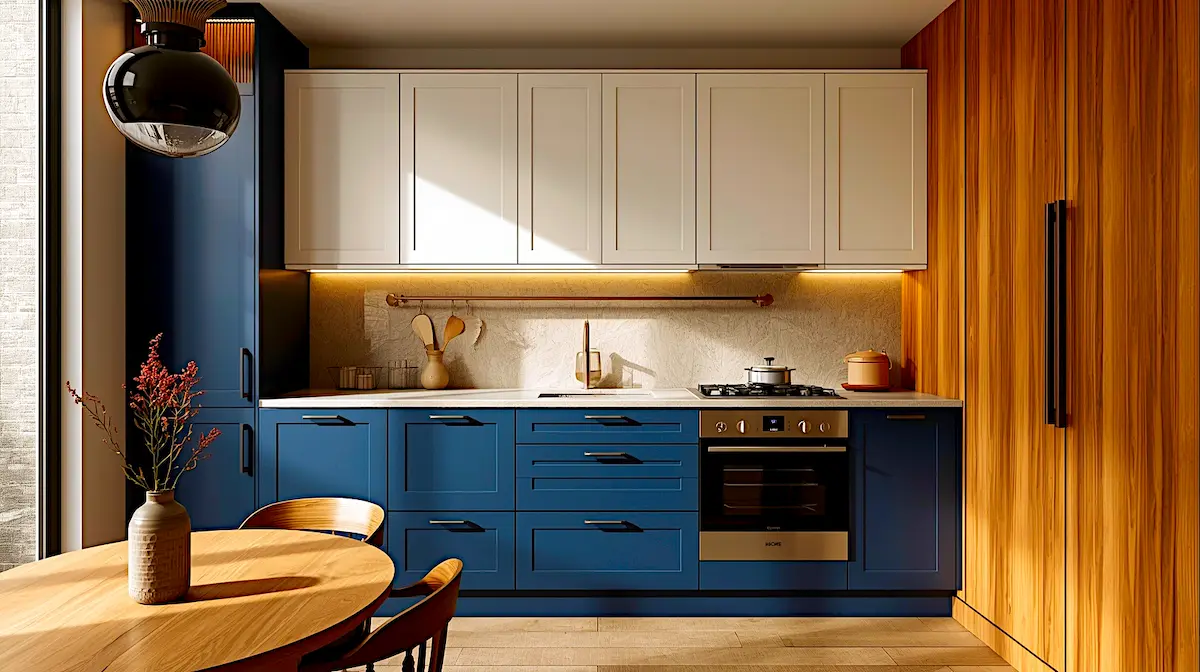
Bold cabinet colors are transforming small kitchen design in 2026. Consequently, deep blues, rich greens, and sophisticated charcoals create dramatic focal points without overwhelming compact spaces.
Trending cabinet colors for 2026:
- Navy blue (shown above) – Classic maritime sophistication
- Sage green – Calming, nature-inspired earth tone
- Charcoal gray – Modern alternative to black
- Olive green – Warm, organic, unexpected
- Deep teal – Jewel-tone luxury
Two-tone strategy: Notice how this kitchen pairs navy lower cabinets with warm wood uppers. Therefore, this contemporary small kitchen idea grounds the space while maintaining airiness above eye level.
Design principle: Use darker colors on lower cabinets and lighter tones on uppers. As a result, you prevent top-heavy visual weight in small kitchens.
Bring Warmth with Natural Wood Cabinets
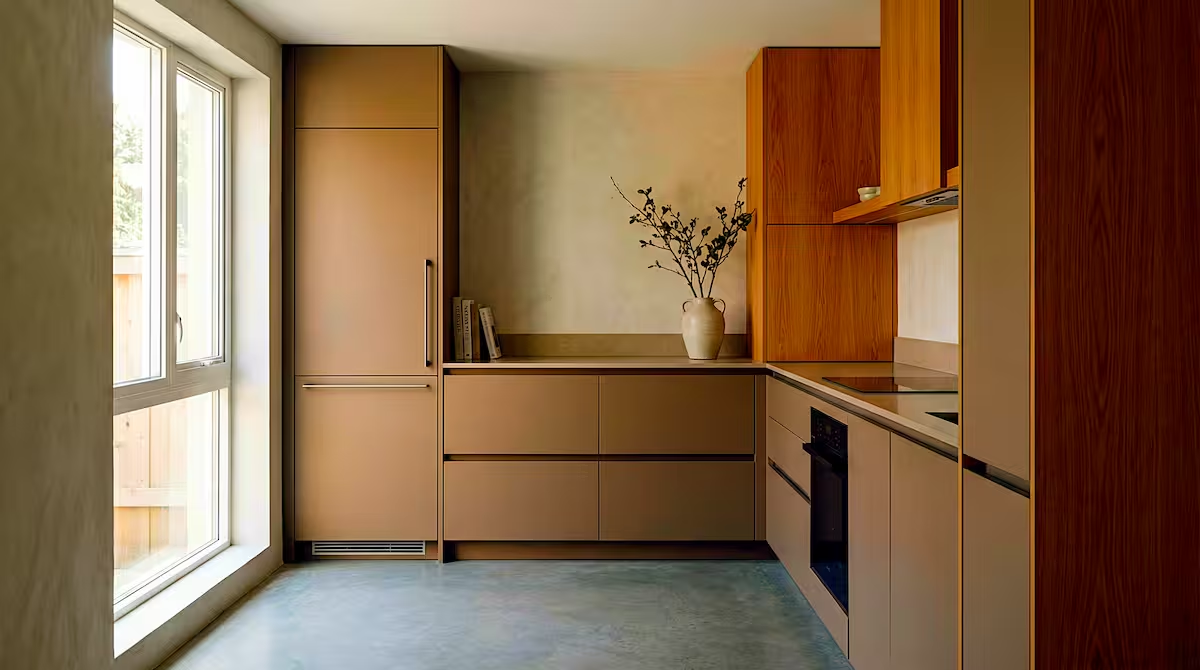
Here’s a 2026 game-changer: natural wood cabinets have officially overtaken white as the most popular choice. According to Houzz’s 2026 Kitchen Trends Report, wood now leads at 29% versus white at 28%. This marks the first time wood has led in over a decade.
Why wood works now:
- White oak kitchen cabinets in small kitchens add warmth without darkness
- Light wood tones (maple, ash, birch) reflect light similarly to white
- Natural grain provides visual interest without busy patterns
- Walnut and darker woods work as accent elements
Styling natural wood small kitchen remodels:
- Pair light wood with white countertops for contrast
- Use vertical grain patterns to add height perception
- Combine wood cabinets with open shelving for breathing room
- Add brass or black hardware for definition
This approach creates luxury small kitchen remodels that feel organic, warm, and distinctly current. Moreover, it aligns with the broader movement toward biophilic design principles.
Optimize the Galley Kitchen Layout
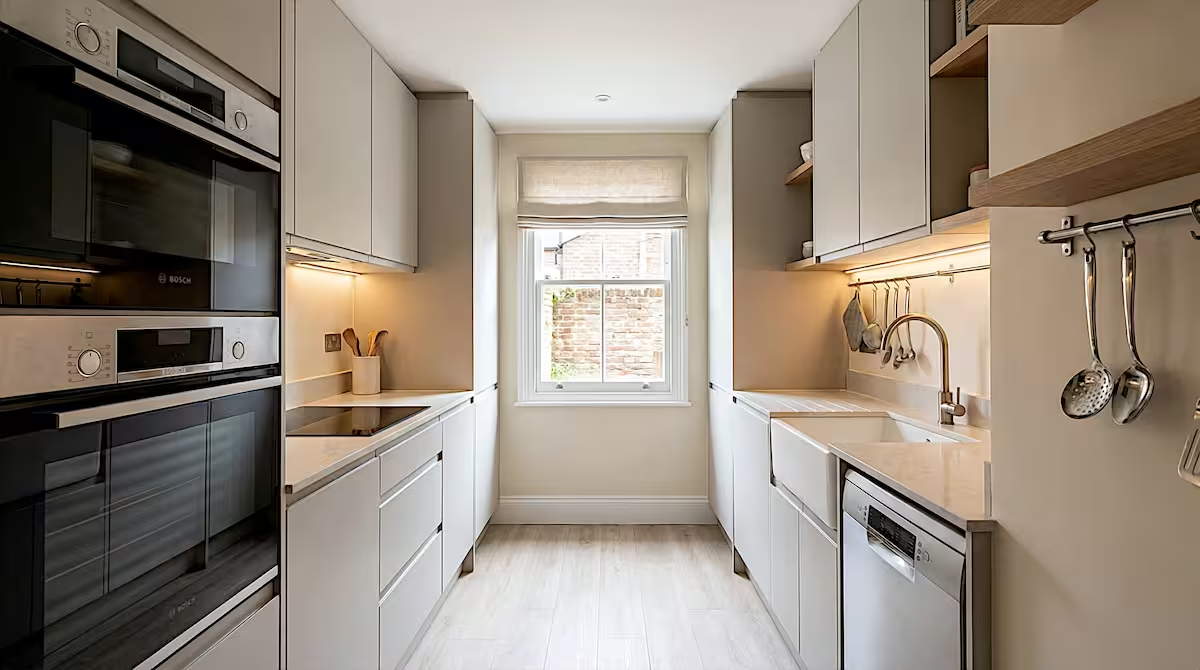
Small galley kitchen remodel ideas focus on efficiency. The galley layout (two parallel counters with a walkway between) is the most space-efficient kitchen configuration. Consequently, it maximizes workflow in minimal square footage.
Galley kitchen success strategies:
- Maintain 42-48″ walkway between cabinets
- Place sink and stove on opposite walls for work triangle
- Use light colors on both sides to prevent tunnel effect
- Install under-cabinet lighting to brighten work surfaces
- Consider removing upper cabinets on one side for openness
Pro tip: If your galley kitchen has a window at one end, make it a focal point. Therefore, position your sink there to frame outdoor views during daily tasks.
Maximize Vertical Storage from Floor to Ceiling
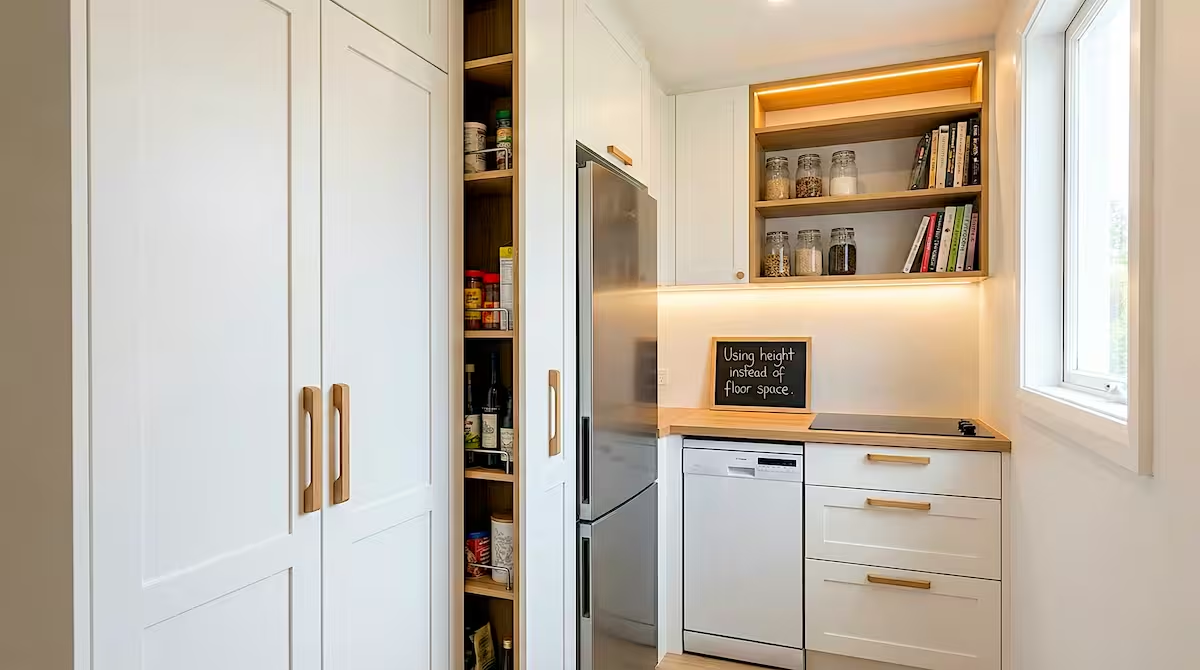
Vertical kitchen storage ideas are critical in small spaces where floor area is limited. Furthermore, this compact kitchen demonstrates how floor-to-ceiling storage maximizes every available inch.
Notice these smart vertical storage solutions:
- Open shelving on left wall reaches full ceiling height
- Lower cabinets provide concealed storage
- Wall-mounted design eliminates bulky furniture
- Minimal footprint keeps walkways clear
Vertical storage strategies:
- Install cabinets to ceiling (not standard 36″ height)
- Use that top 18″ for rarely-used items
- Add pull-down shelves for accessibility
- Stack floating shelves in unused wall areas
- Mount pot racks, magnetic knife strips, utensil bars
According to the American Institute of Architects, space-saving kitchen ideas focusing on vertical storage increased 47% in 2025 remodels. This reflects homeowners’ desire to maximize existing footprints rather than expand.
Small kitchen organization ideas: Group items by frequency daily items at eye level, weekly items on top shelves, rarely-used items in highest cabinets.
Create Efficient Compact Work Zones
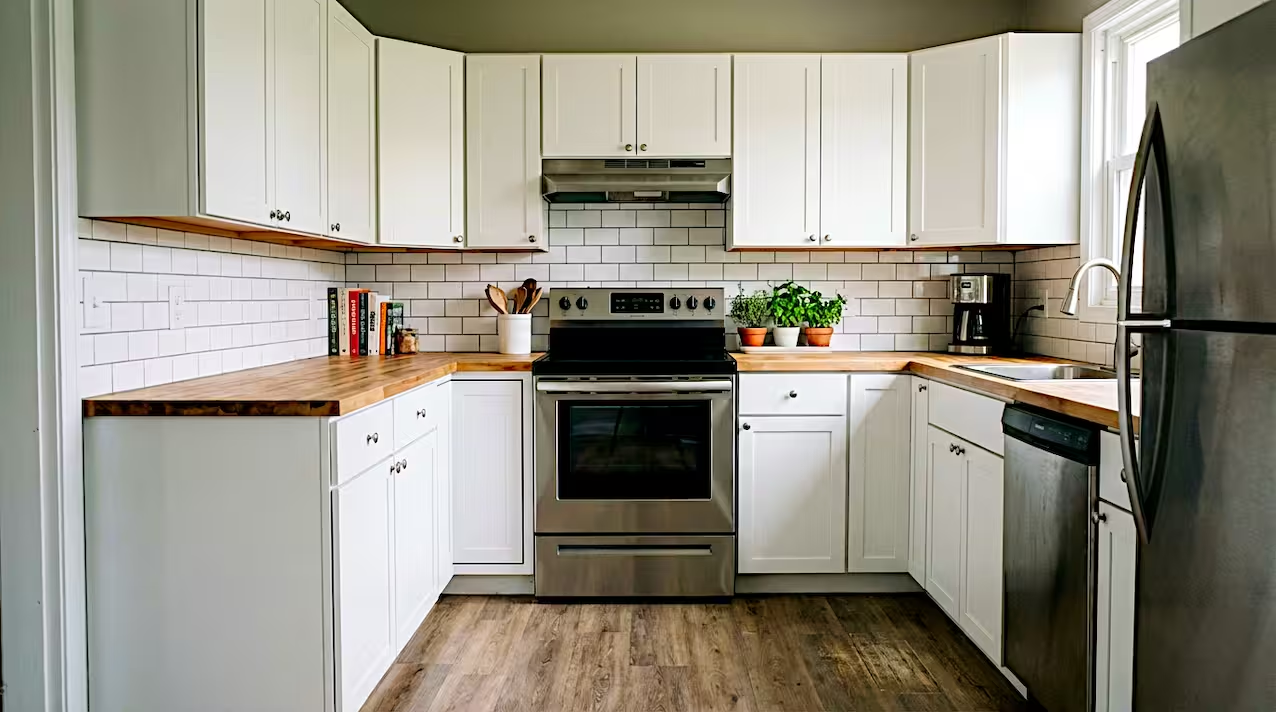
The kitchen work triangle (sink, stove, refrigerator) becomes even more critical in compact kitchens. Meanwhile, this U-shaped layout demonstrates perfect small kitchen layout ideas with everything within arm’s reach.
Work triangle principles for small spaces:
- Keep total triangle perimeter under 26 feet
- Maintain 4-9 feet between each point
- Avoid traffic paths cutting through triangle
- Place refrigerator at one end (not in middle)
Compact kitchen design benefits:
- Reduced steps during meal preparation
- Multiple work surfaces for food prep
- Natural workflow from storage → prep → cooking → cleanup
Layout options by space:
| Square Footage | Recommended Layout | Best For |
|---|---|---|
| 50-80 sq ft | Single wall or galley | Studios, micro-apartments |
| 80-120 sq ft | L-shaped or galley | Standard apartments, condos |
| 120-150 sq ft | U-shaped or L-shaped with island | Larger apartments, townhomes |
Integrate Appliances Seamlessly
Modern small kitchen remodels hide appliances behind matching cabinet panels. Alternatively, they integrate appliances into cabinetry for a streamlined aesthetic. This contemporary approach makes kitchens feel less cluttered and more sophisticated.
Smart appliance integration strategies:
Refrigerators:
- Counter-depth models save 6-8 inches
- Panel-ready designs blend with cabinetry
- Bottom-freezer models put fresh food at eye level
Microwaves:
- Built-in drawer microwaves save counter space
- Under-counter placement keeps counters clear
- Avoid over-the-range placement (dated, inefficient)
Dishwashers:
- Panel-matched doors create cohesive look
- Drawer dishwashers work in tight spaces
- 18″ models fit where standard 24″ won’t
Small appliance storage:
- Create appliance garages with tambour doors
- Use lift-up cabinet shelves for stand mixers
- Dedicate lower cabinet pull-outs for small appliances
Design a Minimalist Small Kitchen
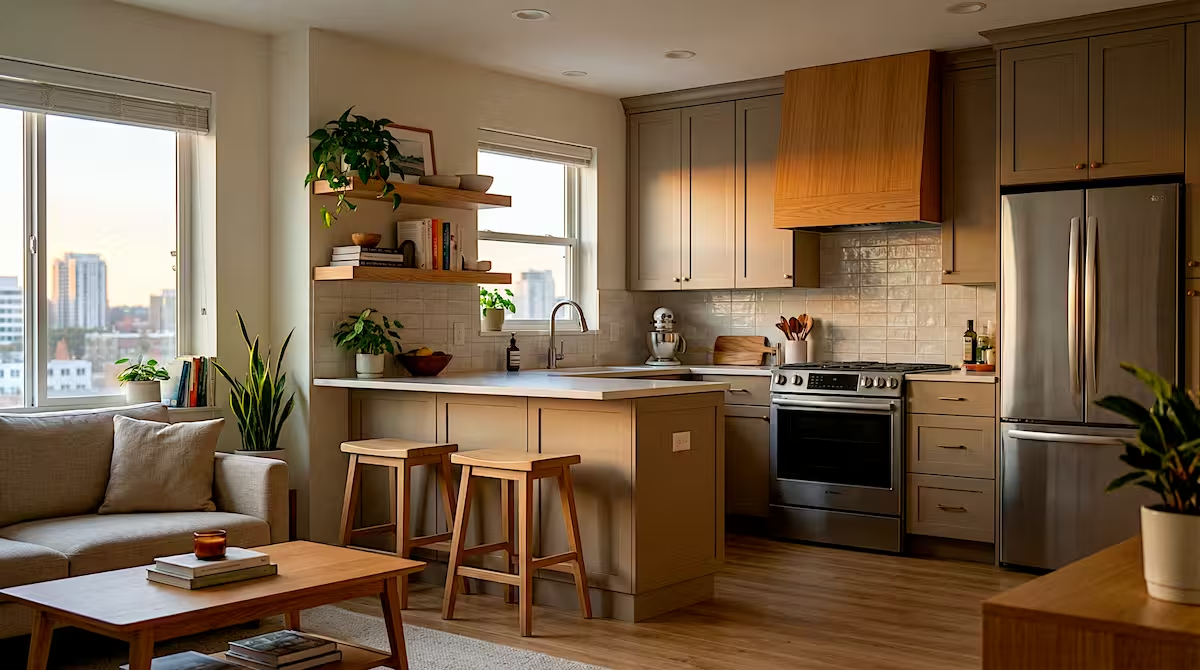
Minimalist kitchen remodels excel in small apartments where every element must earn its place. Therefore, this small apartment kitchen remodel demonstrates how restraint creates breathing room.
Minimalist design principles:
- Limit color palette to 2-3 shades
- Choose handleless cabinets or minimal hardware
- Hide small appliances in cabinets
- Use open shelving sparingly and intentionally
- Select integrated appliances over freestanding
Why minimalism works in tiny spaces:
- Reduces visual clutter that makes spaces feel cramped
- Creates calm, uncluttered cooking environment
- Makes cleaning and maintenance easier
- Highlights quality over quantity
Simple small kitchen remodel approach:
Remove what you don’t need before adding new elements. Often, subtraction is the most powerful design move.
Add Character with Open Shelving
Open shelving instead of upper cabinets is one of the most debated small kitchen storage ideas. Nevertheless, when done right, it provides accessible storage while making rooms feel larger. When done wrong, it creates visual chaos.
Open shelving success rules:
- Use on only one wall (not entire kitchen)
- Style with cohesive, curated items
- Group by color, material, or function
- Display only what you use regularly
- Keep dust-prone items in closed cabinets
Practical benefits:
- Costs 60-70% less than cabinets
- Creates illusion of more space
- Provides easy access to daily dishes
- Showcases beautiful servingware
Balance open and closed:
This kitchen pairs open shelving with closed lower cabinets. Consequently, it provides the best of both approaches display where it matters, concealment where needed.
Transform with Budget-Friendly Cabinet Painting
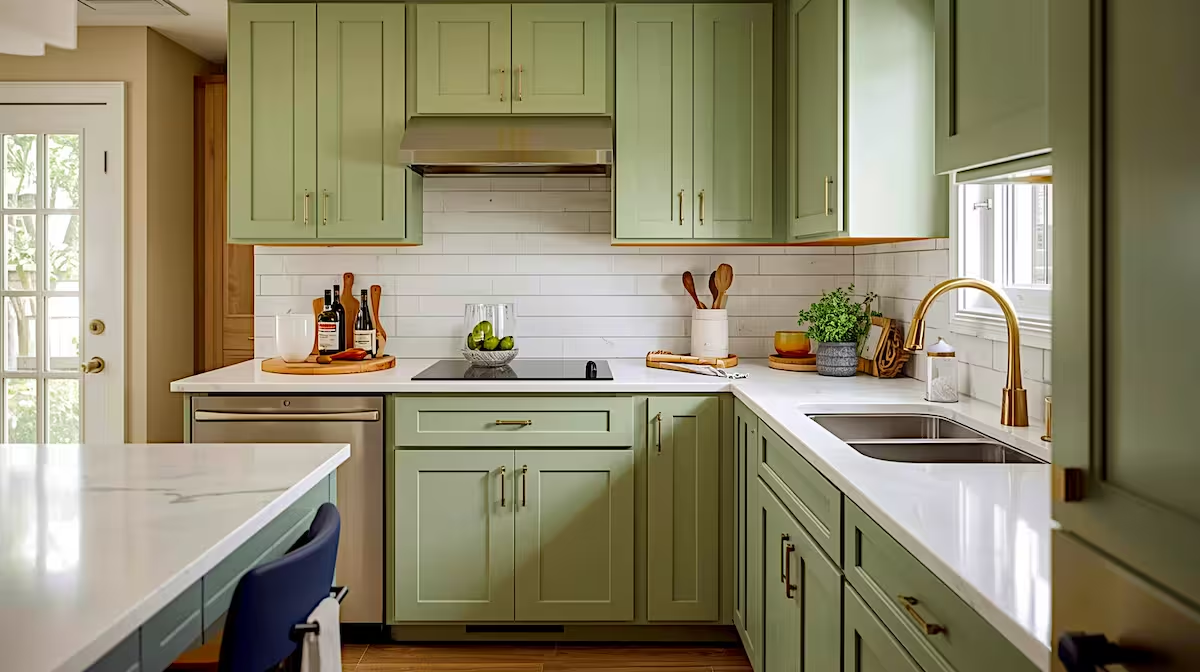
Cabinet painting is the #1 affordable small kitchen remodel strategy. Moreover, it costs $3,000-$8,000 versus $15,000-$30,000 for replacement. This sage green transformation demonstrates how paint completely changes a kitchen’s personality.
Trending paint colors for small kitchens 2026:
- Sage green (shown) – Calming, earthy, timeless
- Eucalyptus green – Softer alternative to sage
- Warm white – Modern neutral replacing stark white
- Greige – Gray-beige hybrid for warmth
- Soft black – Charcoal alternative with less intensity
DIY cabinet painting process:
- Remove doors and hardware
- Clean with degreaser (TSP)
- Sand lightly (120-220 grit)
- Prime with bonding primer
- Apply 2-3 coats paint (cabinet-grade)
- Seal with protective topcoat
- Replace with updated hardware
Cost comparison:
| Update Type | Cost Range | Time Investment | DIY Potential |
|---|---|---|---|
| DIY paint | $200-$500 | 3-5 days | High |
| Professional paint | $3,000-$8,000 | 1-2 weeks | Low |
| Cabinet refacing | $8,000-$15,000 | 2-3 weeks | Low |
| New cabinets | $15,000-$30,000 | 4-6 weeks | Very Low |
ROI perspective: Cabinet painting offers 100%+ return on investment for resale. Therefore, it’s one of the smartest small kitchen upgrade ideas you can implement.
The Butler's Pantry Revolution for Small Kitchens (2026 Trend)
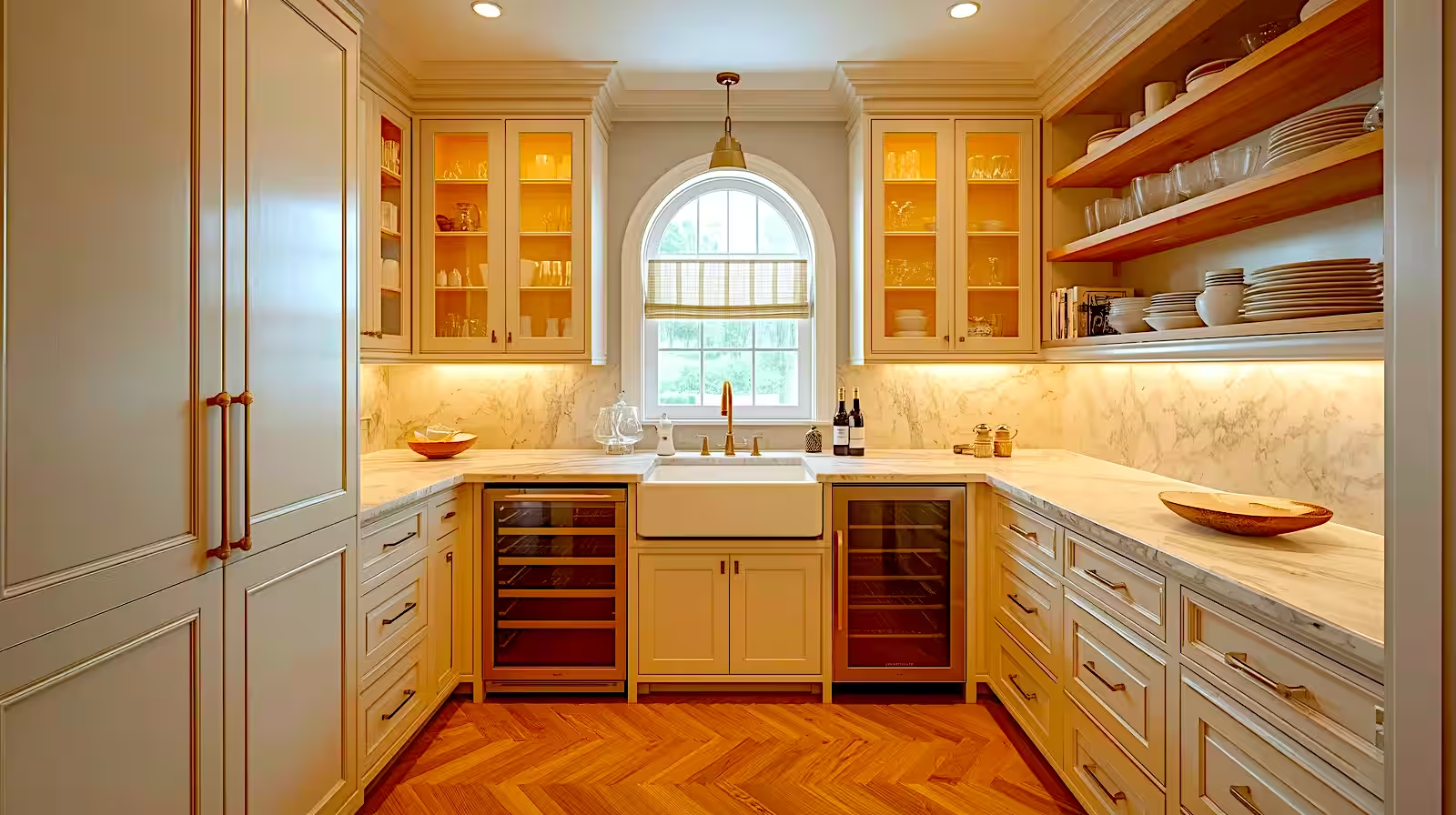
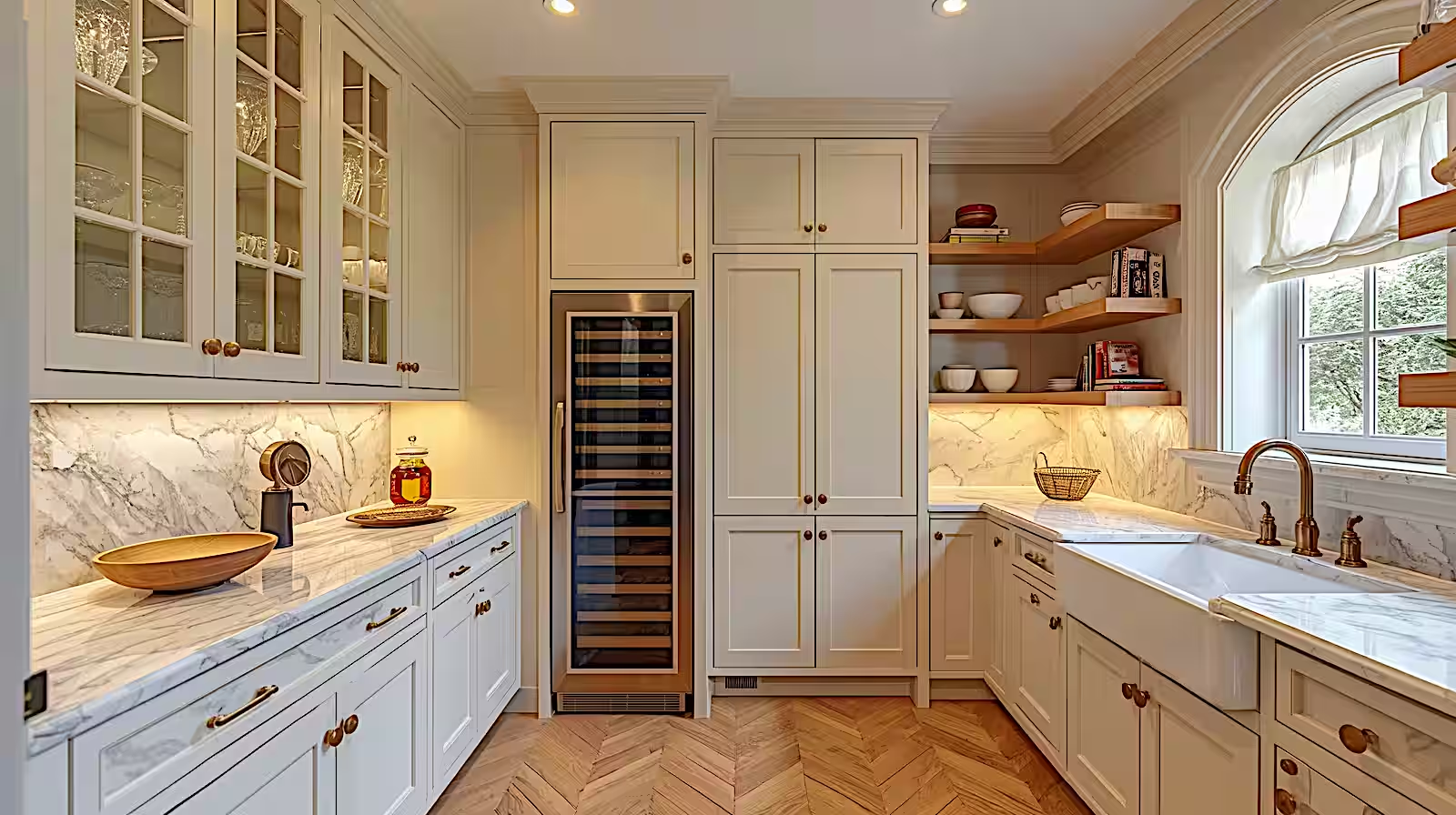
Butler’s pantries—once exclusive to luxury homes are being reimagined for small spaces. The American Institute of Architects reports a 52% increase in butler’s pantry requests. Consequently, homeowners are creating “layered kitchens” that separate prep work from presentation.
What Is a Butler’s Pantry in a Small Kitchen?
A butler’s pantry for small kitchens is a compact prep zone, beverage station, or scullery. Furthermore, it handles messy tasks away from the main kitchen. Think of it as a “kitchen within a kitchen.”
Micro butler’s pantry ideas:
- Coffee bar nook: 2-3 feet of counter with coffee maker, mugs, supplies
- Beverage station: Mini fridge, wine storage, glassware
- Prep kitchen: Secondary sink, cutting board, small appliances
- Baking station: Mixer, baking supplies, measuring tools
Where to create one:
- Convert unused closet adjacent to kitchen
- Repurpose section of hallway with pocket door
- Use end of galley kitchen
- Transform peninsula into hidden workspace
Small kitchen with butler’s pantry benefits:
- Keep messy prep work concealed during entertaining
- Store small appliances out of sight
- Create dedicated coffee/tea station
- Add specialized work zones without expanding kitchen
Aging in Place: Future-Proof Your Small Kitchen (31% Growth Trend)
Aging-in-place small kitchen remodels increased 31% year-over-year according to Houzz’s 2026 trend data. This reflects homeowners’ desire to stay in their homes longer. Meanwhile, accessible small kitchen design incorporates universal design principles that work for all ages and abilities.
Universal Design Features for Small Kitchens
Cabinet modifications:
- Replace lower cabinet doors with pull-out drawers (easier access)
- Install D-shaped pulls instead of knobs (arthritis-friendly)
- Add pull-down shelving for upper cabinets
- Use soft-close mechanisms to prevent slamming
Counter and sink adaptations:
- Lower one section of counter to 32″ for seated work
- Install single-lever faucets (one-hand operation)
- Choose undermount sinks (easier wheelchair access)
- Add electrical outlets at counter height
Flooring and safety:
- Use non-slip flooring materials
- Ensure 36-42″ clear walkways
- Eliminate thresholds and transitions
- Install under-cabinet lighting for visibility
Appliance considerations:
- Side-by-side refrigerators (easier reach)
- Wall ovens at comfortable height
- Drawer dishwashers (no bending)
- Touch-control cooktops
These senior-friendly small kitchen features add minimal cost during renovation. Nevertheless, they provide decades of usability. Moreover, wheelchair-accessible small kitchen design increases home resale value and buyer pool.
Small Kitchen Storage and Organization Ideas That Actually Work
Storage makes or breaks small kitchens. Therefore, let’s explore practical small kitchen organization ideas beyond generic “use baskets” advice.
Drawer Organization Systems
Drawers outperform cabinets in small kitchens by providing:
- 100% visible contents (no lost items in back)
- Easy access without bending or reaching
- Customizable organization
- Better weight distribution
Strategic drawer placement:
- Deep drawers: Pots, pans, large bowls
- Medium drawers: Utensils, gadgets, serving pieces
- Shallow drawers: Cutlery, spices, wraps
Organization systems:
- Bamboo expandable dividers
- Pegboard drawer inserts (customizable)
- Vertical plate holders
- Spice drawer inserts with angled visibility
Corner Cabinet Solutions
Corner cabinets waste 30-50% of available space in standard configurations. However, you can fix this with:
Lazy Susan options:
- Full-circle lazy Susan for deep corners
- Kidney-shaped for better access
- Two-tier for vertical space
Pull-out systems:
- Magic corner pull-outs (two-tier sliding)
- Blind corner organizers with swing-out shelves
- Diagonal drawers that maximize corner depth
Cost analysis:
- Basic lazy Susan: $80-$150
- Pull-out system: $200-$400
- Custom diagonal drawers: $500-$800
ROI: Corner solutions recover 60-80% of previously wasted space. Therefore, this is equivalent to adding an entire cabinet of storage.
Vertical Wall Storage
Walls are your most underutilized resource. Consequently, maximize them with:
Magnetic solutions:
- Magnetic knife strips (saves drawer space)
- Magnetic spice tins on metal backsplash
- Magnetic utensil bars
Mounted systems:
- Pot racks (ceiling or wall-mounted)
- Pegboard with hooks (customizable)
- Rail systems with S-hooks
- Floating shelves for display
Hidden storage:
- Toe-kick drawers (4″ drawers under base cabinets)
- Above-cabinet storage (decorative baskets)
- Inside cabinet door organizers
Pantry Solutions for No-Pantry Kitchens
Small kitchen pantry alternatives:
Pull-out pantries:
- 6″ pull-out between appliances
- 12″ pull-out at end of cabinet run
- Floor-to-ceiling sliding units
Furniture pantries:
- Freestanding pantry cabinets
- Converted armoires
- Open baker’s racks with baskets
Vertical organizers:
- Door-mounted spice racks
- Over-the-door organizers
- Wall-mounted can dispensers
Small Appliance Storage Strategy
Where to store small appliances:
| Appliance | Best Location | Access Frequency | Storage Tip |
|---|---|---|---|
| Coffee maker | Dedicated coffee bar / counter | Daily | Leave visible if used daily |
| Toaster | Appliance garage / counter | Daily | Cord management system |
| Stand mixer | Lower cabinet pull-out | Weekly | Heavy-duty pull-out shelf |
| Food processor | Lower cabinet shelf | Weekly | Store attachments together |
| Blender | Upper cabinet / garage | Weekly | Near smoothie ingredients |
| Waffle maker | Deep cabinet / basement | Monthly | Seasonal rotation |
Appliance garage designs:
- Tambour door roll-up (easiest access)
- Bifold doors (traditional)
- Pocket doors (sleek)
- Lift-up doors (modern)
Rule of thumb: If you don’t use it weekly, it shouldn’t live on your counter. Therefore, prioritize accessible storage for daily-use items only.
Small Kitchen Layout Ideas: Choosing the Right Configuration
Layout determines functionality. Furthermore, let’s analyze which small kitchen layout ideas work best for different spaces.
The Galley Kitchen (Best for Narrow Spaces)
Dimensions: 7-12 feet wide, 10-15+ feet long
Advantages:
- Most efficient use of linear space
- Perfect work triangle
- Maximum counter and cabinet space
- Natural workflow
Disadvantages:
- Can feel corridor-like
- Limited options for dining space
- May lack natural light on one side
When to choose: Narrow apartments, railroad layouts, spaces 8-10 feet wide.
The L-Shaped Kitchen (Most Versatile)
Dimensions: Two perpendicular walls, typically 8-12 feet each
Advantages:
- Open to adjacent rooms
- Accommodates small dining table or island
- Good work triangle
- Flexible for multiple users
Disadvantages:
- Corner cabinet can waste space
- Requires more square footage
- May spread work triangle too wide
When to choose: Open-concept spaces, combined kitchen-dining areas, homes with 100-150 sq ft kitchens.
The U-Shaped Kitchen (Maximum Storage)
Dimensions: Three walls of cabinets, typically 8-10 feet each
Advantages:
- Excellent work triangle
- Maximum storage and counter space
- Separates cooking from other rooms
- Multiple work zones
Disadvantages:
- Can feel enclosed
- Requires adequate room width (10+ feet)
- Expensive (three walls of cabinets)
When to choose: Dedicated kitchen rooms, 120+ sq ft spaces, serious cooks needing maximum prep area.
The Single-Wall Kitchen (Ultra-Compact)
Dimensions: 8-12 feet of linear space along one wall
Advantages:
- Works in studio apartments
- Open feel
- Affordable (one wall of cabinets)
- Easy installation
Disadvantages:
- Limited storage
- Poor work triangle
- Minimal counter space
- Not ideal for serious cooking
When to choose: Studio apartments, mother-in-law suites, tiny homes under 80 sq ft.
Kitchen Layout Comparison Table
| Layout Type | Best Square Footage | Storage Level | Cost | Work Triangle | Best For |
|---|---|---|---|---|---|
| Single Wall | 50-80 sq ft | Low | $ | Poor | Studios |
| Galley | 50-100 sq ft | High | $$ | Excellent | Narrow spaces |
| L-Shaped | 100-150 sq ft | Medium-High | $$$ | Good | Versatile spaces |
| U-Shaped | 120-150+ sq ft | Highest | $$$$ | Excellent | Maximum storage |
Budget Breakdown: Small Kitchen Remodel Costs by Scope
Understanding small kitchen remodel costs helps set realistic expectations. Moreover, it enables you to prioritize spending effectively.
Budget-Friendly Update ($3,000-$8,000)
What you get:
- Cabinet painting or refinishing
- New hardware
- Peel-and-stick or DIY backsplash
- New lighting fixtures
- Fresh paint
- Possibly new countertops (laminate)
Best for: Cosmetic updates, rental properties, DIY-capable homeowners.
Timeline: 1-3 weeks
Small kitchen makeover ideas in this range:
- Paint oak cabinets white or sage green
- Install subway tile backsplash
- Replace dated hardware with modern pulls
- Add under-cabinet LED lighting
- Update faucet and sink
ROI: 80-100% return on investment
Mid-Range Remodel ($15,000-$30,000)
What you get:
- New stock or semi-custom cabinets
- Quartz or granite countertops
- Tile or hardwood flooring
- New appliances (mid-tier)
- Professional backsplash installation
- Updated lighting
Best for: Outdated kitchens needing structural updates, homeowners planning 5+ years in home.
Timeline: 4-8 weeks
Typical breakdown:
- Cabinets: $8,000-$15,000 (50%)
- Countertops: $2,500-$4,500 (15%)
- Appliances: $2,000-$4,000 (13%)
- Labor: $3,000-$5,000 (17%)
- Flooring/backsplash: $1,500-$2,500 (8%)
ROI: 60-80% return on investment
High-End Renovation ($35,000-$60,000+)
What you get:
- Custom cabinetry
- Premium countertops (marble, quartzite)
- High-end appliances (Sub-Zero, Wolf)
- Designer fixtures and hardware
- Structural changes (wall removal, window addition)
- Professional design services
Best for: Forever homes, luxury condos, significant layout changes.
Timeline: 8-16 weeks
Premium features:
- Custom butler’s pantry integration
- Smart home technology
- Hidden appliance panels
- Designer tile work
- Professional lighting design
ROI: 50-65% return on investment (lower percentage but higher absolute value)
Where to Splurge vs. Save
SPLURGE ON:
- Quality cabinets – You touch them 10+ times daily
- Durable countertops – Quartz over laminate
- Good lighting – Transforms how space functions
- Professional plumbing/electrical – Safety and code compliance
SAVE ON:
- Backsplash – DIY peel-and-stick or subway tile
- Hardware – Affordable options look expensive
- Flooring – Vinyl plank mimics wood at 1/4 cost
- Paint – Always DIY-able with proper prep
2026 Small Kitchen Design Trends Worth Adopting
Stay current with these data-backed trends from design industry reports. Furthermore, these trends offer both aesthetic appeal and functional benefits.
Natural Materials and Warm Tones
The cold, clinical white kitchen is fading. Instead, 2026 embraces warmer, more organic aesthetics.
Materials trending:
- White oak (light wood gaining 23% over previous year)
- Walnut accents (warm dark contrast)
- Brass and bronze hardware (replacing brushed nickel)
- Natural stone with visible veining
- Textured surfaces (fluted cabinets, reeded glass)
Why this matters: Warm tones make small spaces feel inviting rather than sterile. Therefore, they create homes that feel lived-in and loved.
Fluted and Textured Cabinet Fronts
Fluted cabinet small kitchens add vertical interest through subtle grooves on cabinet faces. This textured approach:
- Creates visual interest without color
- Adds perceived height through vertical lines
- Works on cabinet doors, islands, or feature walls
- Pairs beautifully with minimalist hardware
Alternative textures:
- Reeded glass upper cabinets
- Shiplap cabinet faces
- Board-and-batten patterns
- Wire mesh cabinet inserts
Mixed Metals for Sophistication
Gone are days of matching every metal finish. Consequently, today’s small kitchen design ideas embrace intentional mixing.
Popular combinations:
- Brass faucet + black hardware + stainless appliances
- Oil-rubbed bronze + brushed gold + chrome
- Matte black + brass + copper accents
How to mix metals successfully:
- Choose one dominant metal (60%)
- Add secondary metal (30%)
- Accent with third metal (10%)
- Repeat each metal at least twice for cohesion
- Keep undertones consistent (all warm or all cool)
Statement Lighting as Focal Point
In small kitchens lacking architectural interest, lighting becomes the jewelry. Therefore, consider these options:
Pendant lights:
- Oversized single pendant over sink
- Two smaller pendants over prep area
- Glass globes for airiness
- Black metal for contrast
Flush-mount options:
- Semi-flush for 8-foot ceilings
- Drum shades for diffused light
- LED panels for maximum brightness
Under-cabinet lighting:
- LED strips (cool or warm white)
- Puck lights for task lighting
- Motion-activated for convenience
Common Small Kitchen Remodel Mistakes to Avoid
Learn from others’ expensive errors. Moreover, avoiding these pitfalls saves both money and frustration.
Sacrificing Function for Aesthetics
Mistake: Choosing 12″ deep upper cabinets because they look sleek.
Reality: Standard 14″ depth provides 30% more storage.
Solution: Use standard depths in most areas. Consequently, use shallow cabinets only where clearance demands it.
Inadequate Lighting
Mistake: Relying on single overhead fixture.
Reality: Small kitchens need 3-4 light sources for proper illumination.
Solution: Layer ambient + task + accent lighting for optimal functionality.
Ignoring the Work Triangle
Mistake: Placing refrigerator across kitchen from sink and stove.
Reality: This creates unnecessary steps and inefficiency.
Solution: Keep triangle points within 4-9 feet of each other.
Overspending on Trendy Features
Mistake: Installing $5,000 statement backsplash you’ll tire of.
Reality: Trends change every 5-7 years.
Solution: Choose timeless foundations. Meanwhile, add trends through changeable elements (paint, hardware, accessories).
Insufficient Electrical Outlets
Mistake: Not adding outlets during renovation.
Reality: Modern kitchens need outlets every 24″ along counters.
Solution: Upgrade electrical during renovation; it’s exponentially harder later. Furthermore, consult code requirements for your area.
Hiring Professionals vs. DIY: Making Smart Decisions
Know when to call pros and when to save with DIY. Therefore, let’s break down the decision-making process.
Always Hire Professionals For:
Electrical work:
- Required by code in most jurisdictions
- Safety risk with improper installation
- Affects home insurance validity
Plumbing alterations:
- Moving sink or dishwasher locations
- Gas line work for ranges
- Risk of water damage with errors
Structural changes:
- Wall removal or modification
- Window or door installation
- Anything affecting load-bearing elements
Cabinet installation (unless experienced):
- Requires precision leveling
- Mistakes are expensive to fix
- Professional installation often warranties work
Safe DIY Projects:
Painting:
- Walls, ceilings, cabinets (with proper prep)
- Savings: $1,500-$3,000
Backsplash:
- Peel-and-stick options
- Simple subway tile with tutorials
- Savings: $800-$2,000
Hardware installation:
- Cabinet pulls and knobs
- Faucet replacement (shutoff valves intact)
- Savings: $300-$600
Lighting fixtures:
- Replacing existing fixtures (not adding new)
- Must be comfortable with basic electrical
- Savings: $200-$500
Flooring:
- Vinyl plank (click-lock)
- Peel-and-stick tile
- Savings: $1,000-$2,500
Small Kitchen Remodel Timeline and Process
Set realistic expectations for your renovation journey. Moreover, understanding the timeline helps reduce stress and plan accordingly.
Phase 1: Planning and Design (2-4 weeks)
Week 1-2:
- Measure existing space
- Research small kitchen remodel ideas
- Create Pinterest boards
- Set budget
- Identify must-haves vs. nice-to-haves
Week 3-4:
- Get contractor quotes (3-5 estimates)
- Select materials and finishes
- Order long-lead items (custom cabinets: 8-12 weeks)
- Finalize design
- Apply for permits if needed
Phase 2: Demolition (2-5 days)
Tasks:
- Remove old cabinets, countertops, appliances
- Demo backsplash and flooring if replacing
- Repair any wall damage
- Assess plumbing and electrical needs
Pro tip: Donate usable cabinets and appliances to Habitat for Humanity. Therefore, you receive a tax deduction while helping others.
Phase 3: Rough-In Work (1-2 weeks)
Includes:
- Electrical updates (new outlets, lighting)
- Plumbing modifications (sink, dishwasher lines)
- HVAC adjustments if needed
- Wall repairs and prep
- Inspection approvals
Timeline note: This phase often experiences delays due to inspector availability. Nevertheless, proper scheduling minimizes disruptions.
Phase 4: Installation (2-4 weeks)
Sequential order:
- Flooring (if replacing)
- Cabinets and shelving
- Countertops (template after cabinets installed)
- Backsplash
- Appliances
- Plumbing fixtures
- Lighting fixtures
- Hardware
Critical path: Countertop template requires cabinets first. Meanwhile, backsplash requires countertops installed. Plan accordingly.
Phase 5: Finishing Touches (1 week)
Final steps:
- Touch-up paint
- Caulking and sealing
- Hardware adjustments
- Final cleaning
- Appliance testing
- Walkthrough with contractor
Total timeline: 6-12 weeks from start to finish. Nevertheless, this depends on scope and custom elements.
Frequently Asked Questions About Small Kitchen Remodels
Q: How much does a small kitchen remodel cost in 2026?
Small kitchen remodels range from $8,000 for cosmetic updates to $60,000+ for complete renovations. The national average is $25,000-$30,000 for a mid-range remodel including new cabinets, countertops, and appliances.
Q: What is the best layout for a small kitchen?
Galley kitchens are most efficient for spaces under 100 sq ft, while L-shaped layouts work best for 100-150 sq ft spaces. However, the best layout depends on your room dimensions, natural light sources, and connection to adjacent rooms.
Q: Can I remodel my small kitchen for under $10,000?
Yes. Focus on cabinet painting ($3,000-$5,000), new hardware ($200-$500), DIY backsplash ($500-$1,000), lighting updates ($500-$1,000), and paint ($300-$500). Nevertheless, avoid replacing cabinets or appliances to stay within budget.
Q: How can I make my small kitchen look bigger?
Use light colors (especially white or warm white), maximize natural light, install open shelving on one wall, choose reflective materials (glass tile, glossy cabinets), and extend cabinets to ceiling. Therefore, you draw the eye upward and create visual expansion.
Q: Should I use open shelving in a small kitchen?
Open shelving works well on one wall (not entire kitchen) if you’re disciplined about styling and maintenance. It creates visual openness but requires keeping items organized and dust free. Consequently, it’s best for displaying curated items you use daily.
Q: What are the best cabinet colors for small kitchens in 2026?
Warm white leads in popularity, followed by white oak, sage green, and navy blue. Light colors make spaces feel larger, while darker colors add drama. Nevertheless, balance dark colors with light countertops and good lighting.
Q: How long does a small kitchen remodel take?
Budget updates (painting, new hardware) take 1-3 weeks. Mid-range remodels (new cabinets, counters) require 6-10 weeks. Meanwhile, high-end renovations with structural changes need 10-16 weeks. Add 8-12 weeks if ordering custom cabinets.
Q: Is it worth remodeling a small kitchen before selling?
Yes. Kitchen remodels return 60-80% of investment on resale. However, focus on affordable updates like painting cabinets, new countertops, and modern hardware. Therefore, avoid high-end renovations unless your market demands it.
Q: Can I add an island to a small kitchen?
Only if you have 150+ sq ft and can maintain 42-48″ walkways on all sides. For smaller kitchens, consider a rolling cart or narrow peninsula instead. Consequently, islands require adequate clearance to function properly without creating bottlenecks.
Q: What should I splurge on vs. save on in a small kitchen remodel?
Splurge on quality cabinets, durable countertops (quartz), and professional electrical/plumbing. Meanwhile, save on backsplash (DIY tile), hardware (affordable options look expensive), and flooring (luxury vinyl mimics wood). This balance maximizes value.
Q: Do I need a permit to remodel my small kitchen?
Cosmetic updates (paint, hardware, lighting fixtures) don’t need permits. However, electrical work, plumbing changes, structural modifications, and gas line work require permits in most jurisdictions. Therefore, check with your local building department before starting.
Q: What is aging-in-place kitchen design?
Aging-in-place design incorporates universal accessibility features. These include pull-out drawers instead of lower cabinets, D-shaped hardware, lever faucets, adequate lighting, and 36-42″ walkways. Consequently, these features accommodate future mobility needs for all ages.
Q: Should I hire a designer for my small kitchen remodel?
For budgets under $15,000, most homeowners design independently using online resources. However, for $20,000+ remodels or complex layouts, a designer ($1,500-$5,000) can optimize space. Therefore, they prevent costly mistakes and maximize functionality.
Q: What are the biggest mistakes in small kitchen remodels?
Common mistakes include inadequate lighting, poor work triangle, insufficient outlets, choosing aesthetics over function, and not maximizing vertical storage. Therefore, plan thoroughly before committing to permanent choices and prioritize function first.
Q: Can I DIY a small kitchen remodel?
You can DIY painting, backsplash, hardware installation, and some flooring. However, hire professionals for electrical work, plumbing changes, cabinet installation, and countertop template/installation. Consequently, this balances savings with quality results and safety.
Final Thoughts: Creating Your Dream Small Kitchen
Small kitchen remodels prove that square footage doesn’t determine satisfaction. Whether you’re painting cabinets sage green on a $5,000 budget or creating a luxury white oak kitchen with a butler’s pantry, the key is maximizing every inch intentionally.
Start your small kitchen remodel journey by:
- Assessing your space honestly – Measure carefully and identify limitations
- Prioritizing needs over wants – Function must precede form
- Setting a realistic budget – Include 15-20% contingency
- Drawing inspiration strategically – Adapt ideas to your specific space
- Balancing DIY and professional help – Know your skill limits
- Planning for the long term – Choose timeless foundations with trendy accents
The transformations shown throughout this guide prove that with smart planning, creative solutions, and strategic investment, any small kitchen can become a hardworking, beautiful heart of your home.
Your turn: Which small kitchen remodel idea will you implement first? Start with one manageable project and build momentum from there.
Reference:
Houzz. (2026). “2026 U.S. Houzz & Home Kitchen Trends Study.” Retrieved from
About the Author:
M. Yazdaan is a Home Decor Editor with 7+ years of experience specializing in residential interior styling, renovation trends, and material selection across living, kitchen, bathroom, and outdoor spaces. Contributing to multiple home focused publications, M. Yazdaan helps homeowners make informed design decisions backed by industry research and real-world applications.
Fact-Checked by:
Emma Cartel, Research & Editorial Standards Coordinator with 8+ years of experience, oversees fact-checking, specification validation, sourcing integrity, and editorial standards for all published content. Her work ensures accuracy in measurements, costs, timelines, and industry data citations.
More about our editorial team: About Us
Recent Posts
Small Kitchen Remodel Ideas: 15 Expert Design Strategies for 2026
Colourful Kitchen Design Ideas: Modern, Bold & Inspiring Styles for 2025
Best Outdoor Coffee Tables for Every Space — From Patio to Balcony