Oushak Rug, Tufted Rug and Hallway Runner Rug: The Complete Style Guide
Written by: M. Yazdaan, Home Decor Editor
Reviewed by: Emma Cartel, Research & Editorial Standards Coordinator (ABOUT US)
Most people spend more time choosing a sofa than a rug, then wonder why the room never quite comes together. The rug is the room’s foundation. Get it wrong and even great furniture floats. Get it right and everything anchors.
Three rug styles are driving searches and shopping decisions across the US and UK right now. The oushak rug leads with its soft vintage warmth. The tufted rug earns its place through sculptural texture at an accessible price. The hallway runner rug transforms one of the most neglected spaces in any home.
This guide covers all three. You will learn what each one is, how craftspeople make it, how to style it, and how to keep it looking its best.
What Is an Oushak Rug?
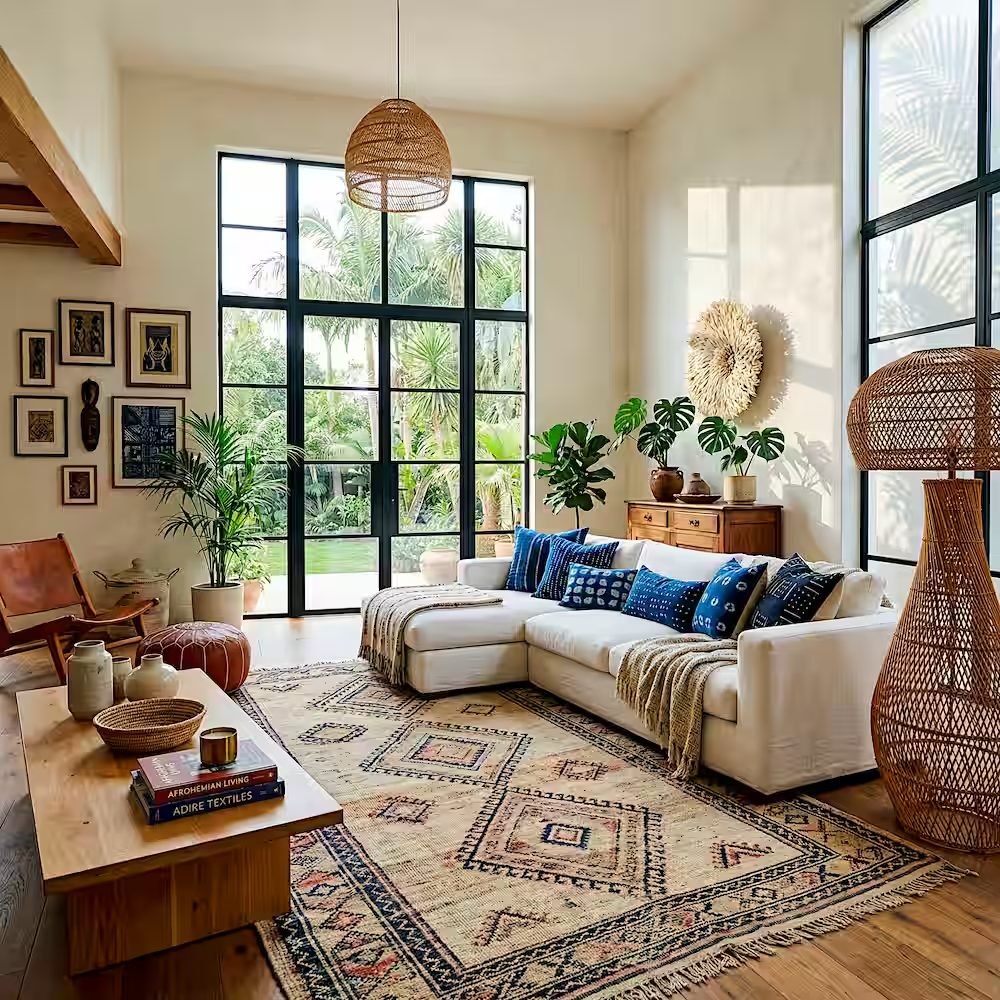
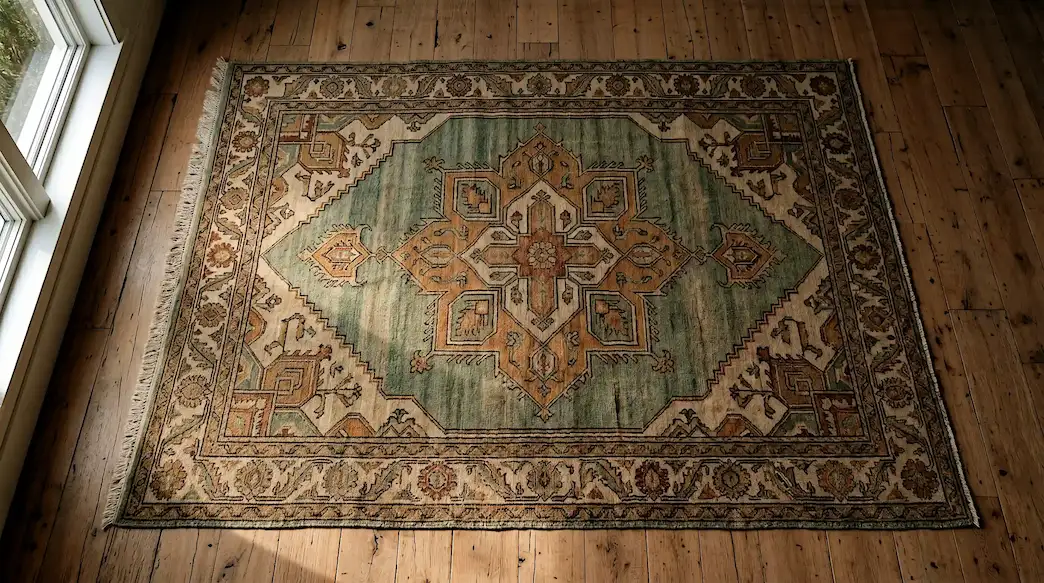
Few rug styles have held their appeal across centuries the way the oushak rug has. Originally woven in the Uşak region of western Turkey, these rugs have made a full-circle return and now appear in everything from minimalist Scandinavian interiors to warm California bohemian homes. Interior designers consistently point to the oushak as one of the most versatile antique-inspired styles available today.
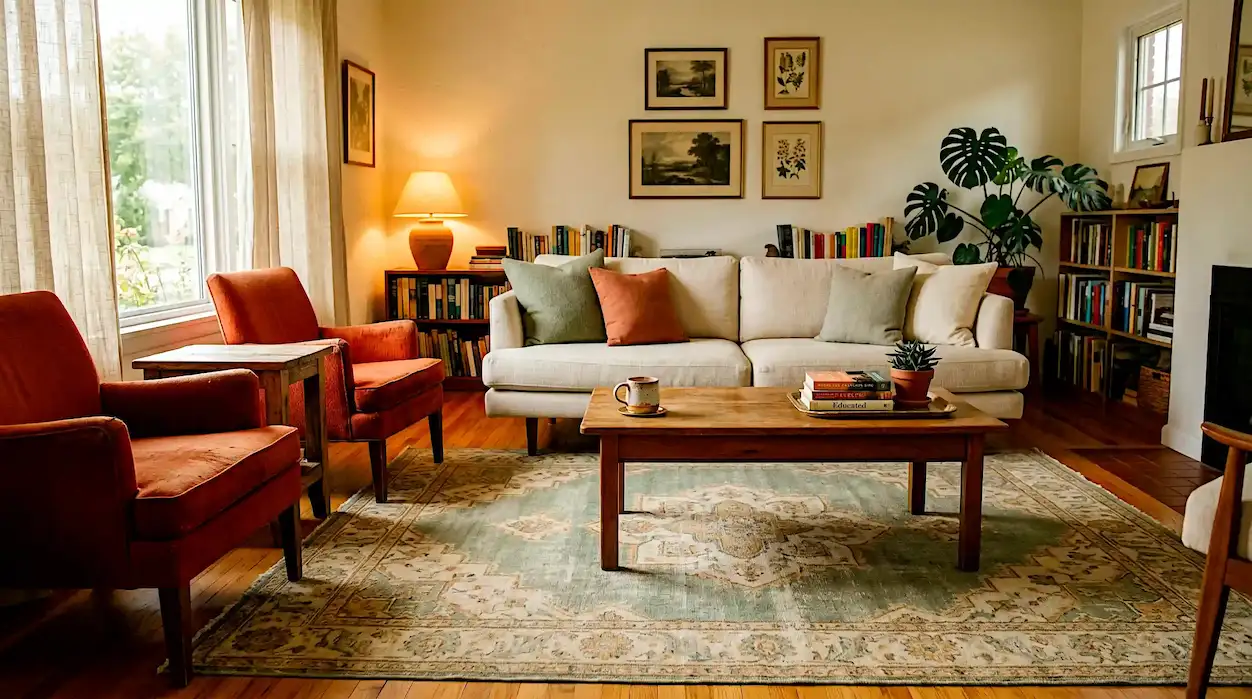
What sets this Turkish style apart from other Persian-style rugs is the color palette and pattern scale. Traditional Persian rugs lean toward deep jewel tones and intricate borders. This style instead uses soft, muted colors such as dusty ochre, faded sage green, ivory, warm terracotta, and chalky blue. The patterns are large and open, with medallion motifs and scrolling arabesques that breathe rather than crowd.
In practice, homeowners find that this Turkish rug style reads as vintage and elevated without demanding a maximalist room around it. A neutral sofa, a wooden coffee table, and a handful of natural-fiber cushions are all it needs to become the focal point of a space.
The History Behind the Oushak Style
The Usak region of Turkey produced rugs for the Ottoman court as far back as the 15th century. Merchants exported these early pieces across Europe, where they appeared in Flemish and Italian Renaissance paintings. Art historians sometimes call them “Holbein rugs” after the painter who depicted them so frequently in his work.
The looms of Uşak specialized in a weaving technique that used a Turkish symmetrical knot on a wool foundation. This construction created a flatter, softer pile than the more tightly knotted Persian styles. It also allowed weavers to achieve the slightly hazy, luminous quality that makes antique Uşak-style pieces so distinctive.
Modern reproductions from Turkish workshops replicate these techniques with varying degrees of fidelity. Fully hand-knotted reproductions from Turkish workshops can take months to complete and carry price tags from $800 to several thousand dollars for room-sized pieces. Machine-made and power-loomed versions start from around $120 and capture the visual style without the handmade construction.
How to Recognize an Oushak Rug
The clearest markers of oushak style are the color palette and the pattern scale. Look for warm, faded tones such as aged ochre, sun-bleached sage, and ivory with a slight cream cast. Large open medallions and minimal border detail complete the signature look.
The pile on a genuine hand-knotted oushak sits relatively low compared to a wool pile rug like a Moroccan beni ourain. The surface carries a soft sheen rather than a matte finish, which comes from the wool quality and the dye process. Traditional oushak dyes were vegetable-based, producing the soft color variation that gives antique pieces their depth.
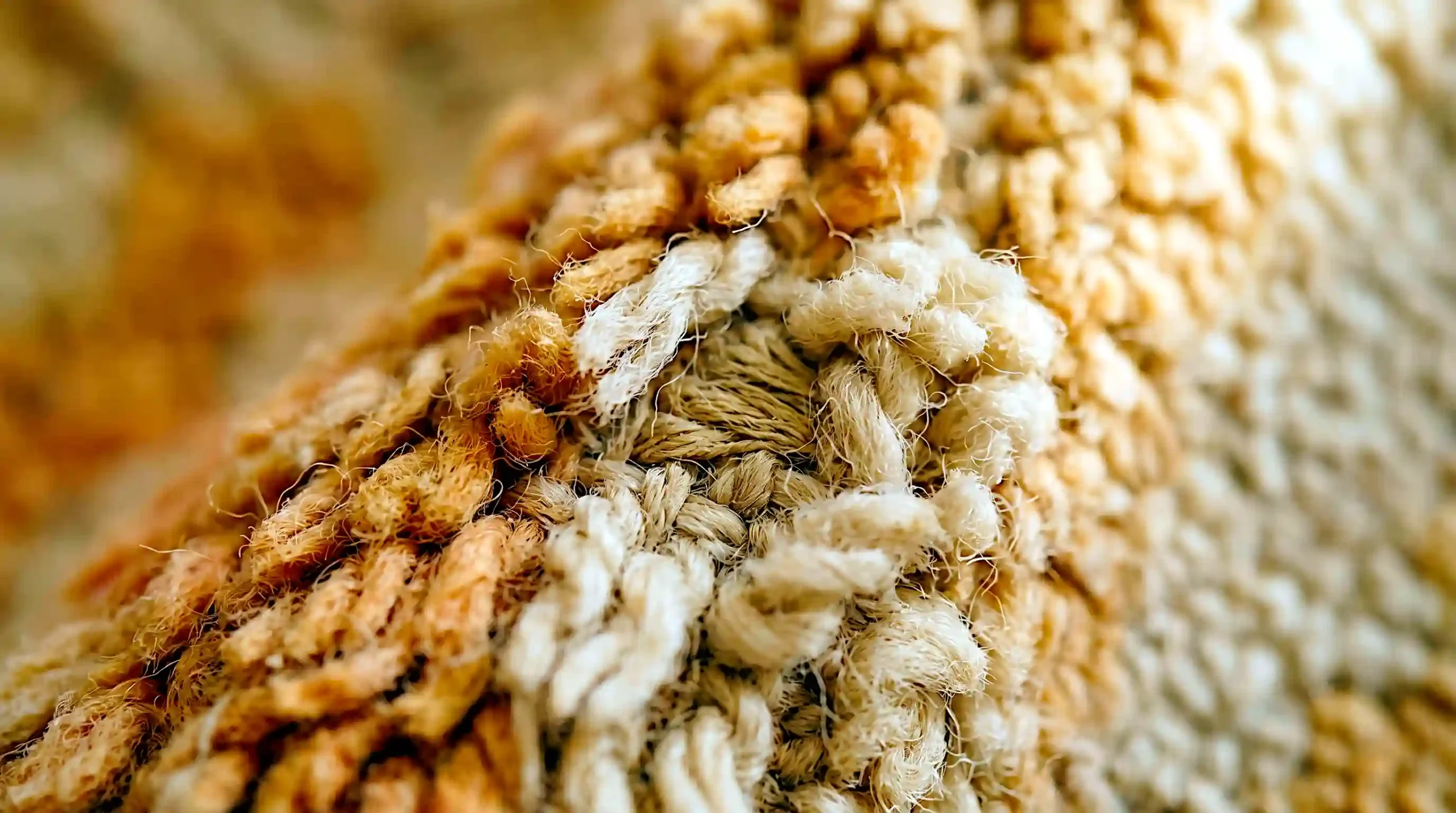
One useful test when shopping in person is to run your hand against the pile direction. On a hand-knotted oushak, individual knots create slight resistance under your fingers. On a machine-made version, the pile feels uniformly consistent without any variation.
Neither is a flaw. They are simply different products at different price points.
How to Style an Oushak Rug in Your Home
This style earns its current popularity because it works with almost every interior direction. In a room with warm wood tones and terracotta accessories, an ochre-and-ivory oushak pulls everything into a cohesive palette. In a cooler, more minimal room with gray walls and white linen, a sage-and-cream version adds warmth without disrupting the restraint.
For living rooms, designers recommend placing the Uşak-style rug so that all front legs of the sofa and chairs rest on it. A standard 8×10 or 9×12 covers most living room configurations. Floating the rug in the center with no furniture legs touching it makes the space feel disconnected rather than anchored.
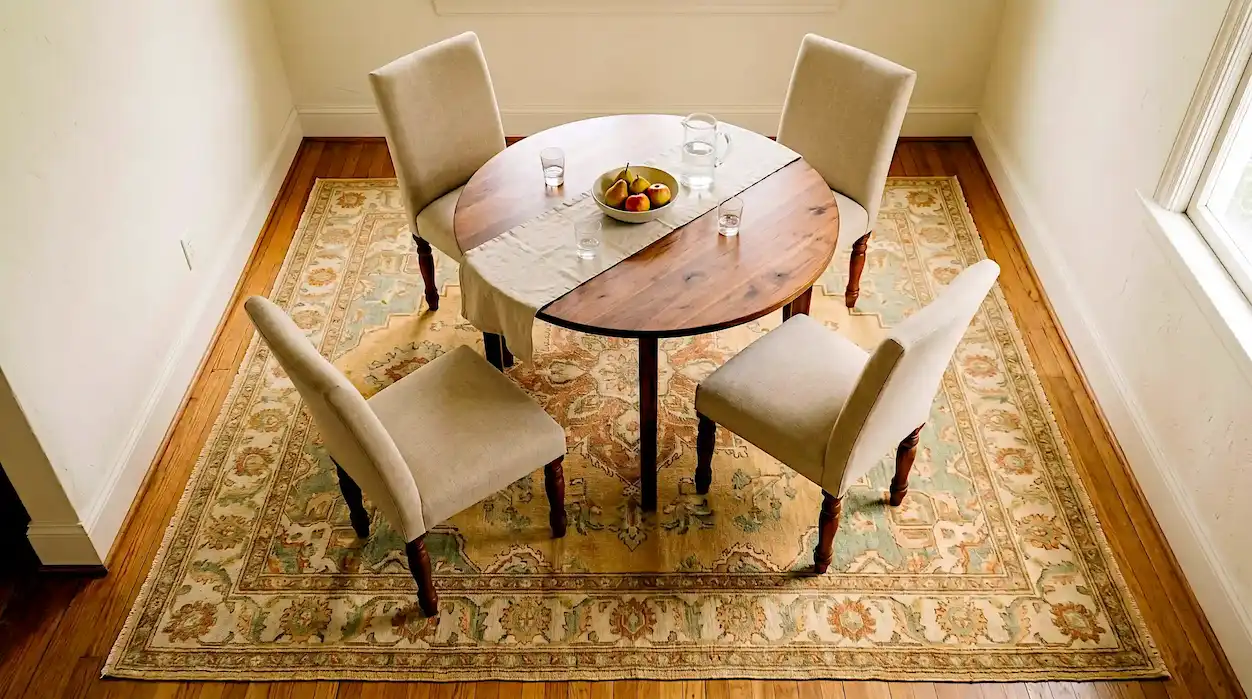
In dining rooms, a round Usak-style piece works beautifully under a round table. Leave at least 24 inches of rug extending past the chair legs on all sides. This ensures pulled-out chairs still rest fully on the surface rather than catching on the edge.
How to Care for an Oushak Rug
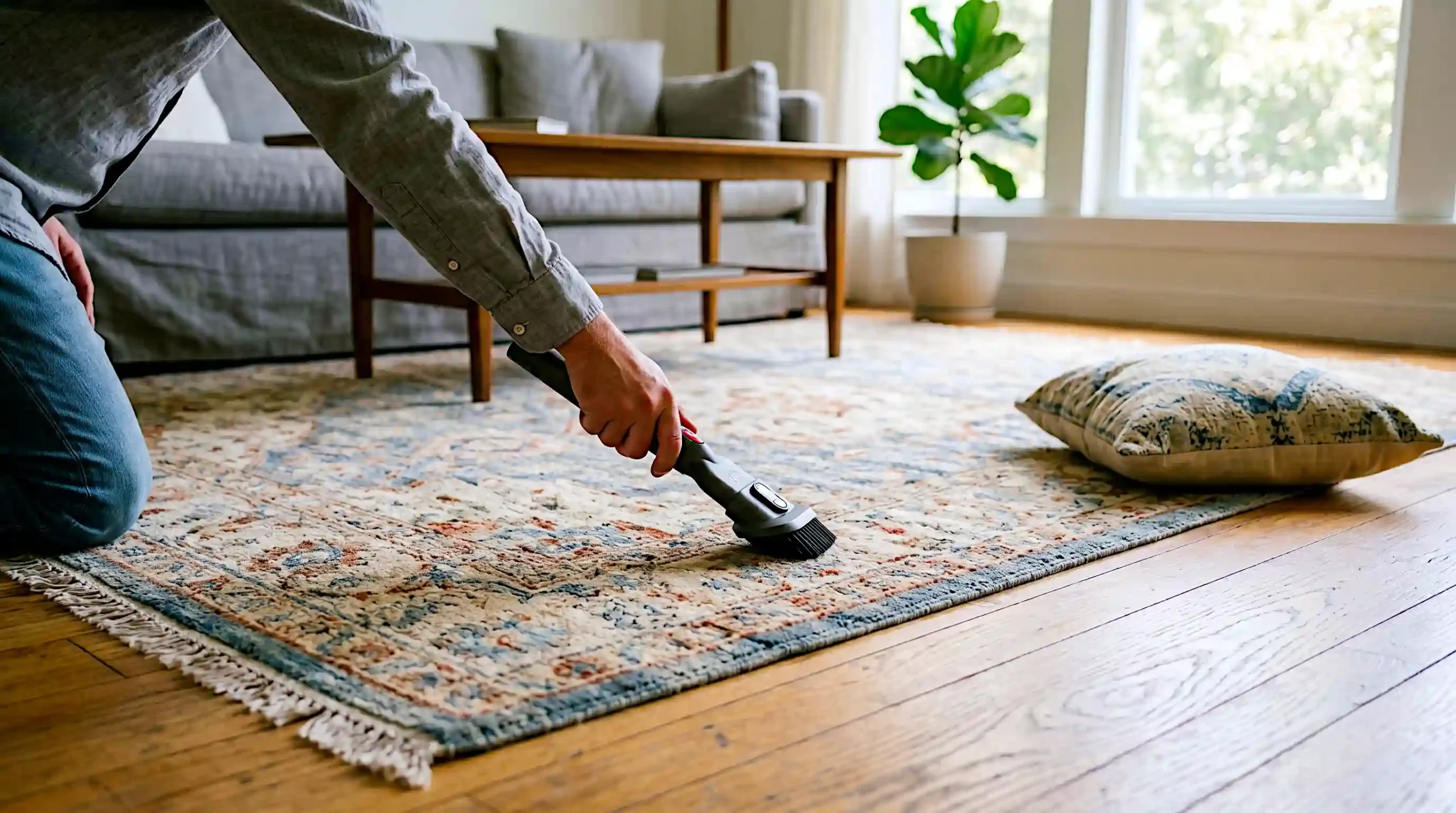
Wool rugs in this style are more resilient than they look, but they do need the right care routine. Vacuum weekly using a suction-only setting. Beater bar attachments stress the pile and accelerate fiber wear, so avoid them entirely. Most rug care specialists recommend vacuuming in the direction of the pile, not against it.
For spills, blot immediately with a clean white cloth and never rub. Cold water handles most liquid spills on wool effectively. For anything oily or pigmented, a wool-safe cleaner like Rug Doctor Spot Remover handles the job without stripping the fiber.
Professional cleaning every 12 to 18 months keeps the pile healthy and removes ground-in grit that regular vacuuming misses. Avoid steam cleaning entirely. It can shrink wool fibers and distort the foundation of this vintage rug style.
What Is a Tufted Rug?
Walk into any home decor store today and you will find a wall of tufted rugs. They dominate the mid-range market because the construction process allows for sculptural texture, rich pile depth, and bold patterns at a fraction of the cost of hand-knotted alternatives. Understanding how craftspeople produce this style of rug helps you shop smarter and set realistic expectations for longevity.
Unlike hand-knotted rugs where individual knots tie each tuft to a woven foundation, a hand-tufted rug uses a tufting gun to punch loops of yarn through a canvas backing. A craftsperson guides the tool by hand, which makes “hand-tufted” a legitimate quality descriptor even though a machine assists the process.
The yarn loops are either cut to create a cut finish or left intact to form a looped surface. A latex adhesive layer bonds the tufts, and a secondary backing fabric seals the base. This construction makes the tufting process significantly faster than hand-knotted alternatives. A skilled artisan completes a 5×8 rug in days rather than months.
That speed shows in the price. Quality pieces from brands like Loloi, Rugs USA, or Anthropologie Home run from $200 to $800 for mid-sized pieces.
Cut Pile vs Loop Pile Tufted Rugs
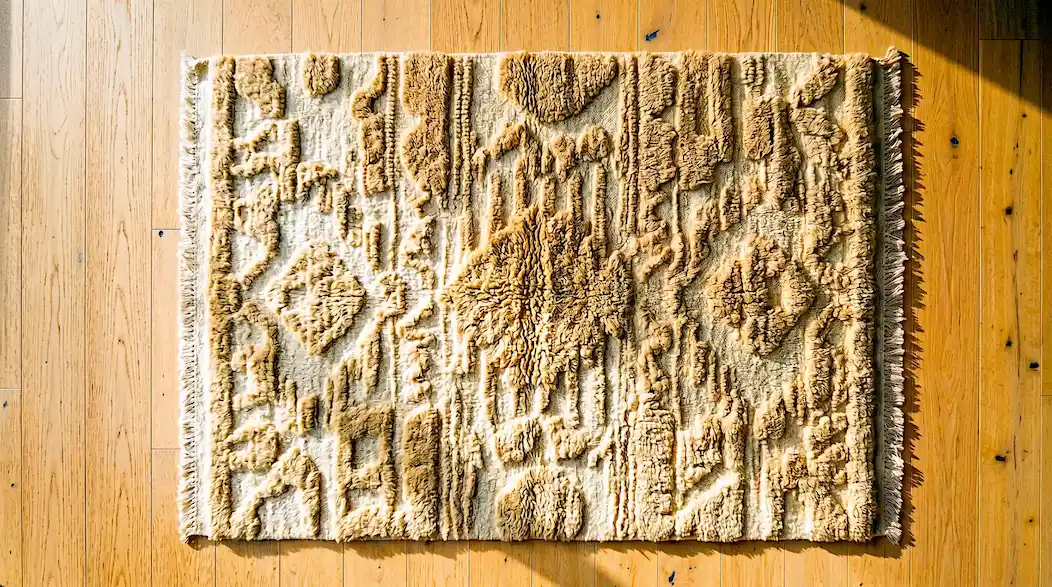
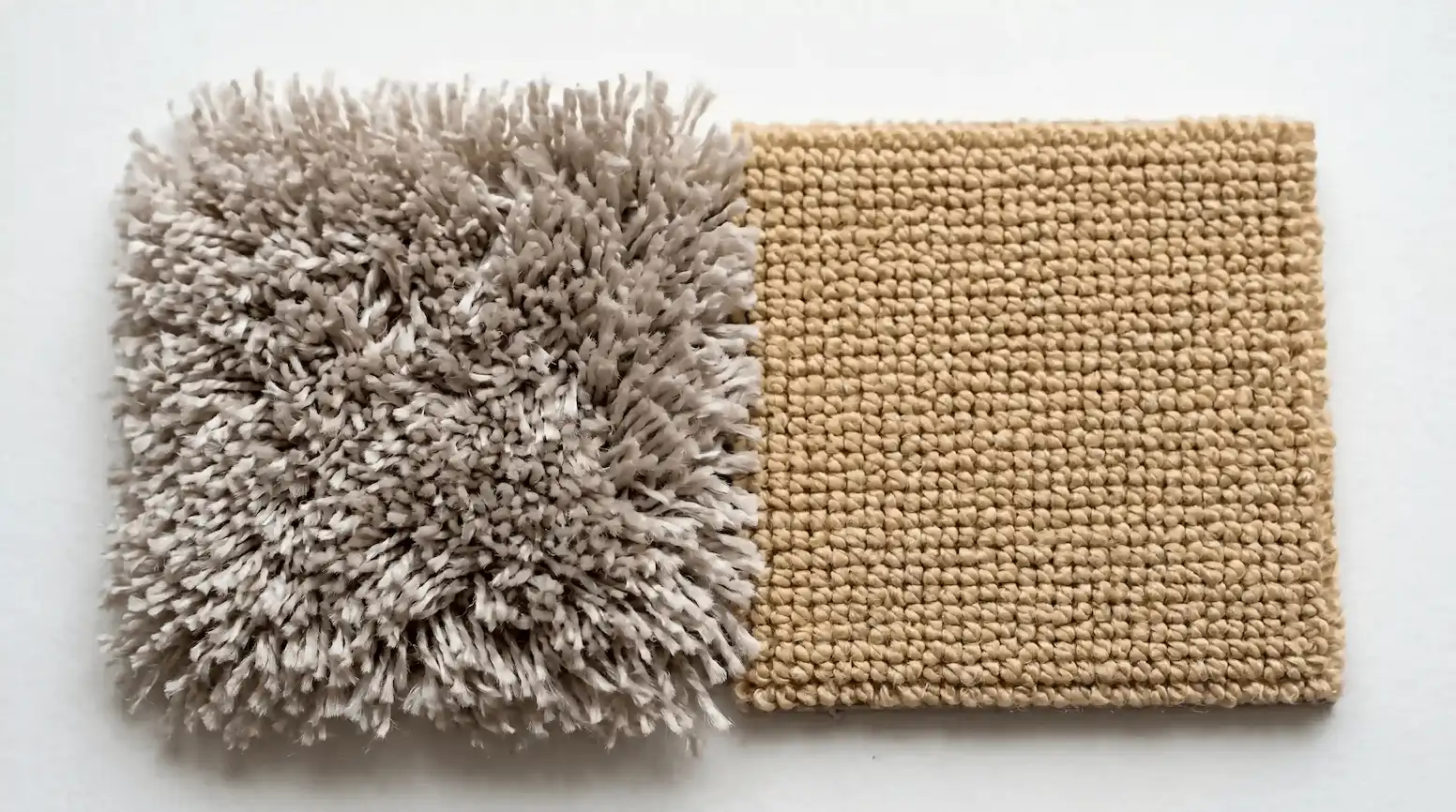
The choice between cut pile and loop pile changes the entire look and feel of this rug type. The cut pile finish produces a soft, plush surface with a slight sheen and a fluffy, cushioned feel underfoot. This finish is the more popular of the two and what most people picture when they imagine a luxurious bedroom rug.
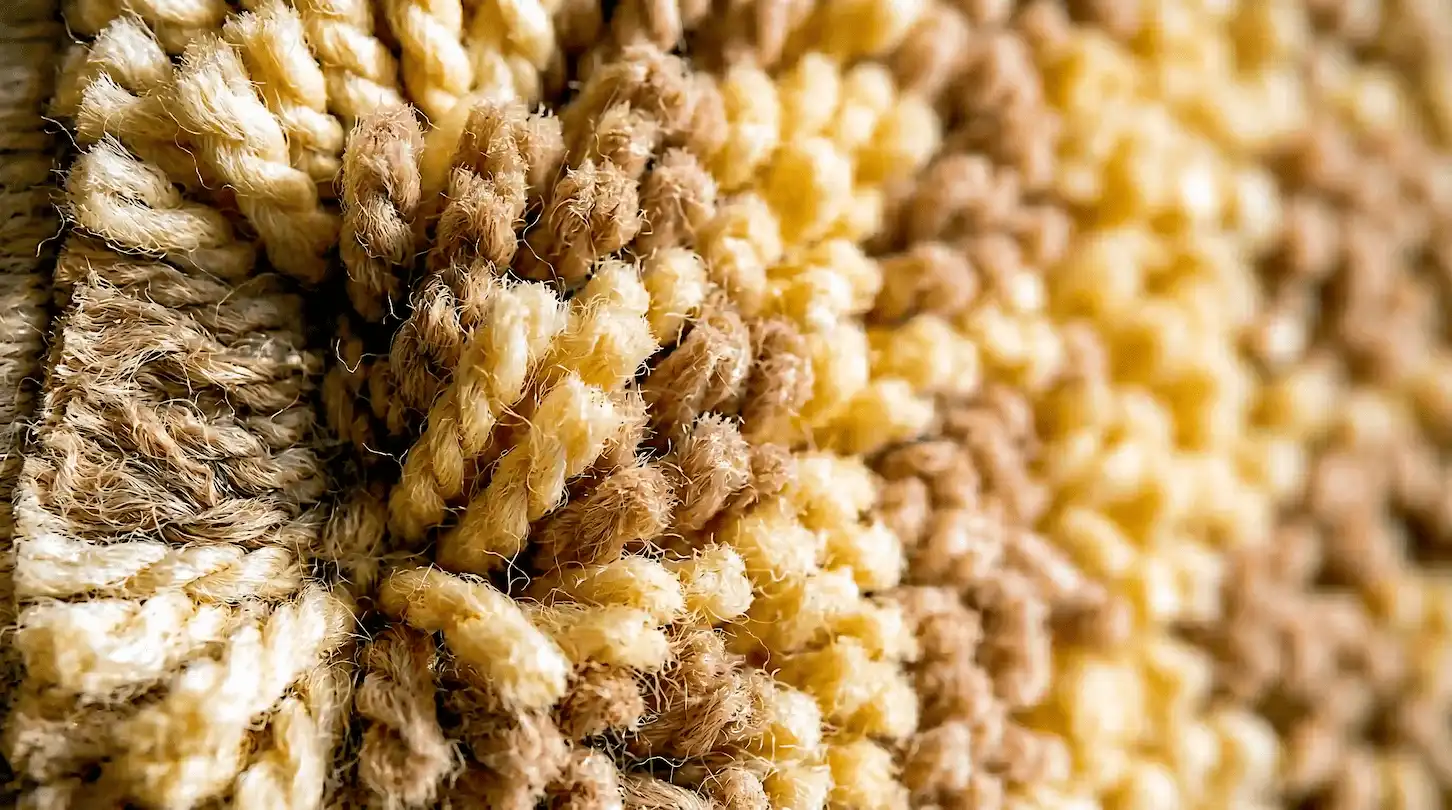
Loop pile keeps the yarn loops intact, creating a tighter and more textured surface. This construction resists crushing better and holds up well in higher-traffic areas like family rooms and hallways. Some of the most interesting designs combine both finishes in the same rug, creating a sculptural high-low pattern where the contrast between pile heights forms the design itself.
In practice, interior designers favor the cut pile finish for bedrooms and reading nooks where softness earns its place. For living rooms with regular foot traffic, loop pile or high-low sculptural designs hold up far better over time.
Does a Tufted Rug Shed?
Shedding is the most common complaint about tufted rugs and it catches buyers off guard. New rugs of this type, especially those with a plush pile in wool or wool-blend yarns, shed loose fibers for the first several weeks of use. This is normal and not a sign of poor quality.
The latex adhesive holds the tufts in place. What comes away during initial use are the loose fiber ends trimmed during manufacturing.
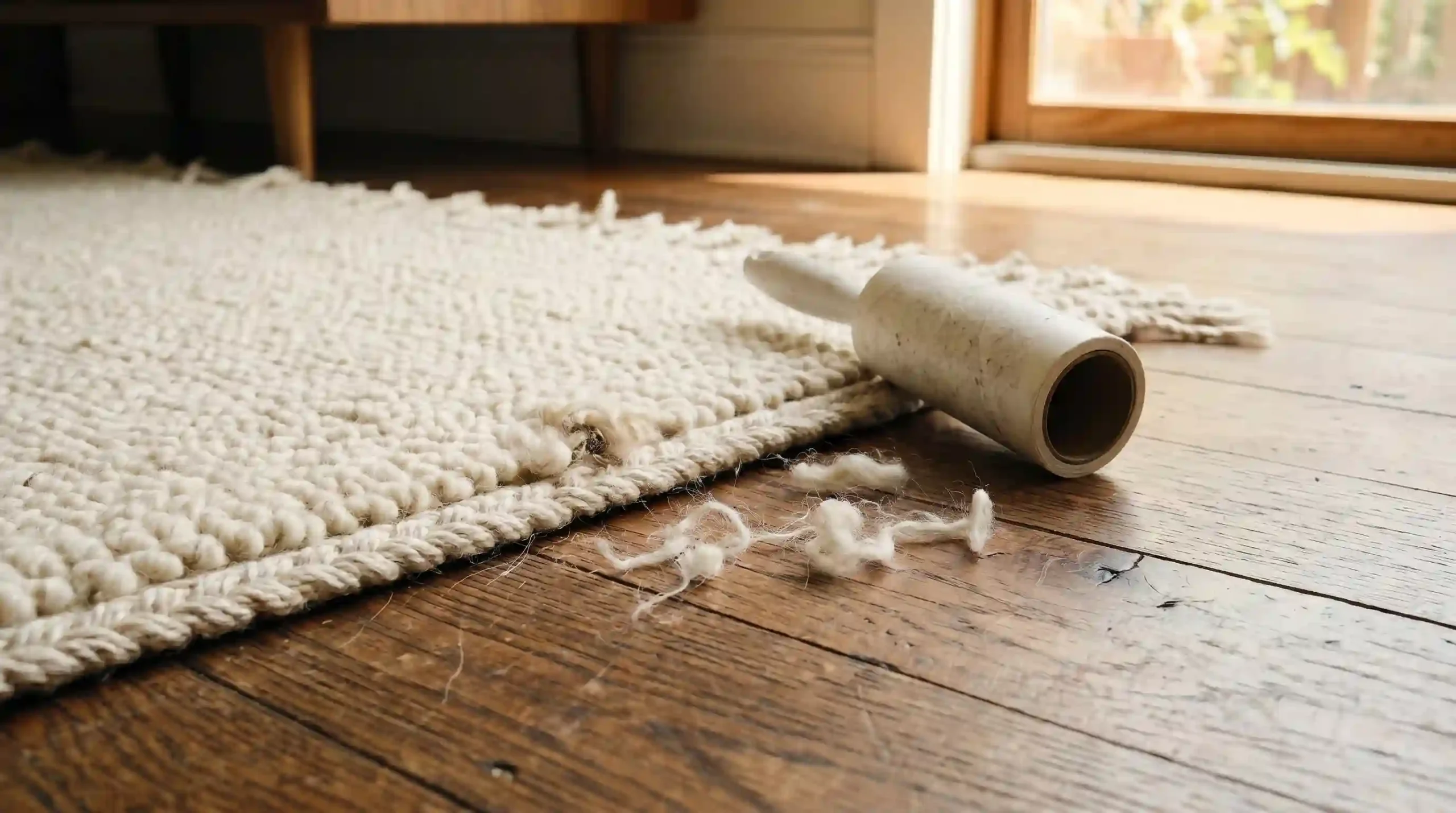
To speed up the break-in period, vacuum the rug every two to three days for the first month using a suction-only setting. Avoid pulling at loose fibers. Trim any long loose strands with scissors instead. Most pile rugs stabilize after four to six weeks of regular use.
If shedding continues heavily after three months, the latex backing may be deteriorating. Cheaper tufted rugs sometimes use a lower-grade latex compound that breaks down faster, releasing fibers from the base. Persistent heavy shedding beyond the break-in period warrants a closer look at the backing quality before you assume the rug performs normally.
Best Rooms for a Tufted Rug
These pile rugs perform best in low to medium traffic areas. The bedroom is the ideal environment because foot traffic stays light and the plush surface feels genuinely luxurious underfoot. The reduced wear also extends the rug’s lifespan significantly.
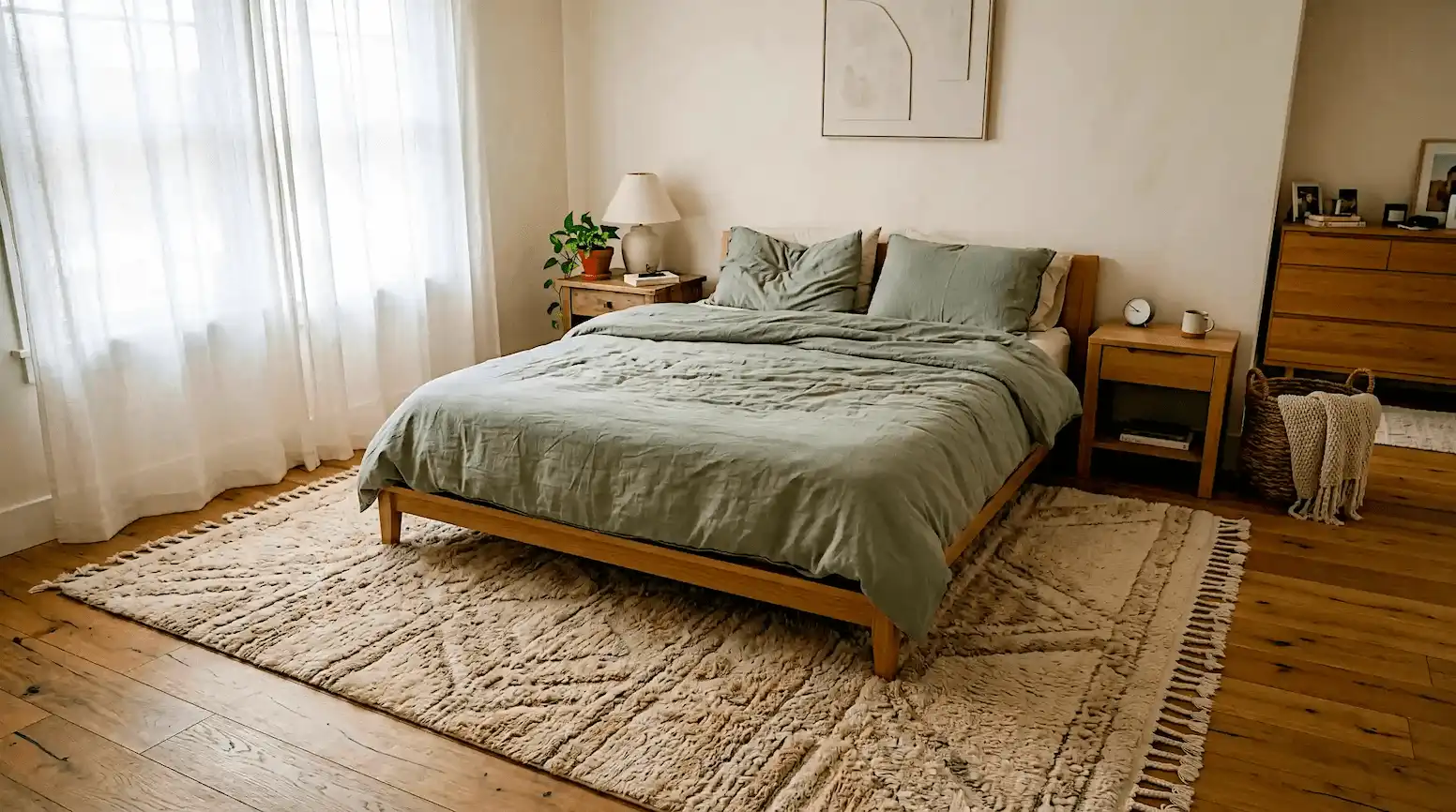
Place an 8×10 pile rug under a queen or king bed. Extend it at least 18 inches on the sides and foot to create the grounded, layered look that dominates bedroom design right now.
Living rooms work well for tufted rugs when foot traffic stays moderate. Avoid placing a delicate pile rug under a dining table. Chair legs scraping repeatedly across the pile damage it faster than almost any other type of wear.
How to Care for a Tufted Rug
Rotate the rug 180 degrees every six months to distribute wear evenly. In rooms with direct sunlight, this rotation also prevents uneven fading across one side. Most wool and wool-blend tufted rugs respond well to the same vacuuming approach used for an oushak. Use suction only, follow the pile direction, and skip the beater bar entirely.
The latex backing does not respond well to moisture. Avoid steam cleaning because the heat and humidity can soften the adhesive and cause tufts to loosen from the base. For deep cleaning, professional dry cleaning or low-moisture extraction cleaning is the safest approach.
A quality rug pad matters more under this construction type than under almost any other. The secondary backing on tufted rugs can be slippery on hardwood or tile, and without a pad the rug shifts with every step. A natural rubber pad like the Mohawk Home Dual Surface Rug Pad grips both the floor and the rug backing without chemical adhesives.
How to Choose a Hallway Runner Rug
The hallway is one of the hardest-working spaces in any home and one of the most ignored when it comes to decor. The right hallway runner rug protects the floor, reduces noise, and gives the space a visual identity rather than leaving it as a forgotten corridor between rooms.
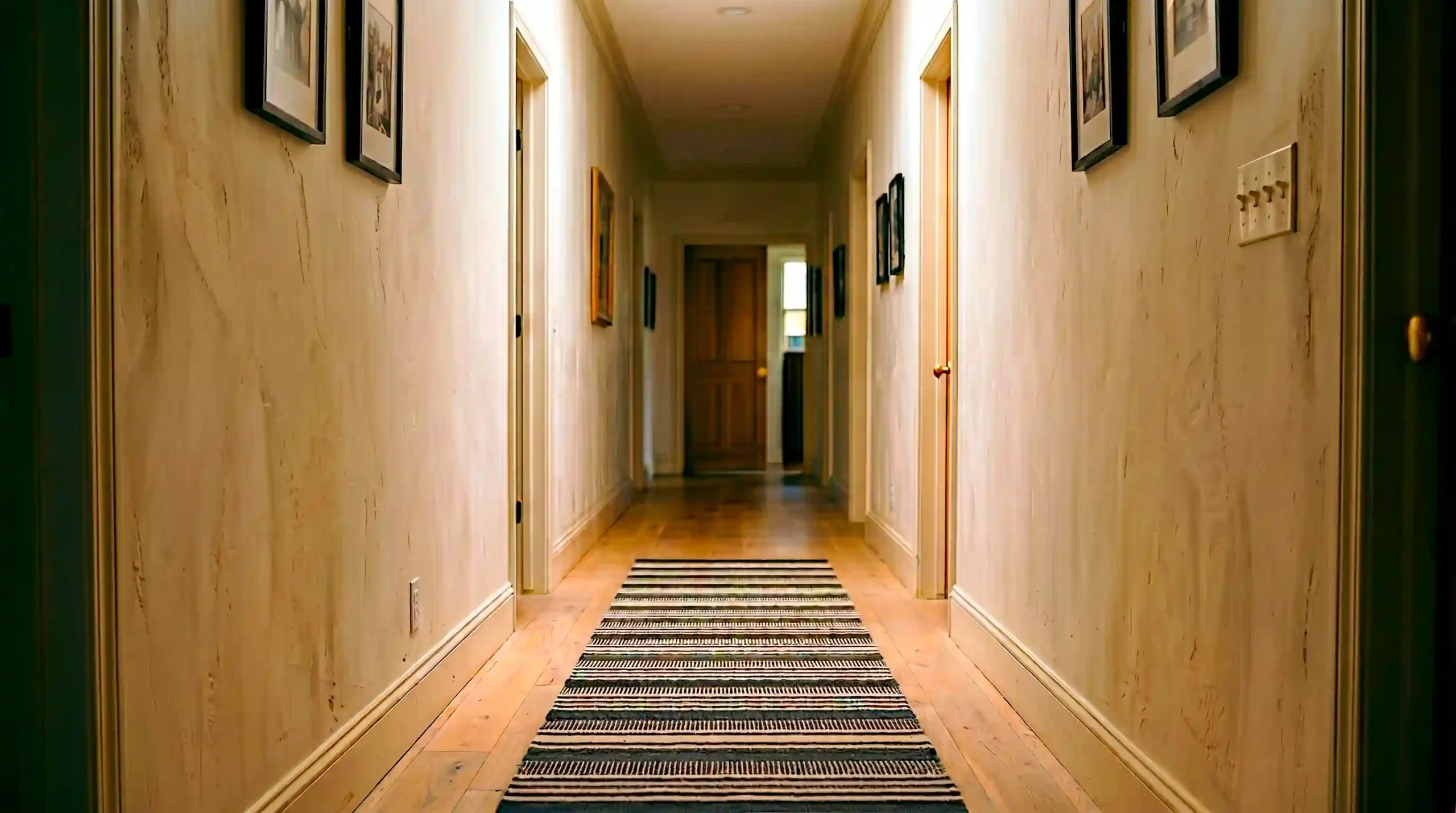
Designers who specialize in full-home styling consistently note that hallways with a well-chosen floor covering feel more intentional and finished than hallways left bare. The right runner signals that the homeowner considered every inch of the space.
What Size Runner Rug Do You Need?
Getting the size right is everything in this space. Professional interior designers recommend leaving 3 to 4 inches of bare floor visible on each side of the runner. This framing effect makes the hallway feel intentionally designed rather than haphazardly furnished.
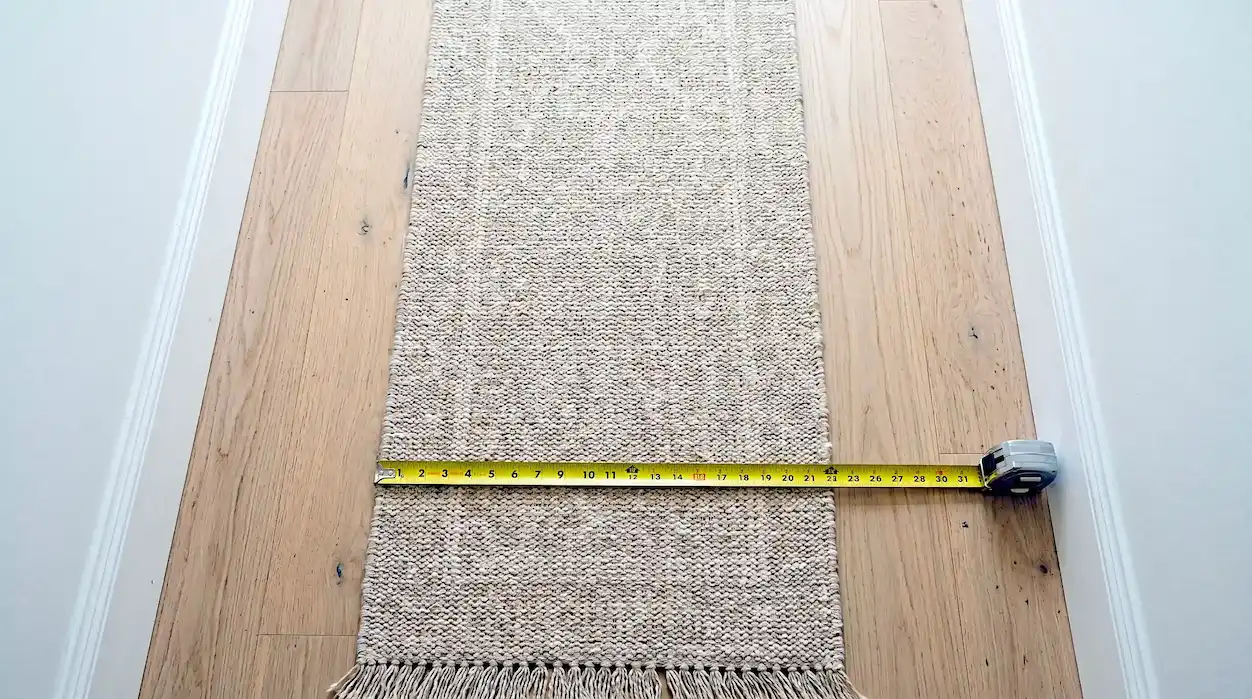
For most standard hallways, typically 36 to 48 inches wide, a runner between 24 and 30 inches wide works well. Narrow apartment hallways of 30 to 36 inches suit a 20 to 24 inch runner. In wider hallways or open-plan entryways exceeding 54 inches, a 30 to 36 inch runner maintains the proportional frame without looking undersized.
Length follows the same logic. The runner should cover the main traffic path of the hallway, stopping 6 to 12 inches from any doorways at either end. Standard runner lengths run from 6 feet to 14 feet, with 8 and 10 foot lengths covering the majority of residential hallways. For very long hallways, two pieces placed end to end with a small gap between them create a cohesive look while solving the length problem practically.
Best Hallway Runner Rug Styles Right Now
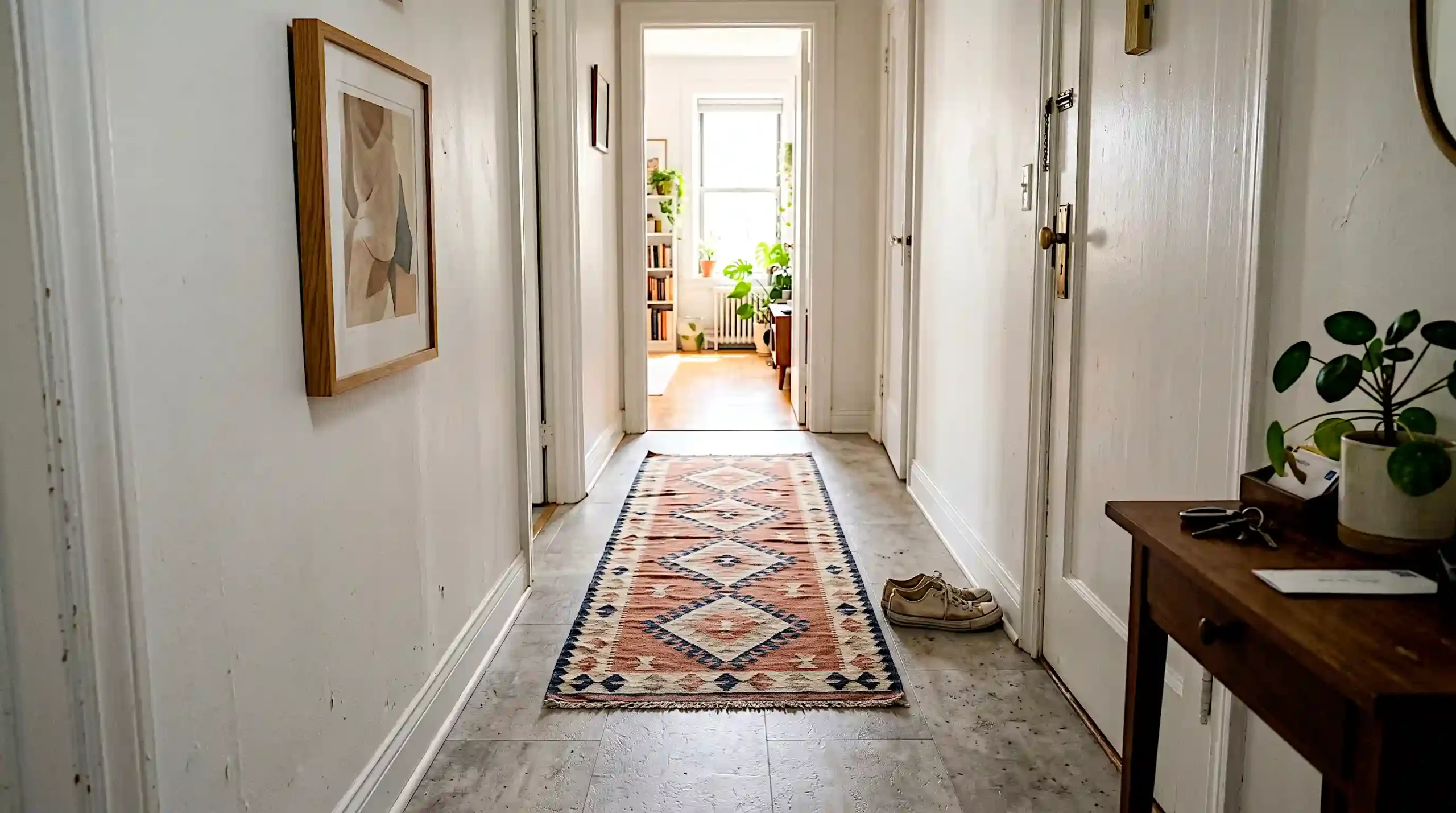
The vintage rug style is the dominant direction for corridor runners right now. Turkish-inspired runners in muted sage, dusty ochre, and ivory bring warmth to neutral hallways without demanding attention. Kilim runners in geometric patterns add graphic interest and work particularly well in homes with clean-lined contemporary furniture.
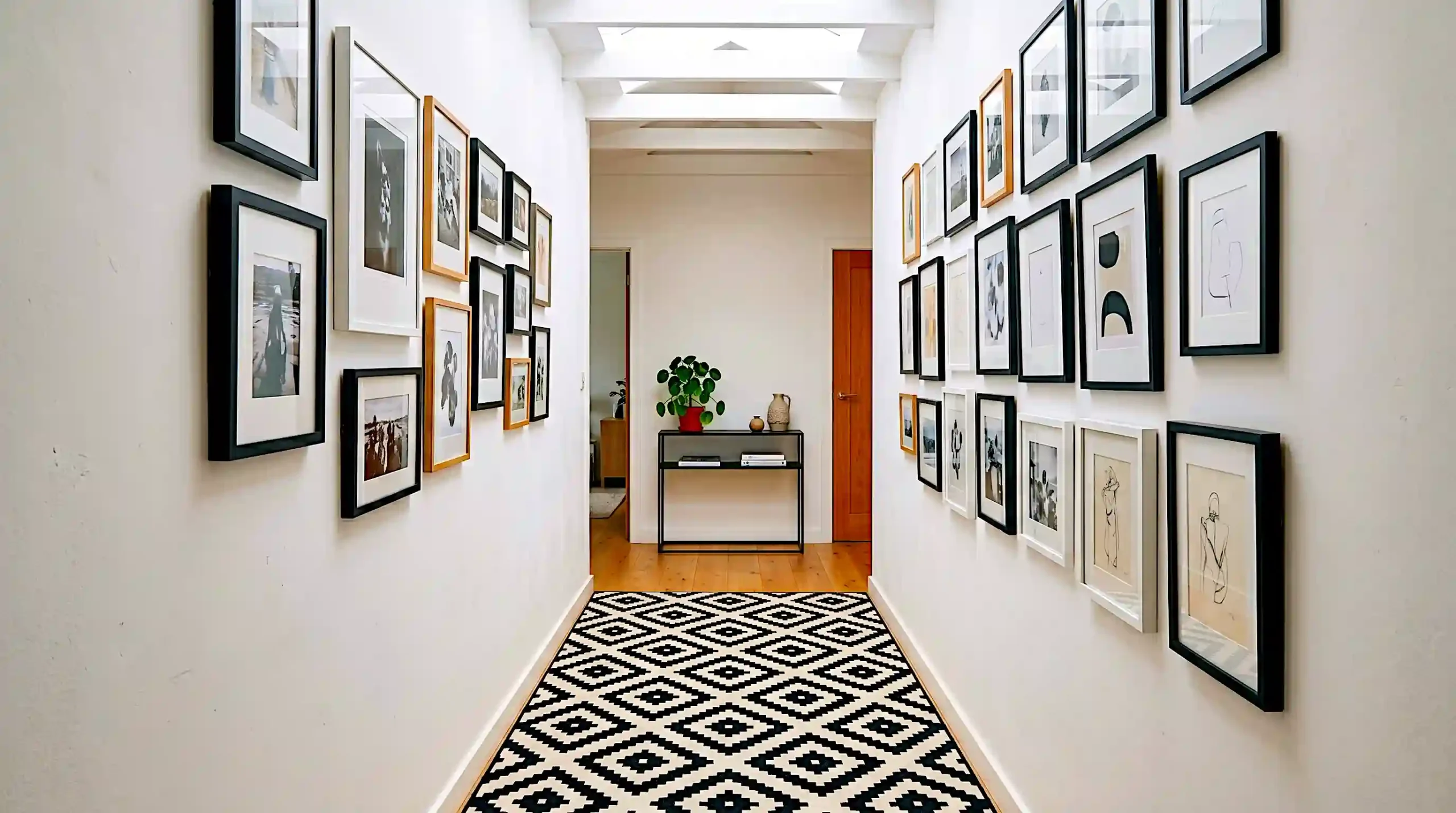
Bold black and white geometric styles have surged in popularity for modern and transitional homes. The high contrast draws the eye down the length of a narrow hallway, making it feel longer. Brands like Safavieh, Unique Loom, and nuLoom offer strong options from around $80 to $250 for standard runner lengths.
Natural fiber options in jute or sisal remain a reliable choice for high-traffic hallways where durability outranks softness. They hold up to daily foot traffic, pet claws, and muddy shoes better than wool or synthetic pile, though they lack the cushioning that makes pile runners more comfortable underfoot.
Entryway vs Hallway: Which Runner Works Where?
The entryway and the hallway look similar but serve different functions, and the right runner for each reflects that difference. An entryway runner takes the hardest abuse in the house, facing shoes, rain, mud, and high-frequency foot traffic from everyone entering and leaving. Durability and cleanability are the priorities here.
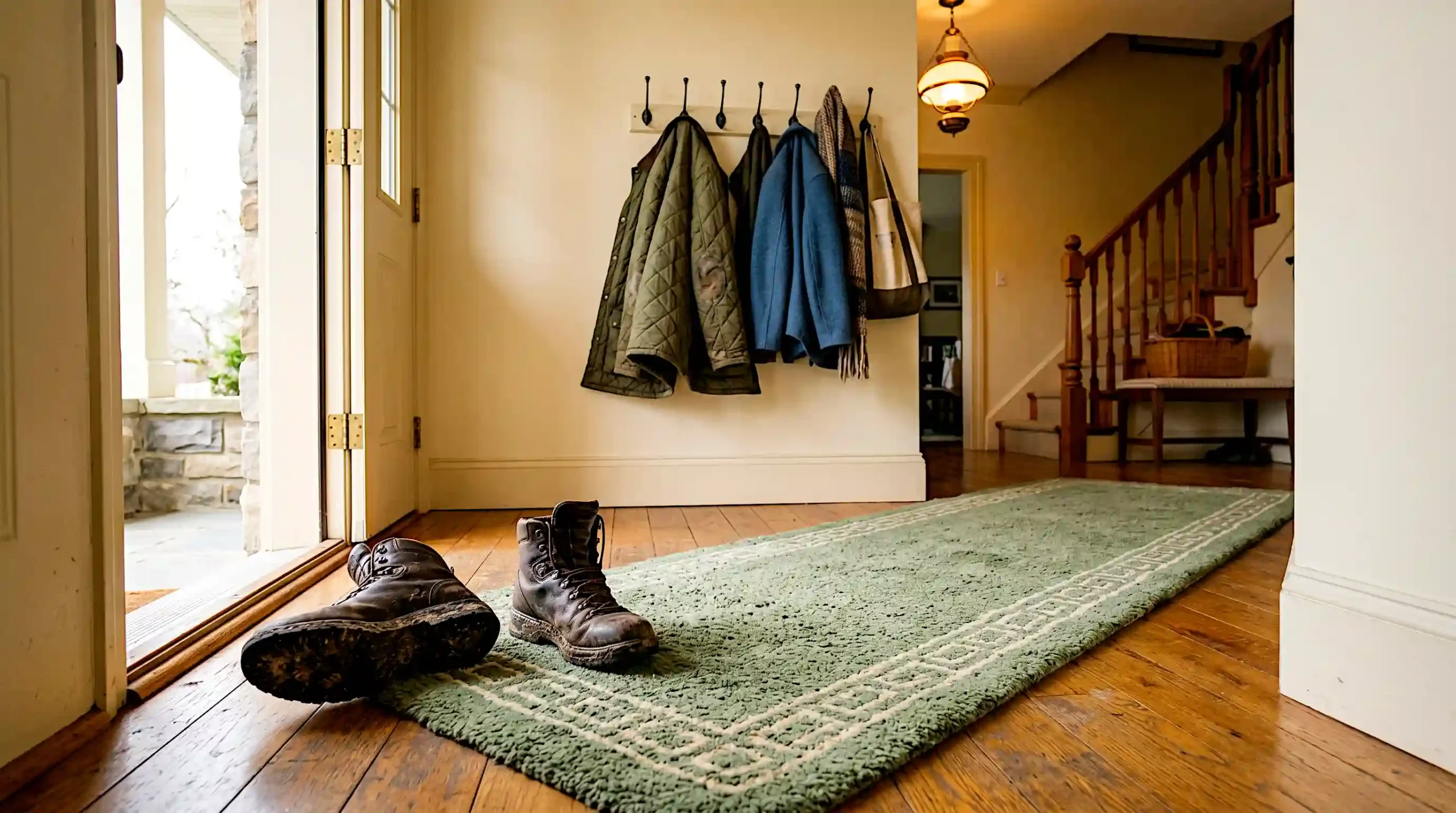
For entryways, flat-woven runners, low-pile synthetic runners, or natural fiber options handle dirt and moisture far better than a plush wool pile runner. A runner with a darker pattern or a busy geometric design also hides the inevitable scuffs and marks that accumulate near the front door.
Runners placed further into the home, away from the front door, can lean into softer pile and more delicate patterns. Since foot traffic is lower and shoes are typically off, a soft wool runner in a Uşak-inspired style or a low-pile tufted option becomes a realistic choice without sacrificing practicality.
How to Keep a Runner Rug in Place
A floor runner that shifts with every step is not just annoying. It is a trip hazard. The standard fix is a non-slip rug pad cut to size and placed under the full length of the piece. Natural rubber pads grip hardwood, tile, and laminate floors without adhesive and without the plasticizer chemicals that can discolor some floor finishes over time.
For very lightweight or thin runners on slick floors, double-sided carpet tape along the edges adds an additional anchor point. Replace the tape every six to twelve months as the adhesive weakens with temperature changes and foot traffic.
On carpet, a rubber-backed runner or a rug-on-carpet grip pad is the right solution. Standard rubber pads designed for hard floors do not work on carpet. They compress and allow the runner to shift. Look for a pad specifically marketed for carpet-on-carpet use, which relies on a different grip mechanism entirely.
Frequently Asked Questions
Originating from the Uşak region of Turkey, this style stands out for its soft, muted color palette of dusty ochre, sage green, and ivory, along with large open medallion patterns. The lower pile and slightly luminous wool surface create a distinctive faded, antique quality that works across many interior styles.
This style offers solid quality at an accessible price. A well-made example from a reputable brand using quality wool and a firm latex backing lasts 5 to 10 years with proper care. Tight, even tufting and minimal shedding after the initial break-in period are the key quality markers to look for.
A runner should leave 3 to 4 inches of bare floor on each side. For a standard 36 to 48 inch wide hallway, a 24 to 30 inch wide runner works well. Measure your hallway width first, then subtract 6 to 8 inches total to find the right runner width for your space.
Yes. This style works well in dining rooms, particularly under round or square tables. Choose a size that extends at least 24 inches beyond the table edge on all sides so chairs remain fully on the rug when pulled out. Address spills promptly and vacuum regularly to keep the wool in good condition.
Always use a rug pad under the runner. Without one, runners shift with foot traffic and become a trip hazard. A natural rubber pad cut to the runner’s dimensions provides grip on hard floors without adhesive. On carpet, use a pad specifically designed for carpet-on-carpet use, as standard hard floor pads do not grip carpet effectively.
Conclusion
The right rug does more than cover a floor. An oushak rug brings centuries of Turkish craft tradition into a modern room without demanding a period interior around it. A tufted rug delivers sculptural texture and tactile warmth at a price that makes it the most accessible quality option in the current market. A well-chosen runner transforms a forgotten corridor into a considered, cohesive space.
All three reward the same thinking. Understand what they are made of, choose the right size for the space, and give them the care they need to last. Start with the room that needs the most attention and build outward from there.
How to Hang Heavy Art Without Drilling Holes
Beginner Decorating Mistakes That Age a Room Fast
Should You Decorate Before Selling Your House?