How to Hang Heavy Art Without Drilling Holes
Written by: M. Yazdaan, Home Decor Editor
Reviewed by: Emma Cartel, Research & Editorial Standards Coordinator (ABOUT US)
Yes, you can hang heavy art and mirrors without drilling, even pieces up to 65 pounds, using weight rated hardware like adhesive strips, drywall claw hangers, spring steel hooks, or French cleats, matched correctly to your wall type and the item’s weight.
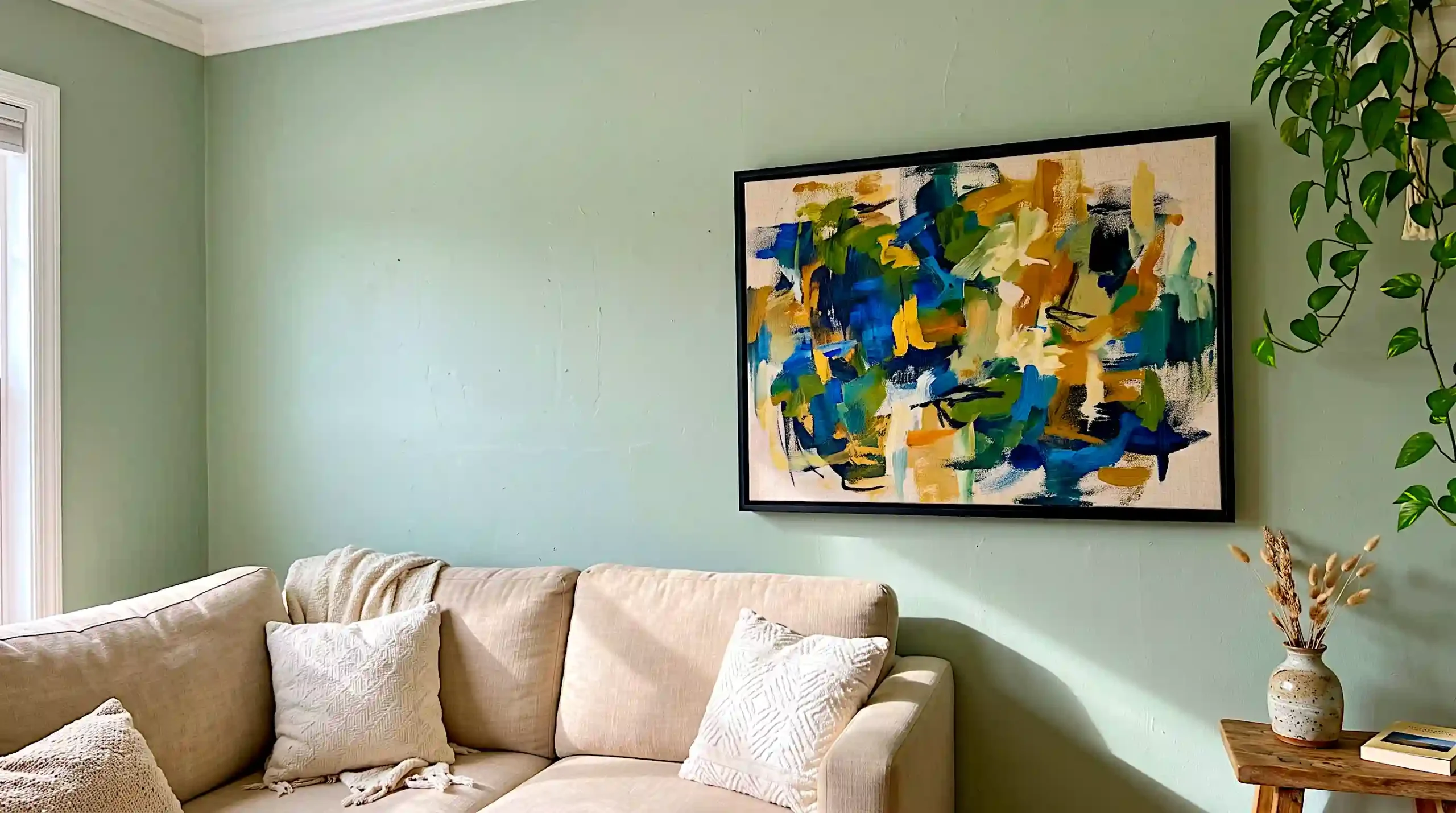
Drilling isn’t always an option. You might be renting, working with plaster you don’t want to crack, or simply don’t want another hole to patch the next time you rearrange. The good news is that today’s no drill hardware is rated to hold real weight, not just small frames, but heavy mirrors, canvases, and gallery pieces, as long as you choose the right product for your wall and your item’s actual weight.
This guide breaks it down by wall type, weight tier, and hardware option, so you can hang your piece once, correctly, and never worry about it coming down.
Why Drilling Isn't Always the Right Answer
Traditional drilling works well when you own your walls outright and don’t plan to move things around. But it isn’t the best fit for everyone:
- Renters risk losing part of their security deposit over patched holes
- Plaster walls in older homes can crack or crumble around drilled anchor points
- Frequent redecorators end up with a wall full of old holes behind every new piece
- Delicate or unusual wall surfaces such as wood paneling, tile, and some finished concrete don’t take screws well at all
No drill hardware has closed the gap. Products like the 3M Claw and heavy duty Command Strips are now rated for 20, 45, even 65 pounds, which covers the vast majority of household art and mirrors without a single hole. Once your art is up, small styling choices around it, like the wall color or the mood you’re going for, make just as much difference as the hardware itself.
If you’re leaning toward a moodier space, these dark bathroom ideas designers actually use show how that same confidence translates well beyond the bathroom.
Know Your Wall Type Before You Choose a Method
The single biggest mistake people make is picking hardware based on the item alone, without checking whether it’s actually rated for their wall. Here’s what to know for each surface.
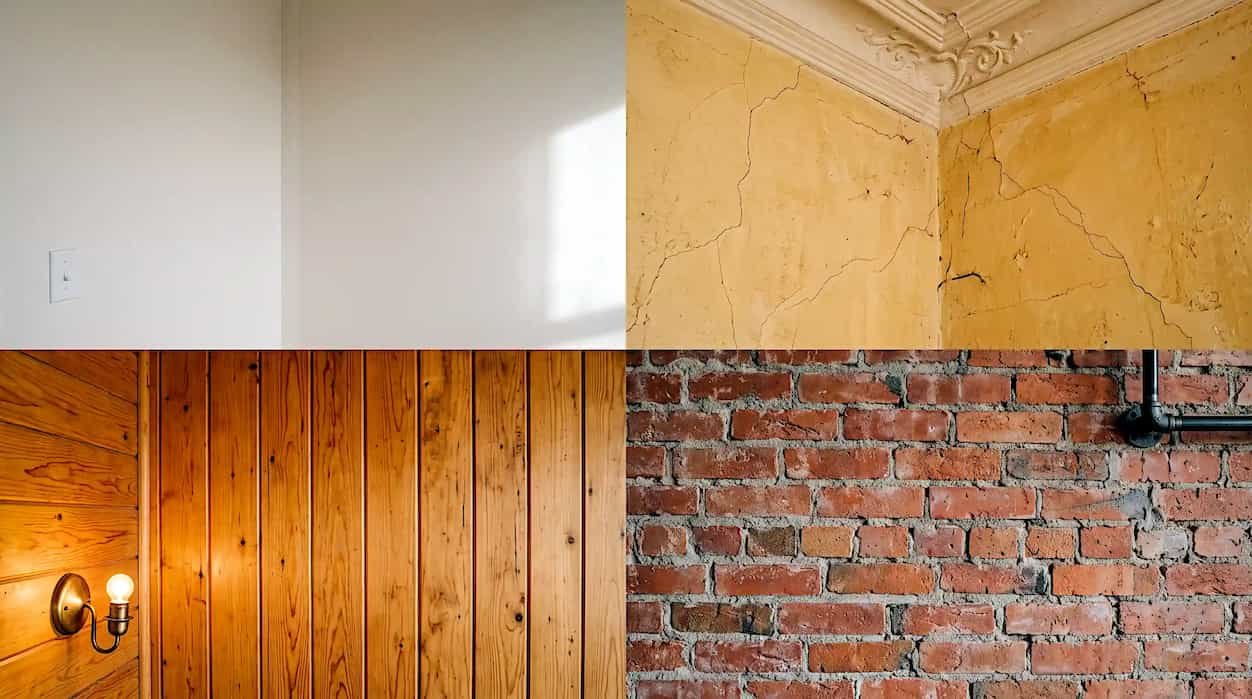
Drywall
Most homes in the US, UK, and much of Europe use drywall (plasterboard) for interior walls. This is the easiest surface to work with. Nearly every no drill product on this list is designed primarily for drywall, including the 3M Claw, Command Strips, and Monkey Hooks.
Plaster
Common in older homes, especially pre 1950s builds across the US, UK, and much of Europe. Plaster is harder than drywall but far more brittle, and it can crack under sharp impact. For plaster walls, small nails or traditional picture hooks made for older homes tend to work better than heavyweight claw style hangers, and lighter adhesive options are generally safer than anything requiring force to install.
Wood Paneling
No drill adhesive and claw style products are not designed for this surface. 3M Claw hangers, for example, are built specifically for drywall, and using them on wood or plaster can cause damage. For paneling, your safest no drill route is a rated adhesive strip on a clean, smooth section, or a French cleat that’s screwed into the panel itself rather than relying on wall penetrating hardware.
Brick, Concrete, and Masonry
These surfaces are too hard for spring steel or claw style hangers to bite into at all. Adhesive strips rated for masonry, or heavy duty suction style mounts on very smooth sealed surfaces, are your realistic no drill options here.
Match the Hanger to the Weight
Weight is the second variable that determines your hardware choice. Here’s how the options break down by tier.
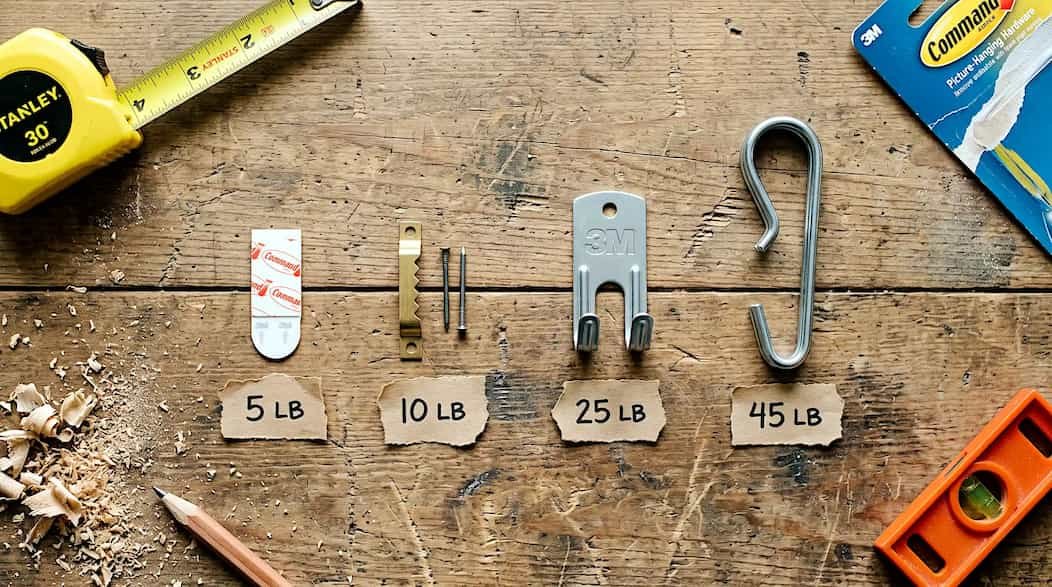
Light (Under 5 lbs)
Small Command Strips or basic adhesive hooks are more than sufficient. These work well for small framed prints, light decorative mirrors, and similar pieces.
Medium (5 to 20 lbs)
This covers most standard framed art. Four pairs of Command Large Picture Hanging Strips hold up to 15 pounds for frames up to 24×36 inches, while four pairs of the X Large strips extend that to 20 pounds at the same frame size. A single Monkey Hook or Gorilla Hook in the 20 to 25 lb range also fits comfortably here.
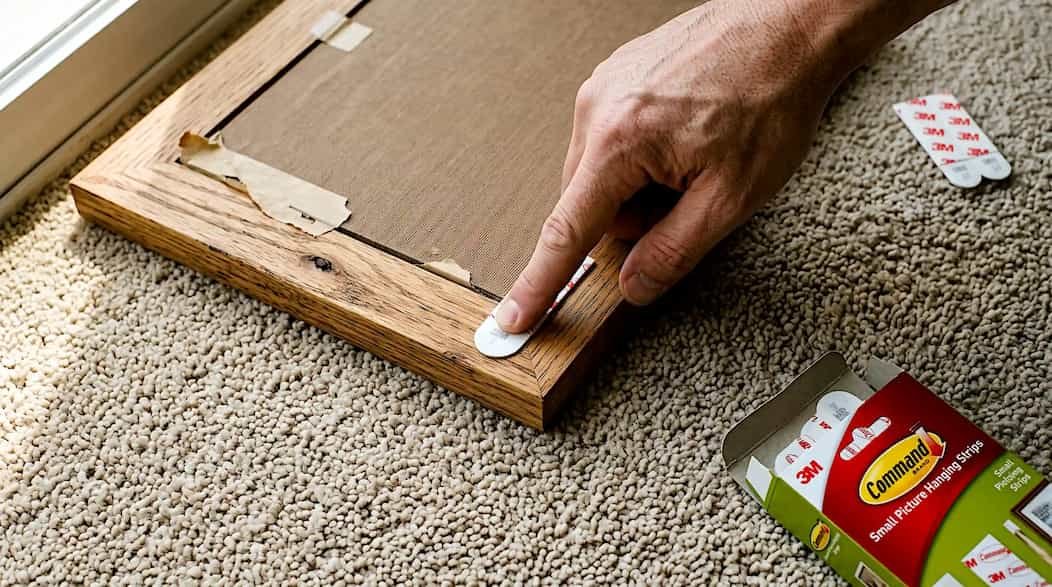
Heavy (20 to 45 lbs)
The 3M Claw Drywall Picture Hanger is proven to hold up to 15, 25, or 45 pounds depending on the model, using hardened steel claws that lock directly into drywall without needing a stud or anchor. This tier covers most standard mirrors, larger framed art, and canvas prints.
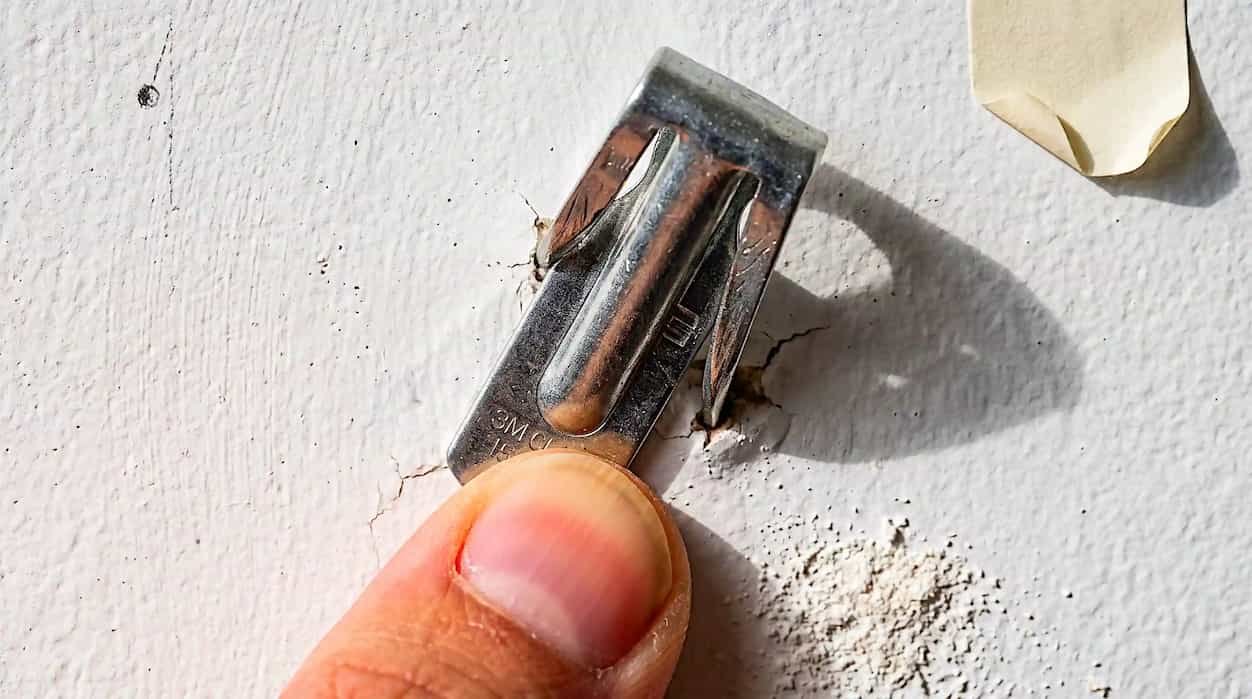
A Monkey Hook or Gorilla Hook is another solid option in this tier. These spring steel hooks install with a simple push into the wall and swing into place to grip from behind the drywall, no separate anchor needed.
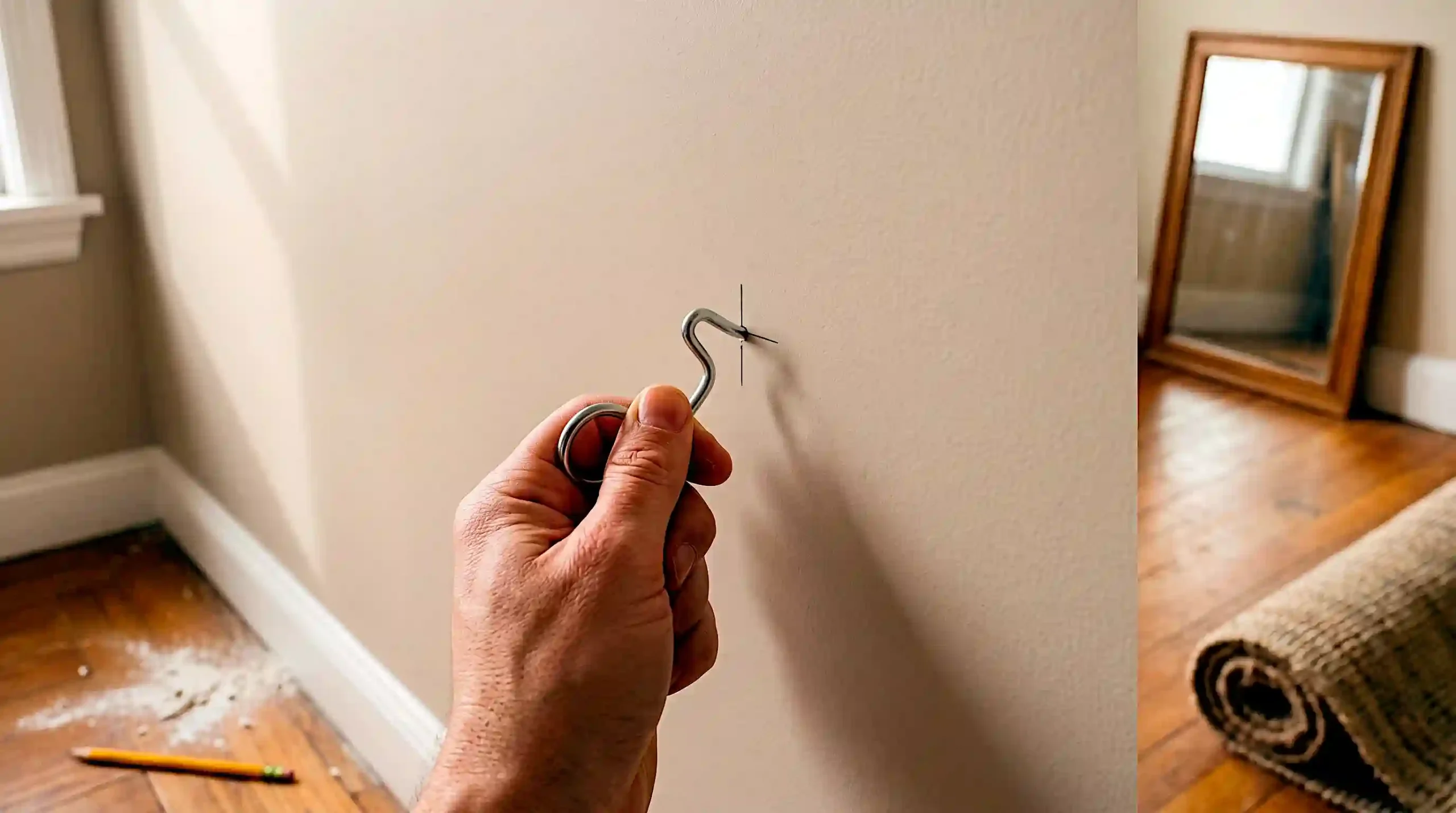
Very Heavy / Mirrors (45 to 65+ lbs)
3M’s heaviest rated Claw hanger is tested to hold up to 65 pounds. For anything beyond that, or for extremely wide or awkwardly balanced pieces, a French cleat, a two piece interlocking bracket that spreads weight across a wide surface rather than a single point, is the more reliable choice, particularly for gallery quality mirrors and statement pieces.
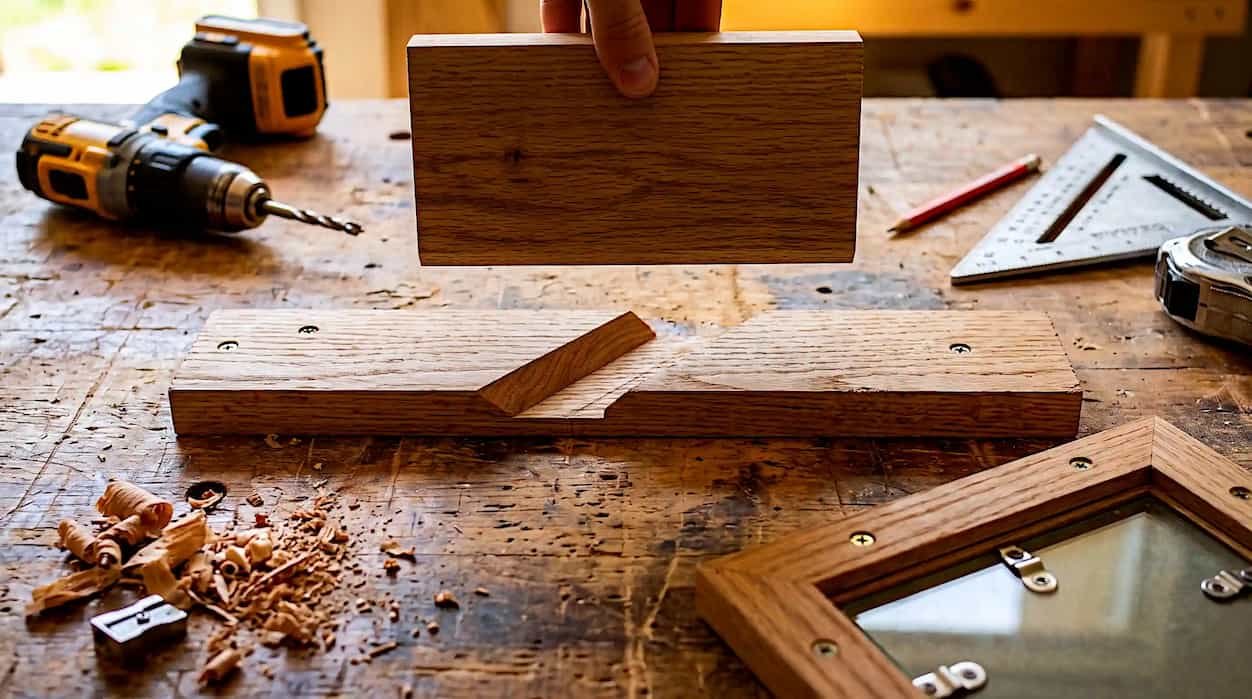
One critical rule that’s easy to miss: if a frame has two separate hanging points and you use two 3M Claw hangers, the weight capacity does not add up between them. The object still can’t exceed the rated weight of a single hanger. Always size your hardware to the full weight of the piece, not a fraction of it.
The Best No-Drill Hanging Methods, Compared
| Method | Weight Rating | Best Wall Type | Removable? | Best For |
|---|---|---|---|---|
| Command Strips (Large/X-Large) | 15 to 20 lbs | Drywall, painted surfaces | Yes, cleanly | Standard framed art, prints |
| 3M Claw Drywall Hanger | 15 / 25 / 45 / 65 lbs | Drywall only | Small hole on removal | Mirrors, heavy frames, canvases |
| Monkey Hook / Gorilla Hook | 20 to 50 lbs | Drywall (5/8″) | Small hole on removal | Mid weight frames, quick installs |
| French Cleat | 50+ lbs (varies by size) | Drywall, wood, plaster (with screws) | No, semi permanent | Very heavy or oversized mirrors |
| Adhesive Wall Anchors (masonry-rated) | Varies by product | Brick, tile, concrete | Yes, with residue check | Hard, non drillable surfaces |
Step-by-Step: How to Hang Heavy Art Without Drilling
- Weigh your piece first. Use a bathroom scale if you’re unsure, don’t estimate. Hardware weight ratings assume you know the real number.
- Identify your wall type. Run your hand across the surface and, if needed, gently tap to check for hollow drywall versus solid plaster or masonry.
- Choose hardware rated above your item’s actual weight, not just equal to it. A small safety margin protects against uneven weight distribution.
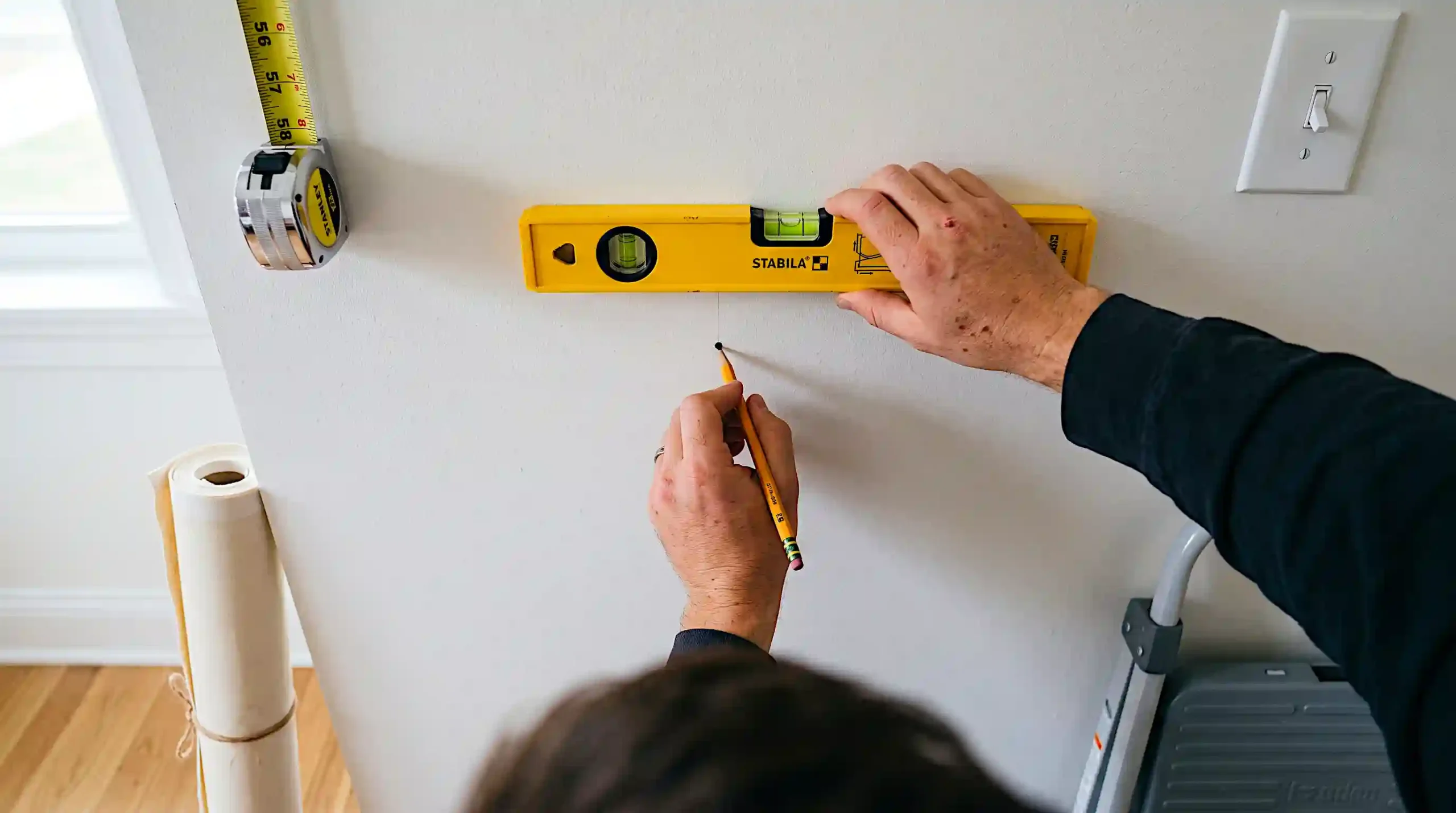
- Mark your position. Hold the piece (or use painter’s tape to outline it) at your desired height. For most rooms, center artwork so its midpoint sits around 57 to 60 inches from the floor, or with its bottom edge 6 to 8 inches above furniture like a sofa.
- Level before you commit. Use a bubble level against your marked points before attaching anything permanently.
- Install the hardware following the product’s specific instructions. Claw hangers push flush into the wall, adhesive strips need firm, even pressure, and cleats need to be screwed into the frame first.
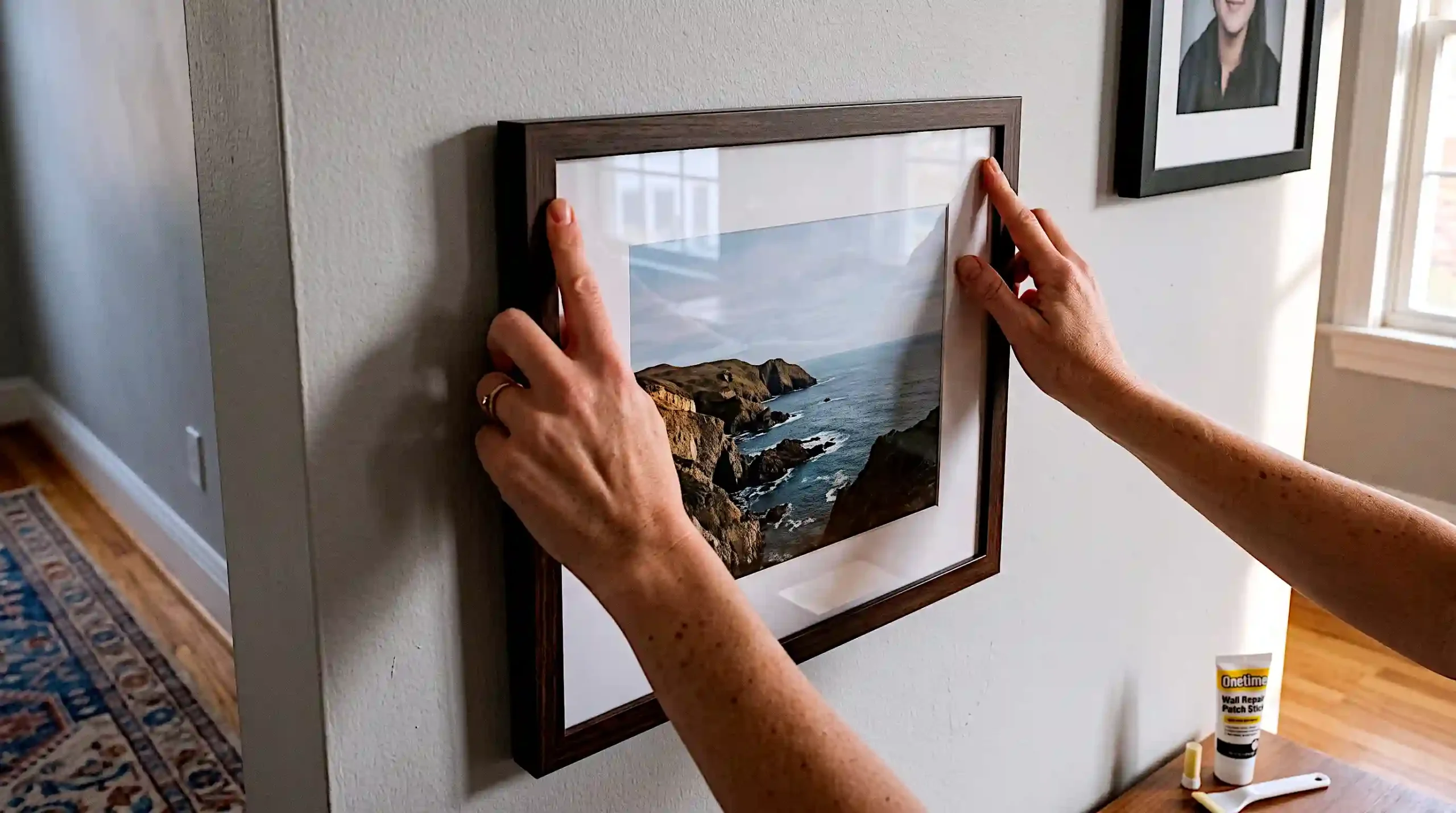
- Hang and test. Once the piece is up, apply gentle downward and side pressure to confirm it’s secure before stepping away.
Special Case: Hanging a Heavy Mirror Without a Stud
Mirrors present a unique challenge because their weight is concentrated and glass adds fragility risk if hardware fails. A few extra considerations:
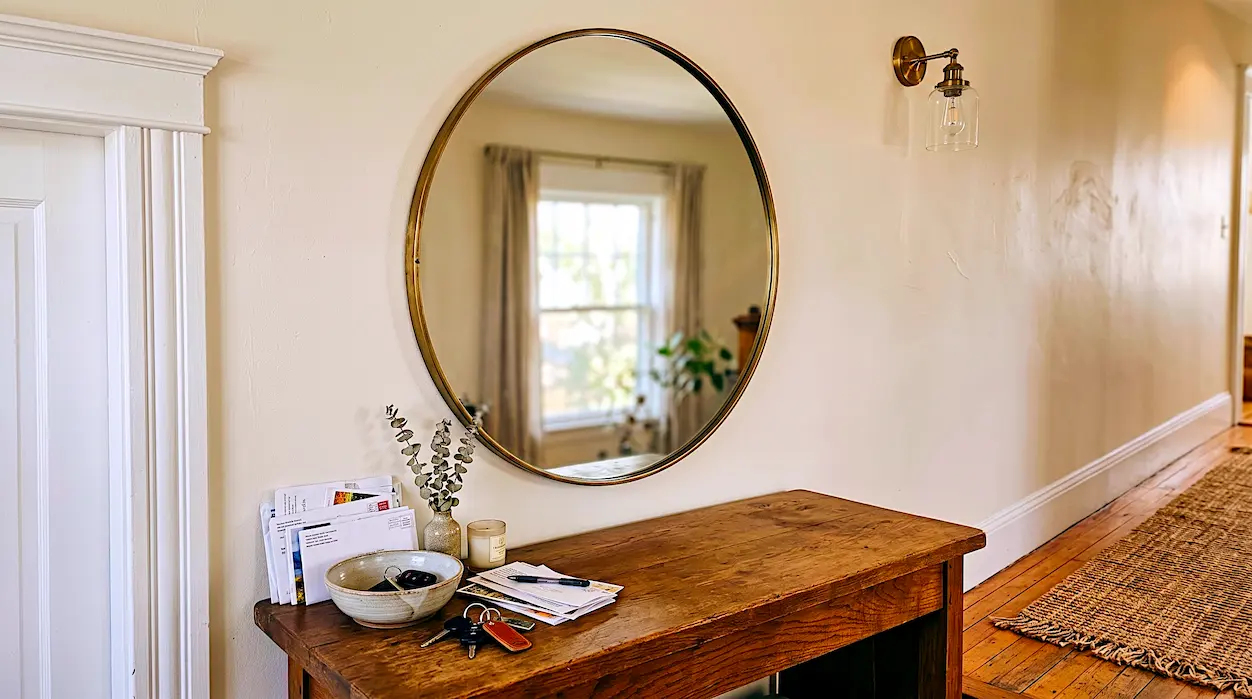
- Distribute the load across two points wherever the mirror’s frame allows, rather than relying on a single central hook.
- Check the mirror’s existing hardware. Many mirrors come with a wire strung between two points. In this case, a single well rated hook can work, but two hooks spaced apart offer more stability and help the mirror hang straight.
- For round or frameless mirrors without built in hanging hardware, a cleat and bracket system mounted directly to the mirror’s backing is usually safer than adhesive alone.
- Don’t skip the weight rating margin. Mirrors are more likely to cause injury or costly damage if hardware fails, so err toward the next weight tier up.
Tips for Renters
If you’re hanging art in a rental, a few extra habits protect both your walls and your deposit:
- Test adhesive products in an inconspicuous spot first, especially on textured or recently painted walls. It’s recommended to wait about seven days after painting before applying adhesive strips, since fresh paint hasn’t fully cured.
- Avoid using adhesive strips on wallpaper or over textured finishes, where the bond is far less reliable.
- Keep the original packaging for any claw or hook hardware. Most brands list the exact hole size left behind, which helps if you need to patch before move out.
- Remove adhesive strips correctly. Pulling straight down, not outward, is the method most brands specify to avoid pulling paint off the wall.
Mistakes to Avoid
- Overloading adhesive strips. Manufacturer weight ratings are tested maximums, not conservative estimates. Don’t push a 20 lb rated strip set to hold a 25 lb frame.
- Assuming two hangers double your capacity. As covered above, most manufacturers explicitly state that using two hangers does not add their ratings together.
- Using drywall only hardware on plaster, wood, or masonry. This is one of the most common causes of hardware failure and wall damage.
- Skipping the weigh in. Guessing a frame’s weight is the single biggest reason people under buy their hardware.
- Hanging valuable or irreplaceable pieces on adhesive alone. For anything sentimental, expensive, or fragile, a mechanical hanger (claw, hook, or cleat) offers more security than adhesive bonding.
Frequently Asked Questions
It depends on the size and how many pairs you use. Four pairs of Large strips hold up to 15 pounds, while four pairs of X Large strips hold up to 20 pounds, both for frames up to 24×36 inches.
Light to medium mirrors within the rated weight limit can work, but for anything heavier or particularly valuable, a mechanical hanger like the 3M Claw or a French cleat offers a more secure hold.
They leave a small entry hole when removed, but they’re specifically engineered for drywall and don’t require a separate anchor. They’re not designed for wood or plaster walls, where they could cause damage, so it’s best to stick to drywall for this product.
Follow the package rating exactly. Most heavy duty options are rated in sets of four pairs (eight strips) for a specific maximum weight and frame size. Adding extra pairs beyond the tested configuration isn’t guaranteed to add extra capacity.
It can be, if the mirror’s actual weight falls safely within the strips’ rated capacity and the wall surface is smooth, painted, and fully cured. For anything near or above the rated limit, a mechanical hanger is the safer choice.
Among mainstream options, the 3M Claw’s largest model is rated to hold up to 65 pounds on drywall. For heavier pieces, a properly installed French cleat generally offers the highest weight capacity of any no drill method.
Mark your desired height first, then use a level to find your horizontal center point. Weight rated hardware placed at that mark, ideally at two points for stability, lets you hang accurately without needing to locate a stud.
Bottom Lines
You don’t need a drill to hang art securely. You need the right hardware for your wall type and an honest read on your item’s weight. Match those two variables correctly, and pieces up to 45 or even 65 pounds can go up cleanly, hold for years, and come down without a trace when you’re ready to redecorate.
Once your hanging hardware is sorted, the bigger design question is often what to hang in the first place. If you’re curious about styles that feel a little more personal and layered than the usual gallery wall, what is Afrohemian decor, the 2026 trend redefining soulful living is a great next read.
How to Hang Heavy Art Without Drilling Holes

Beginner Decorating Mistakes That Age a Room Fast